
Scientists Stumble Upon a 'Supergiant' Gold Deposit — and It's Worth About $83 Billion
Published Jan. 2 2026, 2:58 a.m. ET

A person holding nuggets of gold.
In 2024, Chinese scientists were drilling through the Wangu gold field, which nestles in China’s Pingjiang County of the Hunan Province, when their instruments clanged into an astronomical gold deposit. They came across a "supergiant" deposit of gold ore, containing 1,100 tons of gold with around 300 tons already indicated at shallower levels. In the present day, the astronomical gold deposit is worth a whopping $83 billion.
To have so much gold sitting in the bowels of a province is nothing short of pure fantasy. The cause, scientists believe, is its fascinating geological history that spurred a chemical world that catalyzed the formation of this gold. A 2025 study published in Ore Geology Reviews elaborates on the remarkable geochemistry of the goldfield. When the tectonic plates smashed into each other, they caused the crust to fold. Crustal rollback carved a labyrinth of granite intrusions interlaced with cracks, fissures, and faults. As time went by, the hot magmatic fluids sloshing in the fiery crucible of the mantle became agitated by the tectonic disturbances and started rising upward.
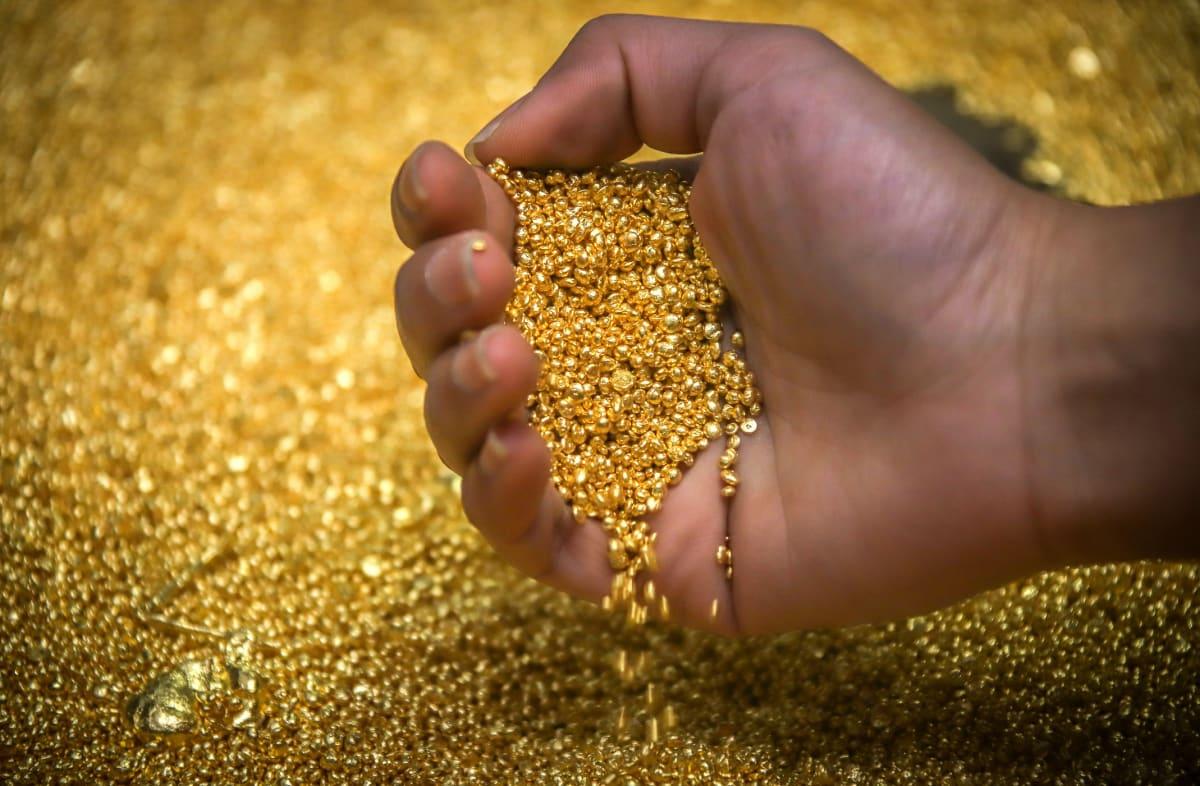
Person's hand holding a scoop of gold pellets
The upwelling fluids seeped into the chassis of cracks and faults and created a metal-enriched soup somewhere between the granite intrusions. A series of magmatic-thermal events and multi-stage mineralization processes triggered the formation of a complicated and confusing polymetallic deposit rich in metals like gold. With folding crust rising to form mountains, the metal-containing slew from metamorphic rocks started boiling. Another series of boiling and rapid crystallization processes, as well as chemical reactions, hardened this slew, and the metals turned into ores, depositing themselves on different types of pyrite rocks. When scientists examined these rocks, they found fingerprints and signatures of these processes that revealed themselves as varied textures on the pyrites.
When combing the area, scientists drilled through these milky white quartz veins, passing through the acidic dikes. They crushed the ores through selective leaching to extract a trove of gold, which isn’t just giant but “supergiant." Roughly 6,560 feet deep, there were over 40 gold-bearing veins.
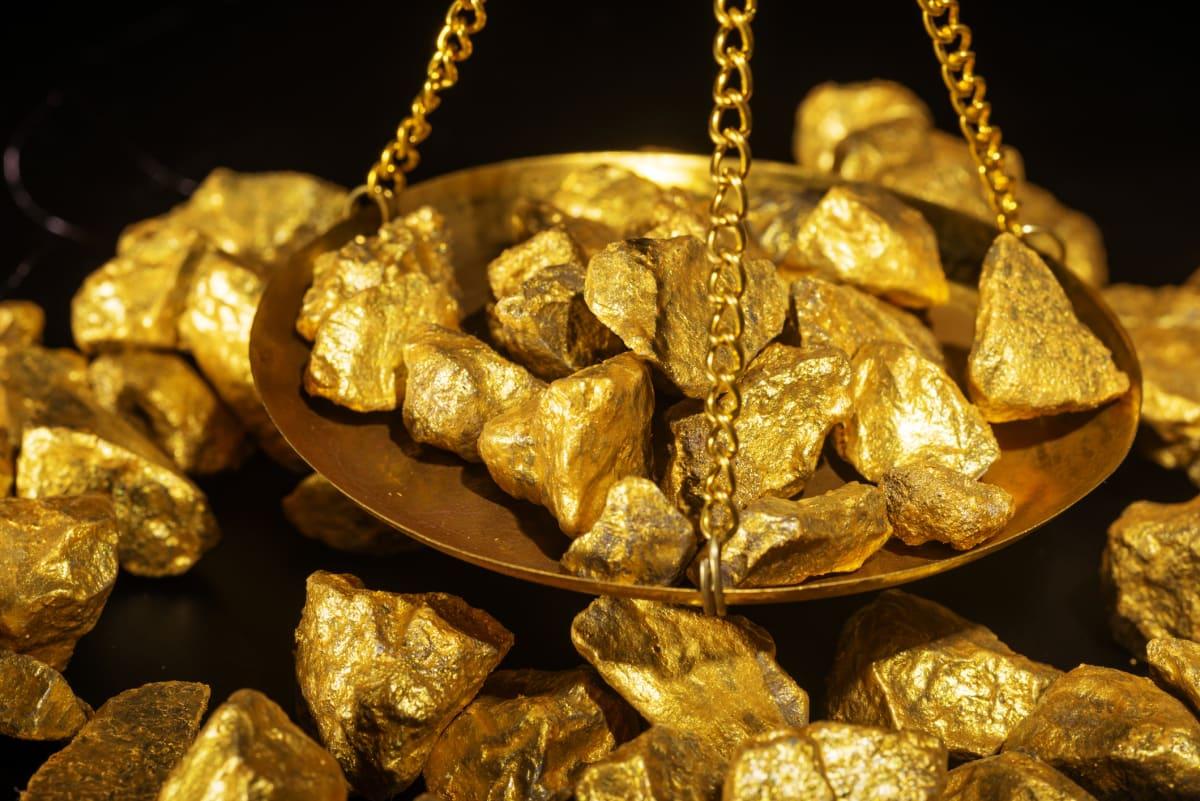
Shiny gold pellets extracted from a mine and cleaned
But 3D models suggest that the veins could reach much farther in depth, more than 9,840 feet deep. According to Chen Rulin, an ore-prospecting expert in Hunan Province’s Geological Bureau, the trove features 138 grams (4.8 ounces) of gold per metric ton of ore, a valuable rate not often found in gold mining. “Many drilled rock cores showed visible gold,” Rulin said. The deposit isn’t just a behemoth of raw, fresh gold. It is also way more gold than discovered anywhere, including South Africa’s South Deep gold mine. The Mining Technology describes that the South Deep gold mine contains about 1,025 tons of gold.
While scientists and locals are still in awe of such an elephantine cache of gold sitting in dark rocks, officials of the world’s gold markets are already planning to raise the gold prices. Already, the price has spiked to $2,700 per ounce, per CCN. The sheer size and concentration of the treasured deposit further solidifies China’s reputation as one of the world’s biggest gold producers, also promising a bounty of gold supply across the world. China and its gold-buying customers are no longer insecure about the precious metal, but the prices may see further spikes as mining processes influence the market dynamics.