
A Rare Iron Age Battle Trumpet Has Been Found — and Experts Say It's One of a Kind
Published Jan. 7 2026, 5:08 a.m. ET

Man playing an ancient battle trumpet.
Archeologists have uncovered an ancient battle trumpet, weirdly in good shape. The excavation happened on a privately owned field in Norfolk, and the discovery has become remarkable in Britain's history of archeological finds. The digging unearthed a bronze horn of an animal. It was a chance discovery that happened last summer during a standard planning excavation by Pre-Construct Archaeology of homes in West Norfolk. Further study confirmed that the horn was an Iron Age battle trumpet, also known as the carnyx. It was one of the three ancient trumpets found in Britain that had a distinctive and loud blare. This discovery is one of the many missing pieces that were buried about 2,000 years ago. The recently found trumpet is also the most complete example of an ancient trumpet ever found in Britain.
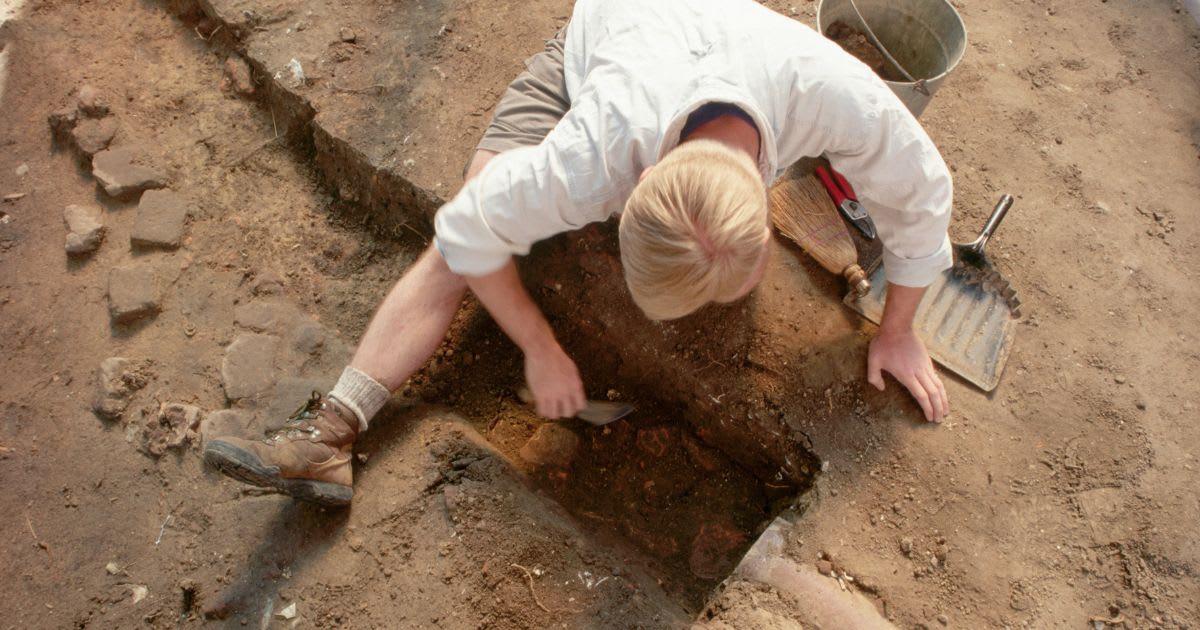
An archaeologist is seen digging for artefacts.
The excavation didn't just uncover the battle trumpet but also other ancient artifacts like a sheet-bronze boar's head. Five shield bosses, which were metal objects used to protect the holder's hand, were also among the artifacts unearthed, as was another iron object that archeologists were unable to identify. “Before this dig began our project manager had ‘a feeling’ that this site would be special,” says Pre-Construct Archaeology's chief executive Mark Hinman, as per BBC Countryfile. “We are so impressed with the team responsible for this find. They discovered something completely unexpected, paused for breath, then followed best excavation practice to recover these rare and fragile objects," he added. The artifacts, after being carefully extracted, underwent a preliminary examination by conservation experts from Norfolk Museums Service.
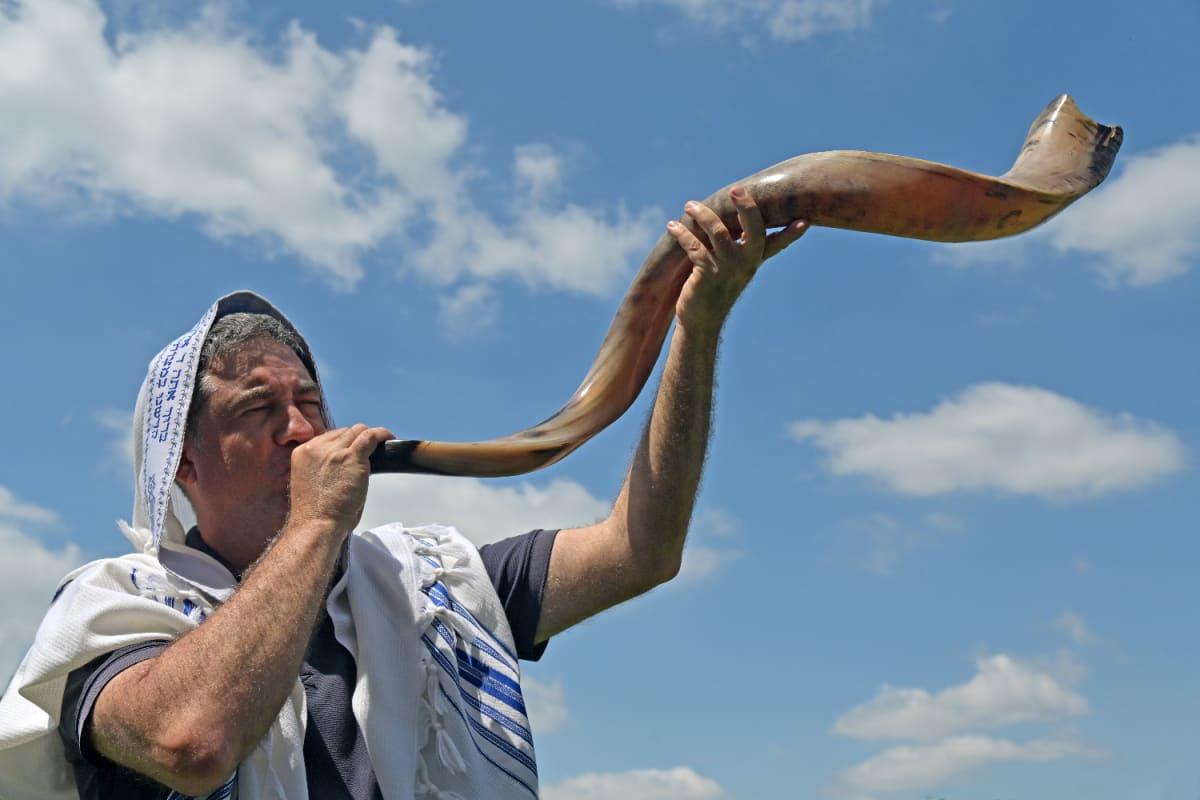
Man blowing on an S-shaped horn.
Historic England, working alongside Pre-Construct Archaeology, Norfolk Museums Service, and the National Museum of Scotland have planned their next move after the successful archaeological find. They intend to focus on stabilizing the artifacts before conducting any detailed observations and initiating the conservation process. It's crucial to take careful steps as the discovery of a near-complete battle trumpet could provide great insight into the Iron Age. “This extraordinary find will add enormously to our understanding of the Iron Age world," said Dr Fraser Hunter, a leading authority on carnyces from the National Museums of Scotland. The co-chief executives of Historic England, Claudia Kenyatta and Emma Squire, believe that the discovery will help understand "ancient British culture." Being an expert in the study, Hunter is sure that the preservation of these fragile artifacts will help them understand the ancient period better.
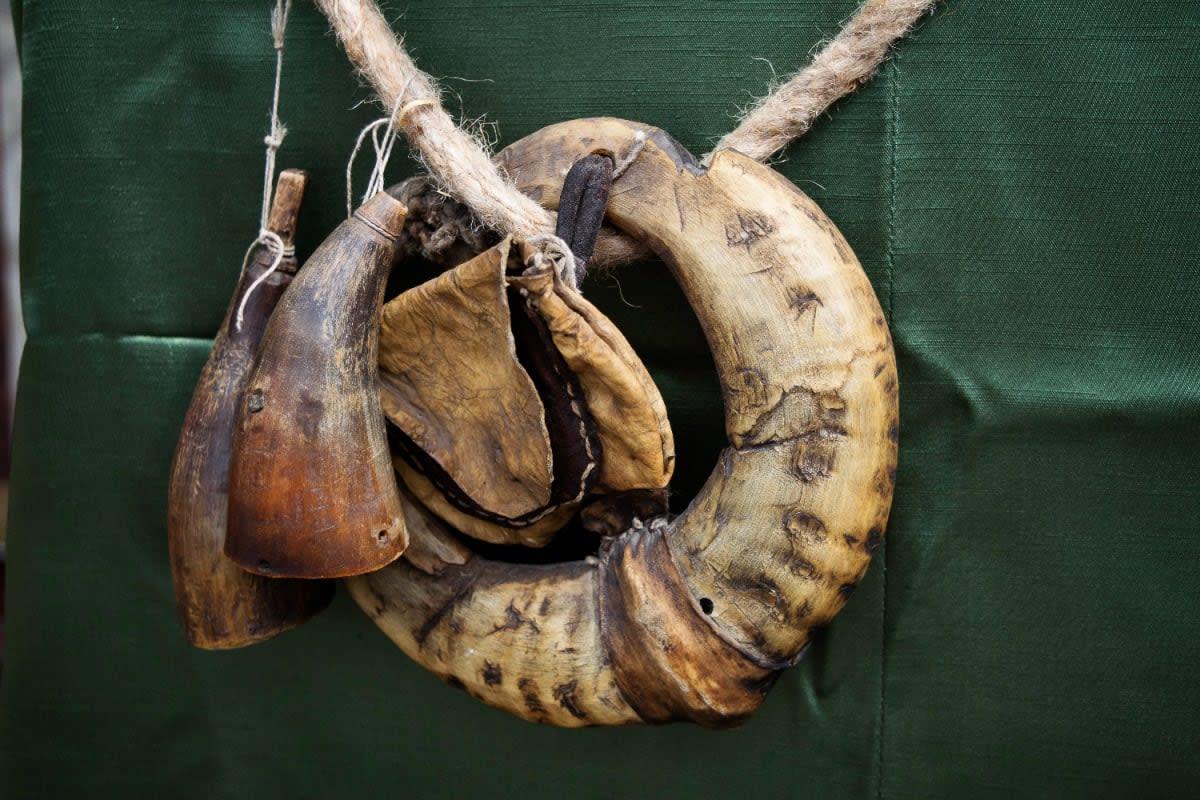
An ancient battle trumpet hung among other artifacts.
Moreover, it might help change the perspective on music and the sound of that era. “The carnyces and the boar-headed standard are styles well known on the continent and remind us that communities in Britain were well-connected to a wider European world at this time," he added. The instrument used for battle announcement at the time was elongated, vertical, and S-shaped and featured a distinct upward-facing bell, as per The Daily Mail UK. The bronze boar head, also discovered at the site, was believed to be part of a military standard that was presumably held afloat to represent the unit's identity. The hoard of artifacts collected from the Norfolk field was micro-excavated by senior conservator Jonathan Clark. The process involved carefully removing the objects from the excavated soil block.