
Weeks of Extreme Weather Leave Iceland’s Iconic Black Sand Beach Looking Unrecognizable
Published Feb. 13 2026, 7:45 a.m. ET

(L) Iceland's Black Beach before extensive coastal erosion; (R) The Black Beach after coastal erosion. (Cover Image Source: (L) Getty Images | ImageBroker - Christian Frumolt; (R) Instagram | @rebeccadouglasphotography)
At first glance, the stunning shores of Reynisfjara or Reynisfjörður Beach, Iceland, appear immersed in black and volcanic sand, the very feature that makes it unique among beach destinations. However, a closer look will unveil the distress it is hiding, which is gradually shaping the landscape. The culprit that is eating away at the beauty of the “Black Beach” is extensive coastal erosion.
ArticPortal.org, an Iceland-based nonprofit organization, shared details on the current condition of the one-of-a-kind destination and how it has changed in appearance over the years. While the picturesque black sand is intact, its color has become noticeably lighter, raising concerns over its future. Be it for aesthetic photoshoots or pious ceremonies like weddings, the beach has hosted numerous visitors. Now, danger looms over that one aspect of the beach that makes it irresistible to visit.
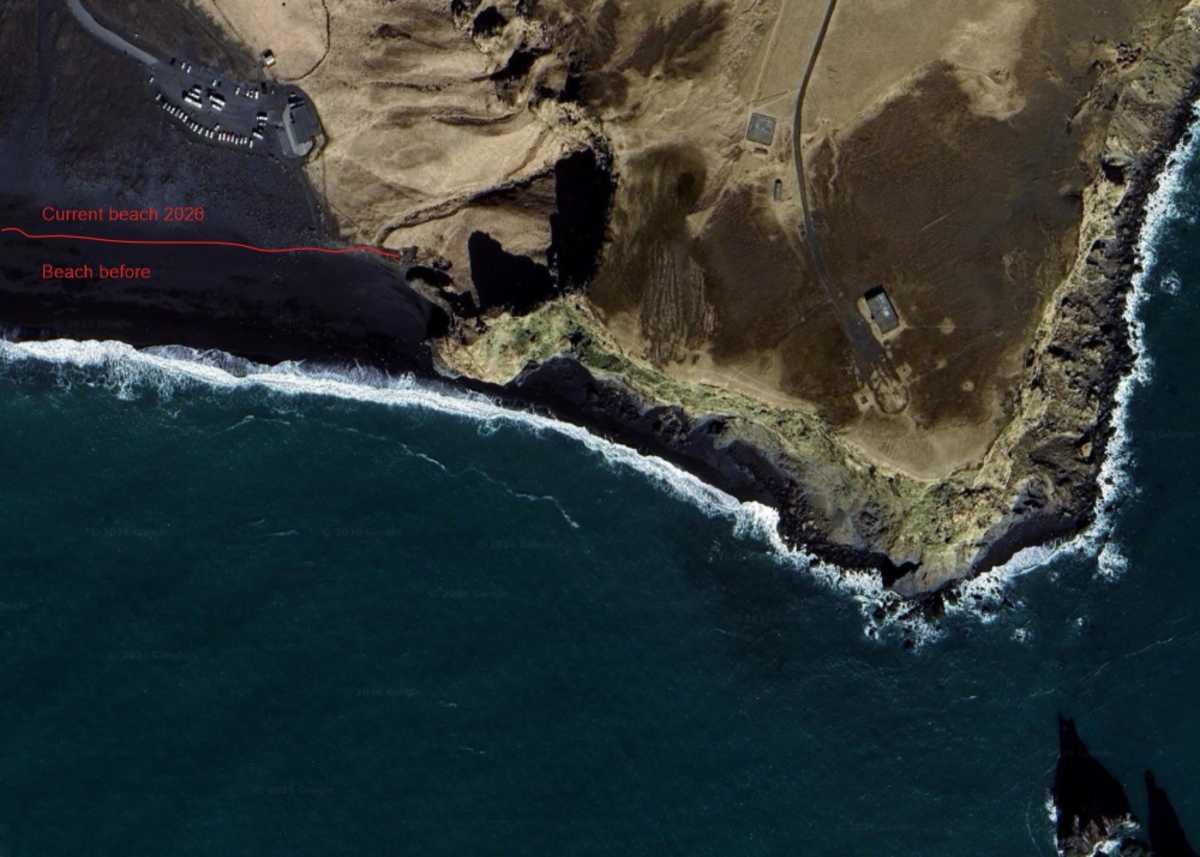
The red line shows how the Reynisfjara shoreline has changed.
The beach shoreline has an extensive number of basalt columns, naturally formed hexagonal pillars made of rock. Like jewels on a crown, these formations are one of the most defining and attractive features of the Black Beach. However, on a recent visit to the destination, locals were shocked to see several of these structures pushed out into the ocean. “The basalt is simply out in the sea now,” said a local landowner.
Under normal circumstances, these rock pillars would protect the shoreline like guards on duty, but that’s no longer the case. Heavy seas and persistent winds have swayed these rocks and sands. What is left behind now is the aftermath of an unprecedented soil erosion. According to residents and observers, the sand beneath these pillars, which once protected and supported their stance, has begun to drift away.
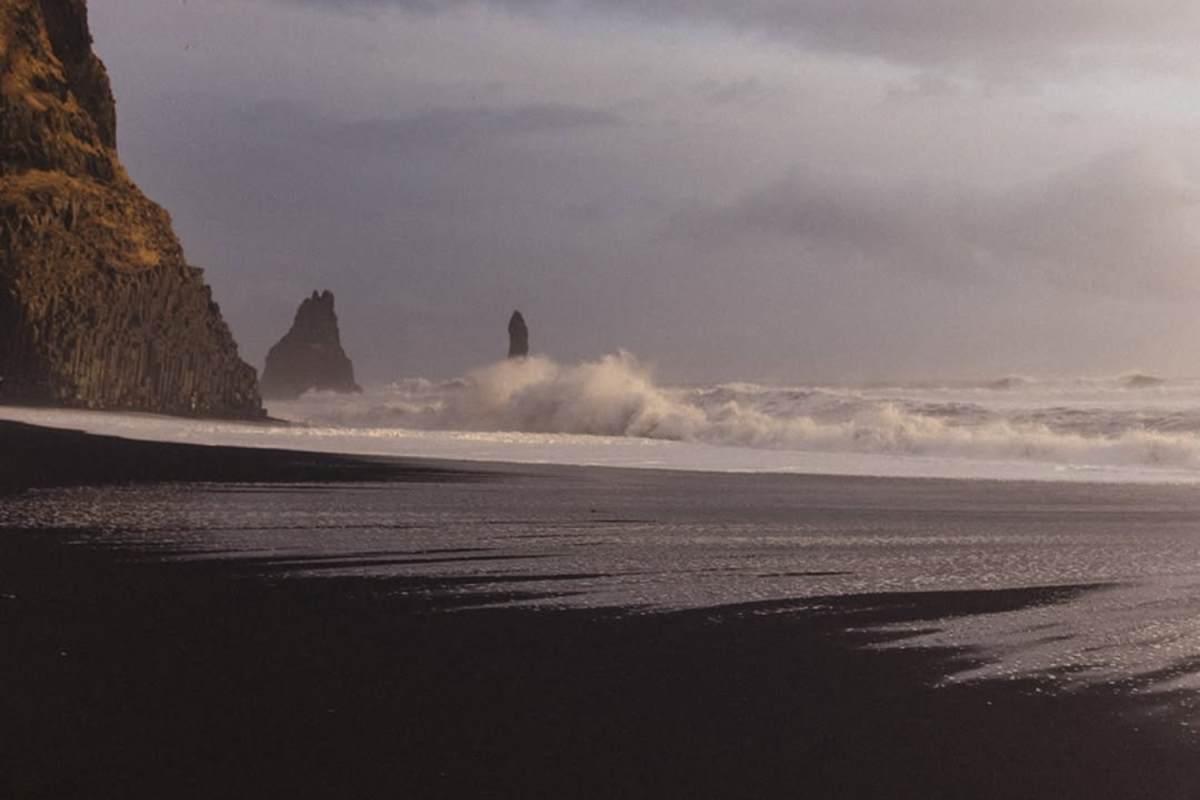
Extensive coastal erosion at Reynisfjara beach makes it unrecognizable.
In the process, it has made the basalt columns more vulnerable to being swept away into the ocean. “Meteorological and coastal experts have pointed to a sustained period of strong easterly winds and high wave activity in January and early February as key factors driving the change,” the organization wrote. “This weather pattern has repeatedly pushed powerful surf against the South Coast, intensifying natural coastal processes and moving sand and stones far more than is typical for this time of year.” Part of the Katla UNESCO Global Geopark, Reynisfjara Beach is recognized for its geological significance and as one of Iceland's highly photographed natural sites. Soil erosion is a natural and inevitable process of nature that the shores of Iceland are familiar with. Then what caused alarm among locals and authorities alike?
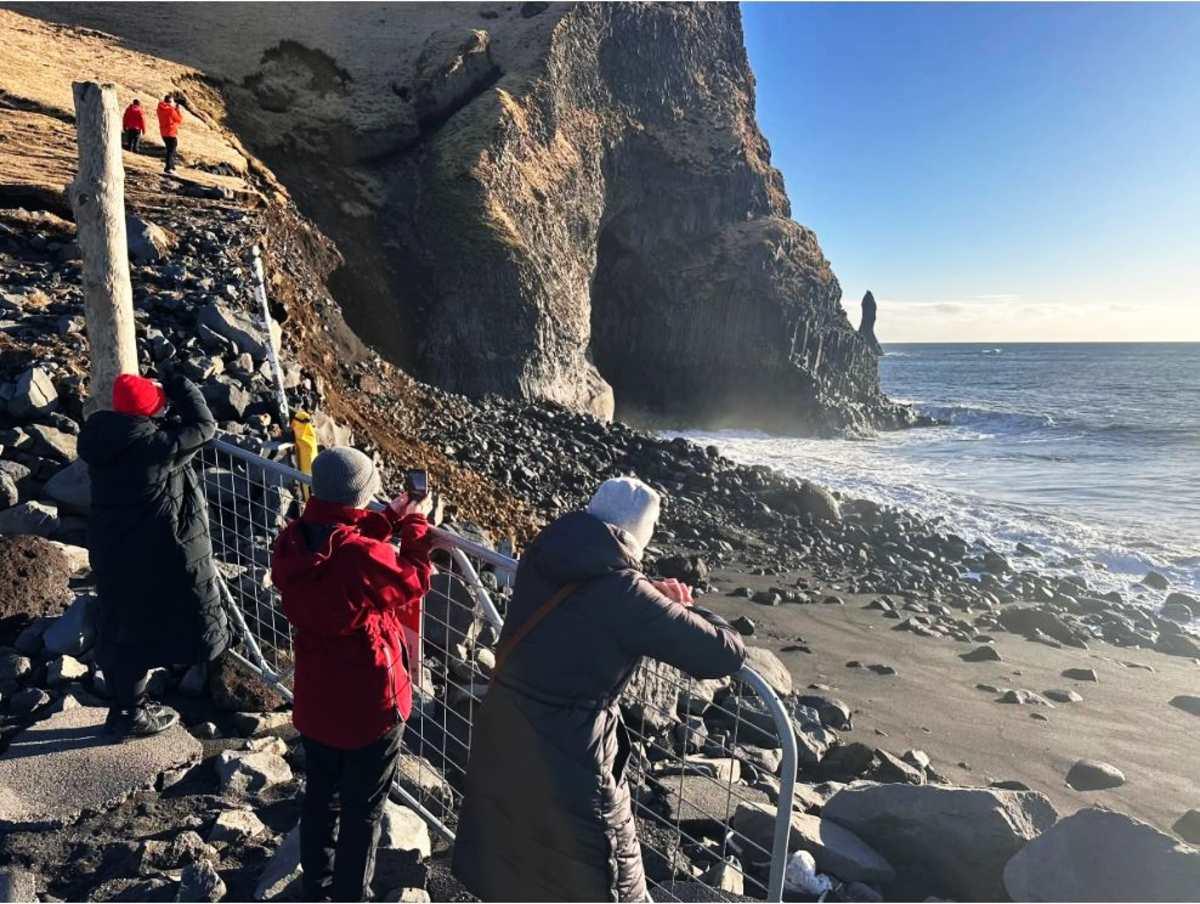
Tourists at the Black Beach in 2026.
According to the organization, the current level of coastal erosion occurring at the beach is quite concerning, and the changes appearing are "exceptionally rapid and extensive." Speaking to the Icelandic media outlet mbl.is, guide Snorri Steinn Sigurðsson expressed his thoughts on the beach’s transformation. “This is incredible to see. The forces of nature have turned the shore so that the place is completely different now than it was,” he said.
“I have seen changes in the nature of the country in the ten years I have been guiding. Things have never happened as fast as they are now.” While tourists are safe to roam the Black Beach under its current weather conditions, things could go south if the waves splashing the shores get higher. The guide urged increasing patrolling for the protection of the tourists. “I think there is no reason to wait for an accident before increasing preparedness,” he added.