
Tourists Flee as Volcano Erupts and Rocks Rain Down in Hawaii Volcanoes National Park
Updated Jan. 30 2026, 12:55 a.m. ET

A blazing snapshot from the Episode 41 of Kilauea volcano's eruption that happened on January 24
On the morning of January 24, something ferocious was stirring beneath the heart of the 354,000-acre Hawaiʻi Volcanoes National Park (HVNP). Steamy plumes were whiffing out of the Halemaʻumaʻu crater, like hiccups, at first from the north and then from both the north and south. At about 11:10 am HST, tourists hiking on trails stopped in their tracks, stunned. A shockwave ran through their bodies as they realized what had just happened. Kilauea had exploded once again.
Its fiery caldera mouth spat towering columns of ash while the restless lava lake unfurled like a monster, spreading its glowing lava fangs like tentacles of burning molten gold silk along the slopes. Hot rocks rained from the sky, at first the size of doorknobs, then grapefruits, and then soccer balls. Fountains of lava raged all day, and by the time they settled, they had blanketed the entire park in a shadowy haze of sooty powder still panting with gassy billows and sputtering embers, according to reports by USGS and SFGate.
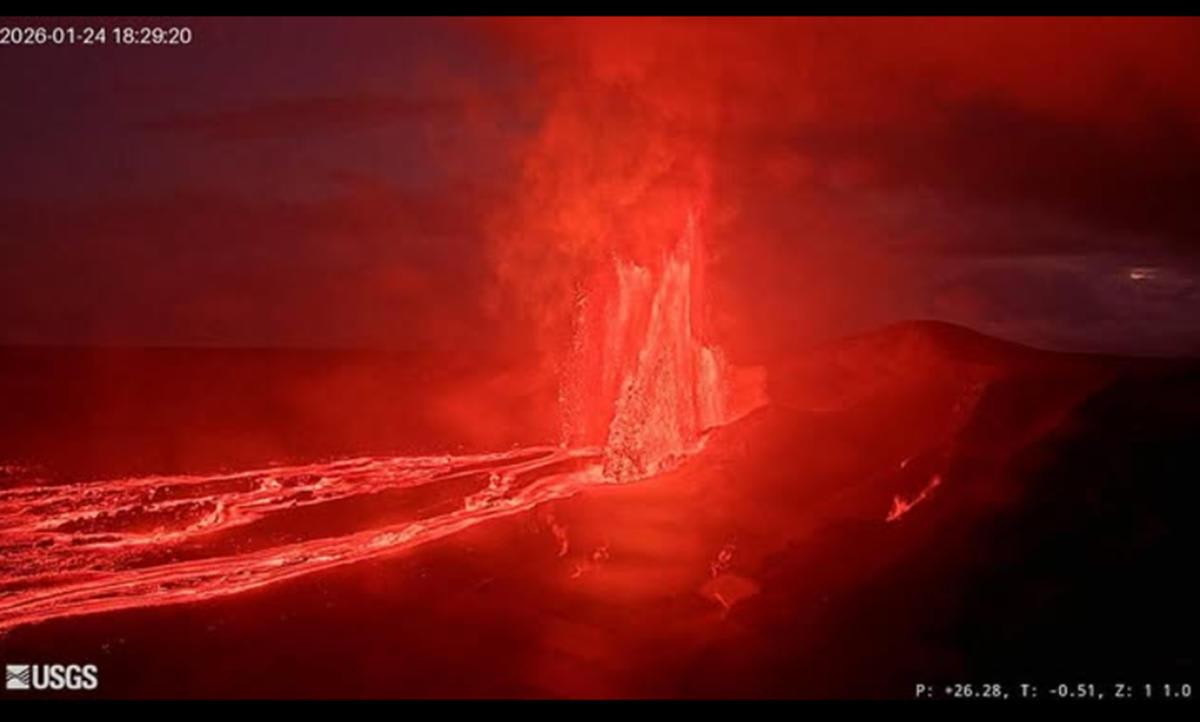
Park service shared snapshot from the Episode 41 of Kilauea's eruption
Retired molecular biology professor from Dallas, Scott Rippel, and his wife, Pamela, had especially extended their vacation to witness one of the most aggressive volcanoes in the world erupt before their eyes. On January 24, they started their hike from Devastation Trail. By the time they reached the Old Crater Rim Drive Trail, their ears were ringing with the deafening roar of Kilauea.
People were running for their lives, covering their eyes with elbows for protection against tiny fragments of volcanic glass that lashed from the sky. Many people careened on electric skateboards, hauling tripods and cameras beneath umbrellas, as seen in Hawaii News Now. Suzanne Smith, who arrived from Virginia, couldn’t even protect her camera. It cracked.
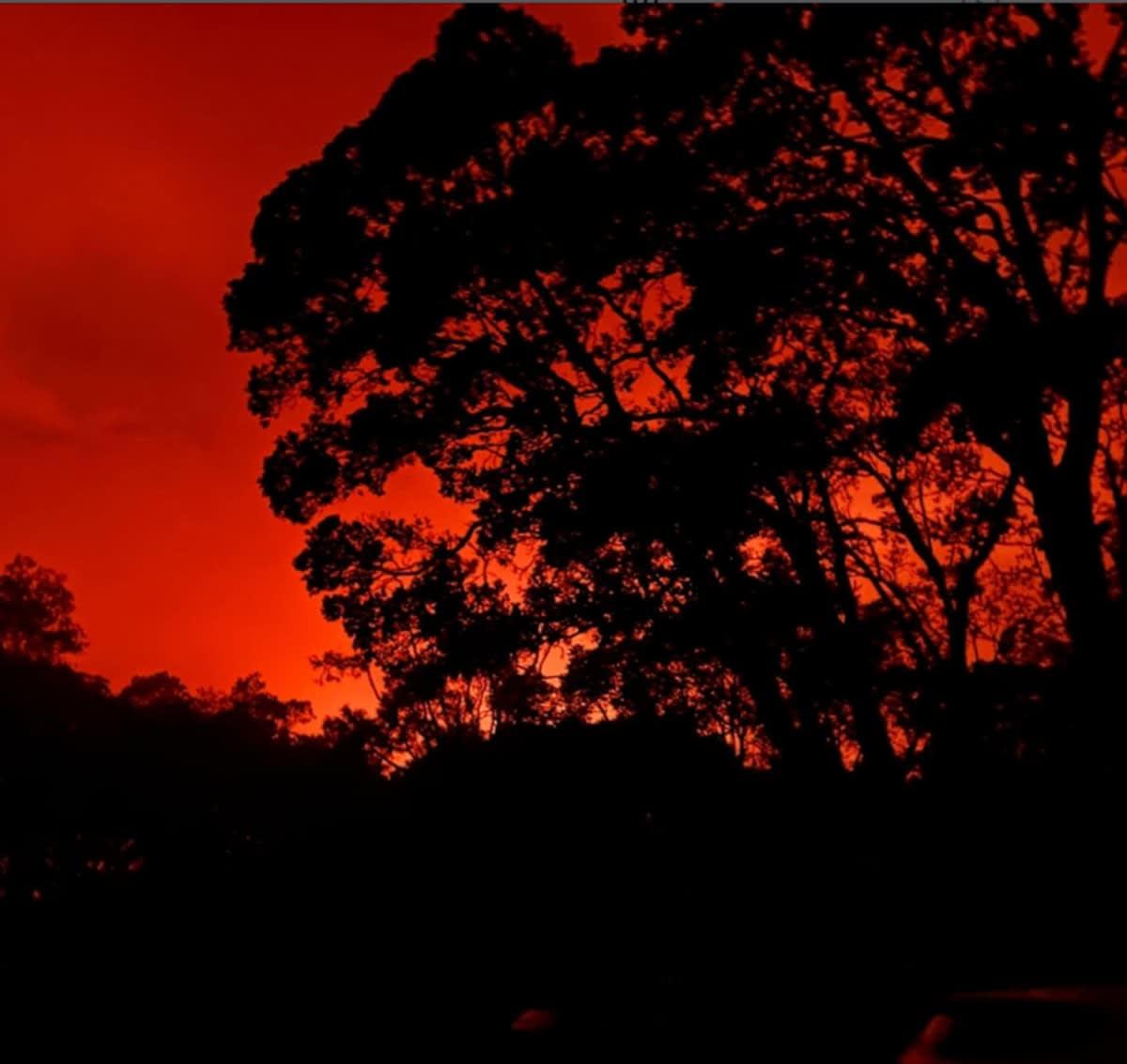
Park officials share photographic snapshot of the silhouette of a tree looking striking against the sky burning in a fiery red glow
Sharp-edged bits of rock and glass poured from the sky, settling in scalps of visitors like Julia Williams. Eli Shonbrod, owner of a brewery company, got a cut in his flesh from the glass. Scott too got one. He called it a “Hawaiian tattoo.” Like Scott, Colleen Grifford, the cashier of a local shop, also felt excited. “It’s amazing,” she exclaimed.
Kilauea has been shooting lava into the sky about every two weeks for more than a year, but this time it was way more intense. Officials reported that the eruption spewed 11 million cubic meters of lava, covering as much as 80 to 85 percent of the crater’s floor. Webcams still display an intermittent moderate glow emitting from the south vent and an intermittent minor glow in the north vent.
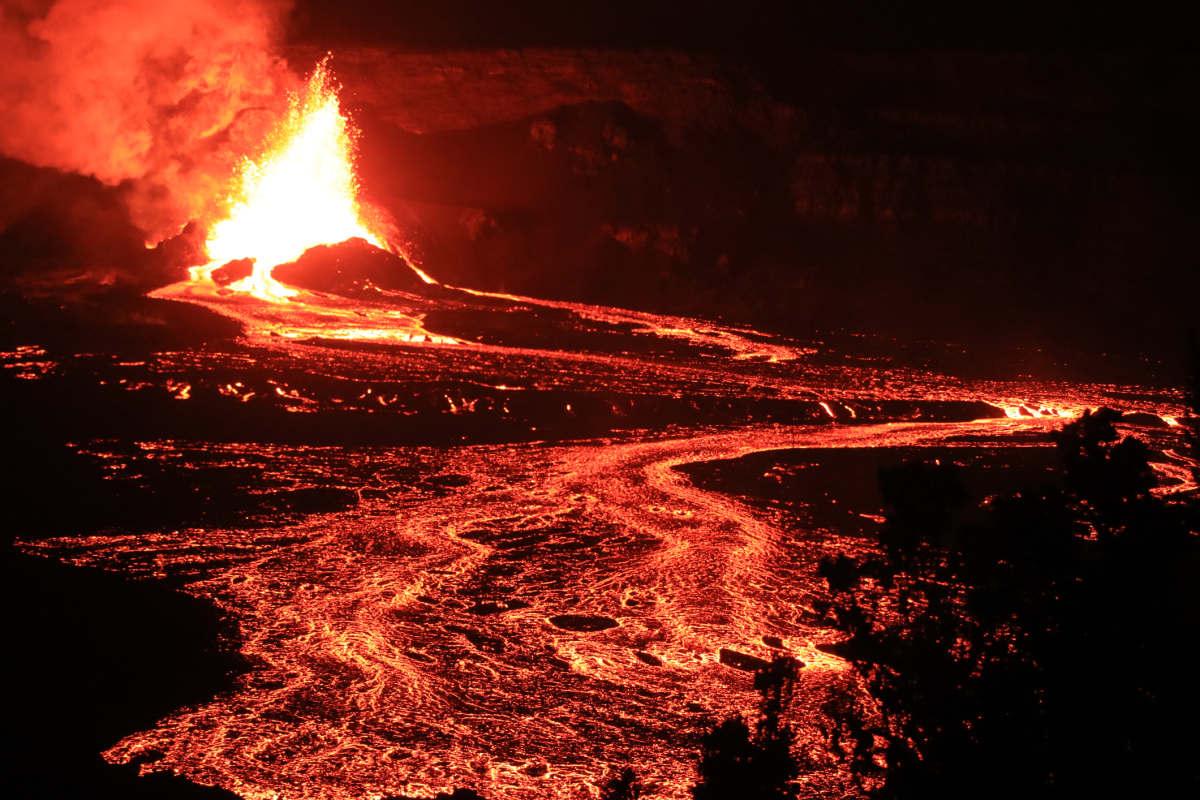
Kilauea Volcano erupting in Hawaii
In a series of episodes officials have been cataloging since December 23, 2024, this was Episode 41. Episode 40 occurred on January 12. With so much pumice mizzling from the sky, park officials shut down Highway 11 along the mile markers 24 and 32. For people who suffer from respiratory problems, intense concentrations of gases like carbon dioxide and sulfur dioxide can be deadly.
Tephra fragments and breathing volcanic gases can trigger serious health conditions, whereas the long, thin strands of volcanic glass, called “Pele’s hair,” can wound the flesh, per SFGate. To protect the crowd from these toxic materials, the quick-thinking park officials ordered an evacuation shortly after Episode 41 and closed the summit.
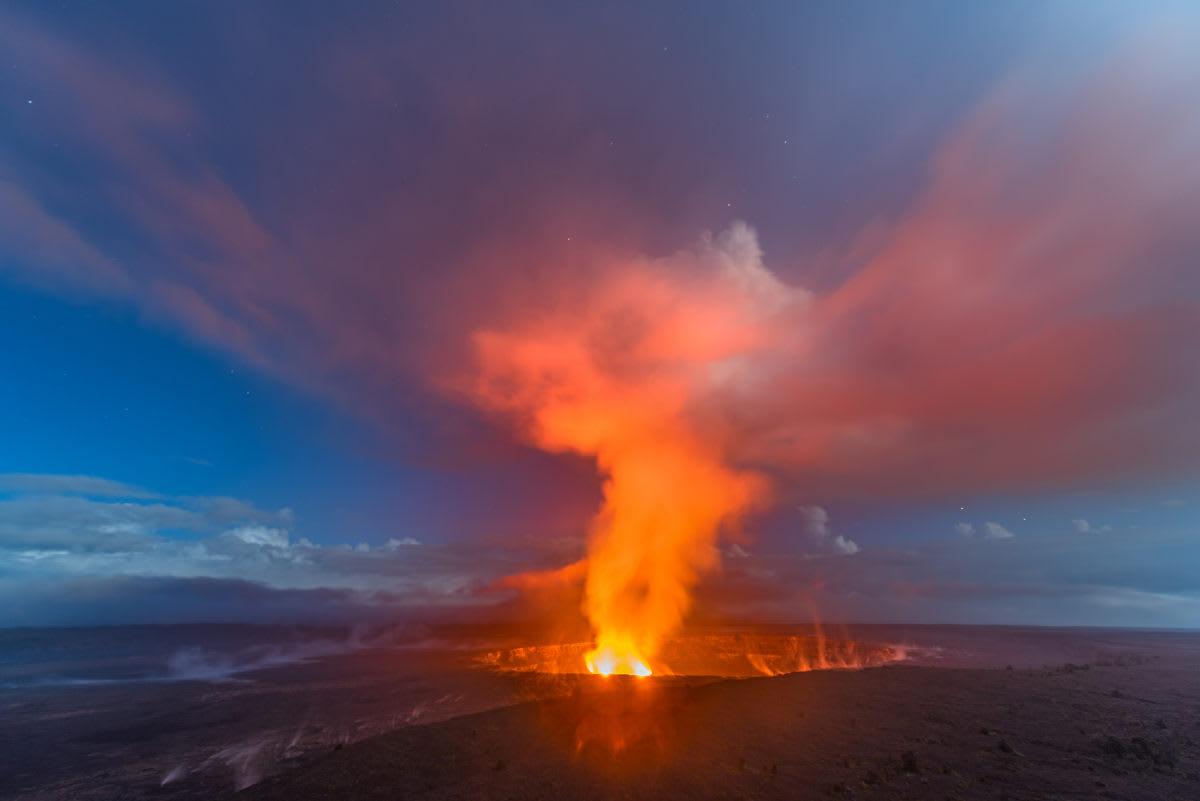
Kilauea volcanic eruption
By 7:26 in the evening, the lava fountains finally calmed down in the north vent. By 7:29 pm, the fountains in the south vent also settled down. And with this, the volcanic monster quieted down, and the episode wrapped up. But Kilauea is not the one to take it easy and cool. Volcanologists have already predicted that Episode 42 will broadcast somewhere between February 10 and 20. Until then, viewers are recollecting the unforgettable memories they collected from Episode 41. “Guys, we’ll remember this forever,” exclaimed a young girl. Meanwhile, the park has reopened the Crater Rim Drive on January 26.