
'January Grizzly' Spotted In Yellowstone — Biologist Says One Of Earliest Sightings On Record
Published Jan. 29 2026, 3:48 a.m. ET

A grizzly bear standing in a meadow in Yellowstone National Park, and a visitor observing it from behind
A grizzly has been spotted wandering out of hibernation in Yellowstone National Park in a surprising sight recently. Bear biologist Frank van Manen claims that this is one of the first times that a grizzly has been spotted so early in the year. There could be two reasons behind this early phenomenon. Either the grizzly bear woke up from its hibernation super early or extremely late. As far as what attracted it to venture outside the cave is concerned, experts have their bets on a tempting food source. Manen, who has studied grizzlies in Greater Yellowstone for years, believes it is “one of the earliest sightings on record,” according to Cowboy State Daily.
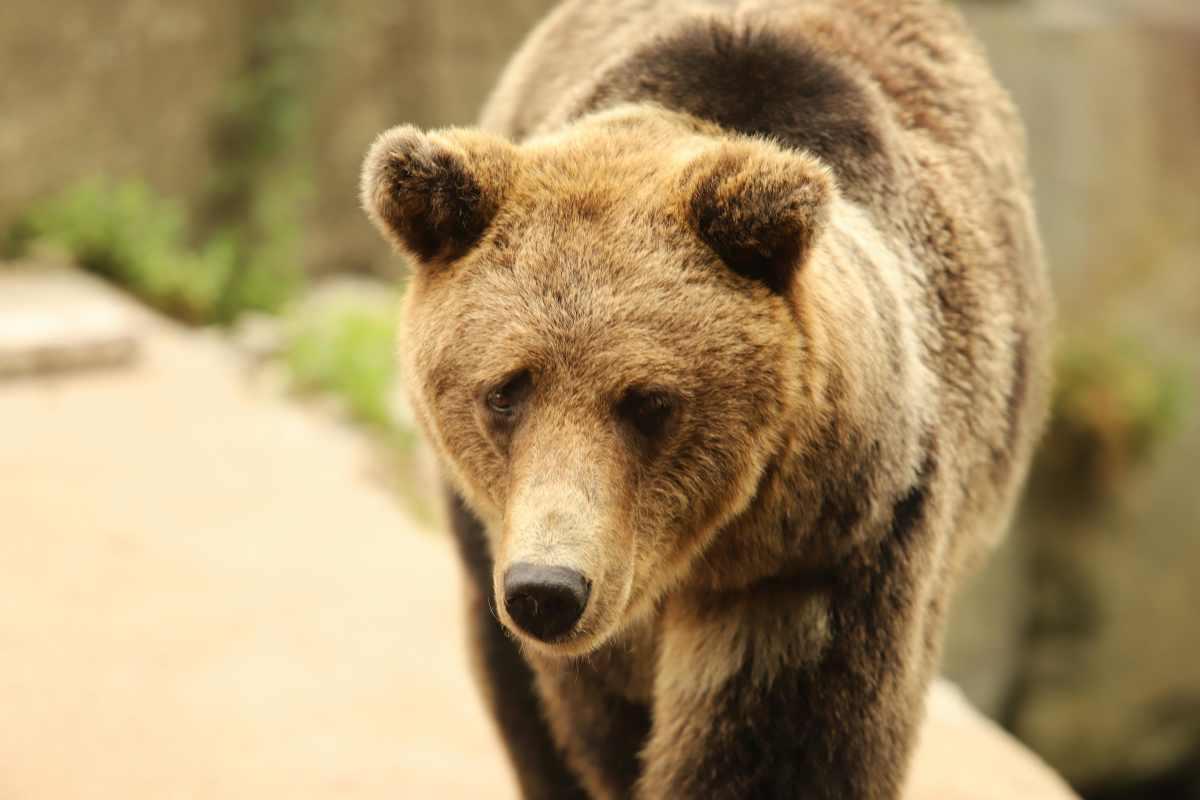
Portrait of a bear
Typically, grizzly bears in Yellowstone National Park hibernate throughout the winter. Male grizzlies come out of hibernation sometime between mid- to late March, while females with cubs venture out even later, in April to early May. Grizzly bears spend the entirety of winter in caves to avoid the extremities of the season. However, such early arrivals could suggest that the winter in the area is steadily becoming warmer. This assertion is backed by data published by the National Park Service (NPS), claiming that the Greater Yellowstone Ecosystem (GYE) has experienced an elevation of 0.31°F/decade in recent times.
The grizzly spotted in January 2026 was captured by wildlife photographer Rob Harwood. He also posted the video on his social media. He spotted the 'January grizzly' at the north end of the park on the slopes of Specimen Ridge. The photographer had heard rumors of this bear and used his knowledge of Yellowstone, along with help from friends, to capture the unique phenomenon on camera. Harwood did not spot any carcass nearby; hence, he could not verify whether the bear was venturing out for food. In his opinion, it seemed to be “wandering.” Also, he could not identify the bear’s sex but believes it could be an adult.
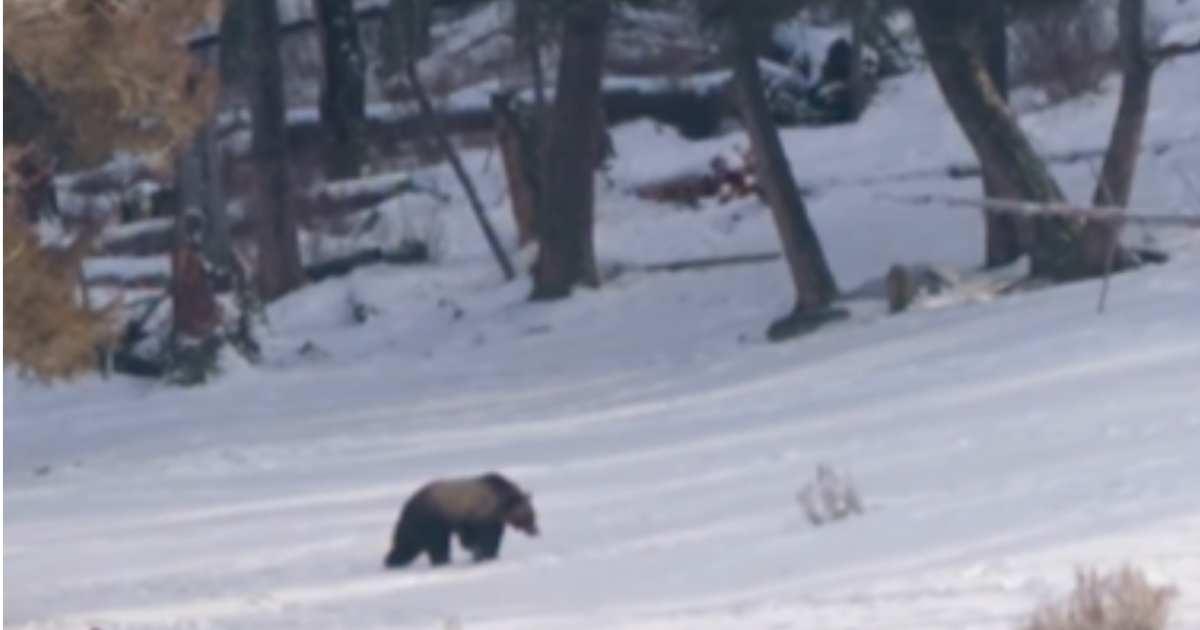
January Grizzly in Yellowstone
Harwood added that the bear was not “especially large.” It implies that the creature may not have been a male grizzly, which is more likely to venture out during odd times. If the assertion is true, then other groups of grizzly bears may have also started to break set patterns. Moreover, experts believe that grizzlies may have started their hibernation period later than usual due to the warmer fall and early winter in 2025 and 2026. The “January grizzly” may be a consequence of this delay.
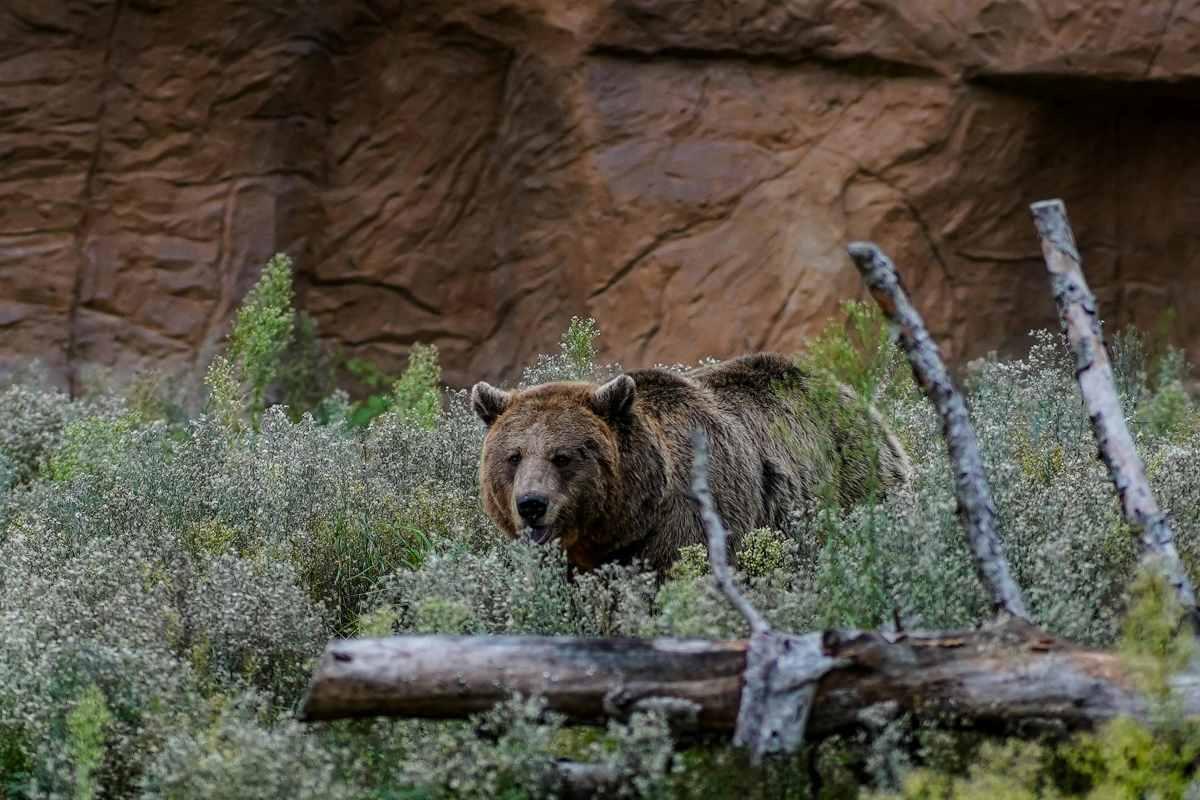
Grizzly bear walking near a wood log
However, experts are not fully convinced that warmer winters are the sole reason behind the venturing of “January grizzly.” The availability of food resources is also one of the major factors behind grizzly bears staying hibernated during winter. “While weather and winter play a role in the timing of denning, the ultimate reason bears hibernate is lack of food, or lack of access to food,” Manen said.
“Bears with access to ungulate carcasses, for example, may remain active well into December. Similarly, first sightings of bears in Yellowstone tend to be bears that have access to a bison or other large carcass of animals that died during the winter,” he added. Researchers are looking for more insights into the “January grizzly” to determine what exactly pushed it out of the den so early in the year.