
A 1,300-Pound NASA Satellite Just Uncontrollably Crashed Into Earth. Where Did It Land?
Published March 12 2026, 7:10 a.m. ET

Illustration of NASA's twin Van Allen Probes orbiting Earth.
On March 11, 2026, a huge satellite came crashing down to Earth after spending nearly 14 years up in orbit. The spacecraft, called Van Allen Probe A, weighed about 1,323 pounds. It originally launched in August 2012 alongside its twin, Van Allen Probe B. The two were sent into space to study the Van Allen radiation belts, which are zones of charged particles trapped around Earth by the planet’s magnetic field. After successfully completing their mission, both satellites were shut down in 2019. Since then, Probe A had been slowly drifting in orbit until it finally reentered Earth’s atmosphere this week.
“The U.S. Space Force confirmed the Van Allen Probe spacecraft reentered the atmosphere at 6:37 a.m. EDT [1037 GMT] on Wednesday over the eastern Pacific Ocean region, at approximately 2 degrees south latitude and 255.3 degrees east longitude,” a NASA spokesperson said, per Space.com. He added that most of the spacecraft was expected to burn up as it passed through Earth’s atmosphere, though some components may have survived the fiery reentry.
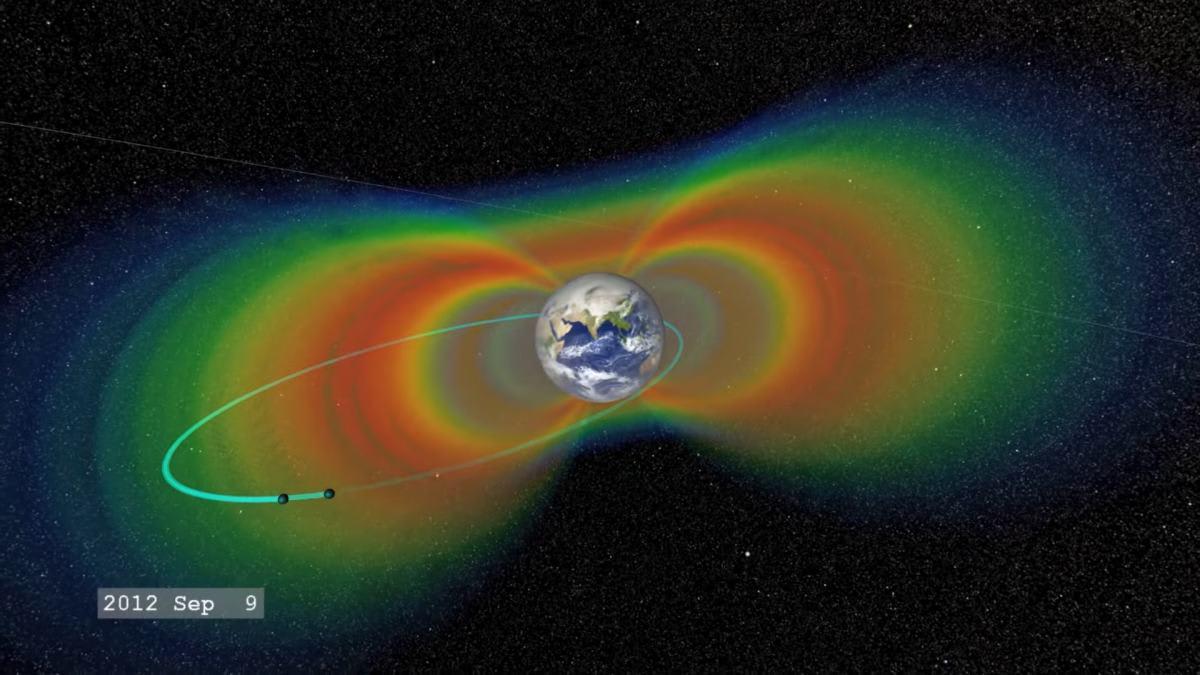
The Van Allen Probes Explore Earth's Radiation Belts
However, the satellite did not just drop on Earth out of thin air. A couple of days earlier, the U.S. Space Force had already predicted when it would likely happen. On March 9, officials stated the spacecraft would probably reenter the atmosphere on March 10 around 7:45 PM EDT, give or take about 24 hours. And that estimate turned out to be pretty accurate. NASA had also made it clear that the risk to people on the ground was extremely low. Scientists estimated there was only about a 1-in-4,200 chance that anyone could be harmed during the reentry. The risk is small because about 70% of the Earth is covered by oceans. So, if any debris survived the fiery fall, it was far more likely to splash down in open water than anywhere near a city.
But the falling of debris is not as uncommon. According to a 2009 report cited by Wired, over 40 years, roughly 5,400 tons of space debris are believed to have survived the intense heat of reentry and returned to Earth in some form. A woman from Tulsa became a victim of such debris back in 1997. When she was out walking in a park, she suddenly noticed a bright flash in the sky. Moments later, a 6-inch piece of metal dropped from above and hit her on the shoulder. NASA said the time and location lined up with the breakup of a Delta rocket stage that had been orbiting Earth for months before reentering the atmosphere. Lottie Williams was not hurt and is the only known person to have ever been hit by man-made space debris.
That might sound alarming, but the chances of it hitting someone are incredibly small. “The odds that you will be hit are one in several trillion, so quite low for any particular person,” Scientist Mark Matney said, per Space.com. A 2011 report by the outlet estimated the overall chance of anyone being injured by falling space debris at about 1 in 3,200, and for any single person, the odds are even smaller.