
33-Year-Old Paraplegic Engineer Becomes the First Wheelchair User to Go to Space
Published Dec. 22 2025, 5:02 a.m. ET

Michaela Benthaus became the first wheelchair user to travel to space in a capsule designed by Jeff Bezos' Blue Origin
"It was the coolest experience," exclaimed Micahela Benthaus as she landed on Earth after an enthralling trip in space that lasted about 10 minutes. As the ivory-colored, dome-shaped craft flanked open its hatch, the recovery team unrolled a carpet on the desert floor of West Texas, southwestern United States. Some staff members ushered hauled the wheelchair for her, that she had left to navigate the remarkable trip to space. Benthaus, a paraplegic engineer from Germany, became the first wheelchair user to travel to space, launching in a capsule designed by Jeff Bezos’ company, Blue Origin.
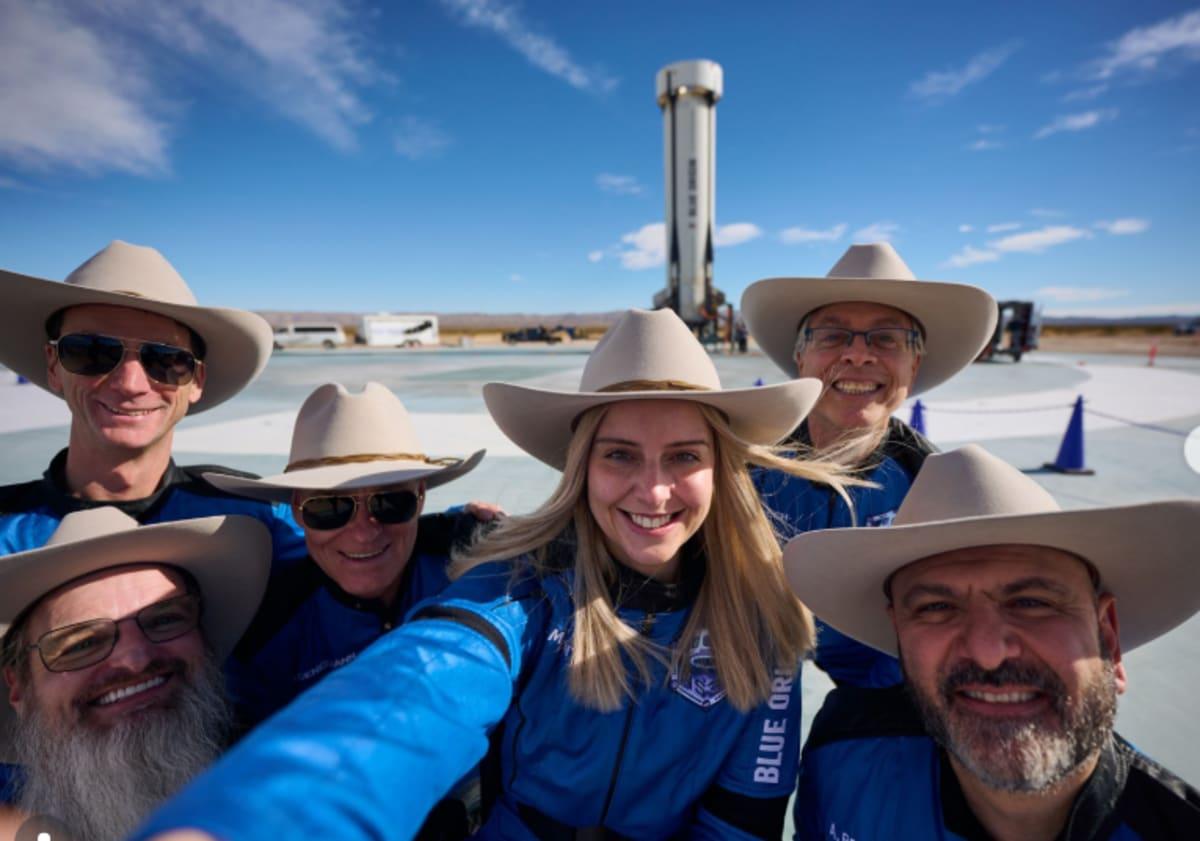
A snapshot from the NS-37 mission, as shared by Blue Origin
When the retired SpaceX executive, Hans Koenigsmann, had first approached Benthaus last year for this space trip, she thought there was some misunderstanding, as she shared with PBS. Benthaus, an aerospace and mechatronics engineer, hadn’t seen anyone like her being allowed to visit the farthest reaches of the cosmos around Earth. “I never really thought that going on a spaceflight would be a real option for me because even as like a super healthy person, it’s like so competitive, right? There is like no history of people with disabilities flying to space,” she had said to The Associated Press. Seven years ago, after getting injured in a mountain bike accident at the age of 26, a spinal cord injury left her at the mercy of a wheelchair.
And she started to believe that her dream of travelling to space would always remain unfulfilled. But as old sages say, life has mysterious ways of bringing to you what your heart truly desires. "I really hope it's opening up for people like me, like I hope I'm only the start," she reflected.
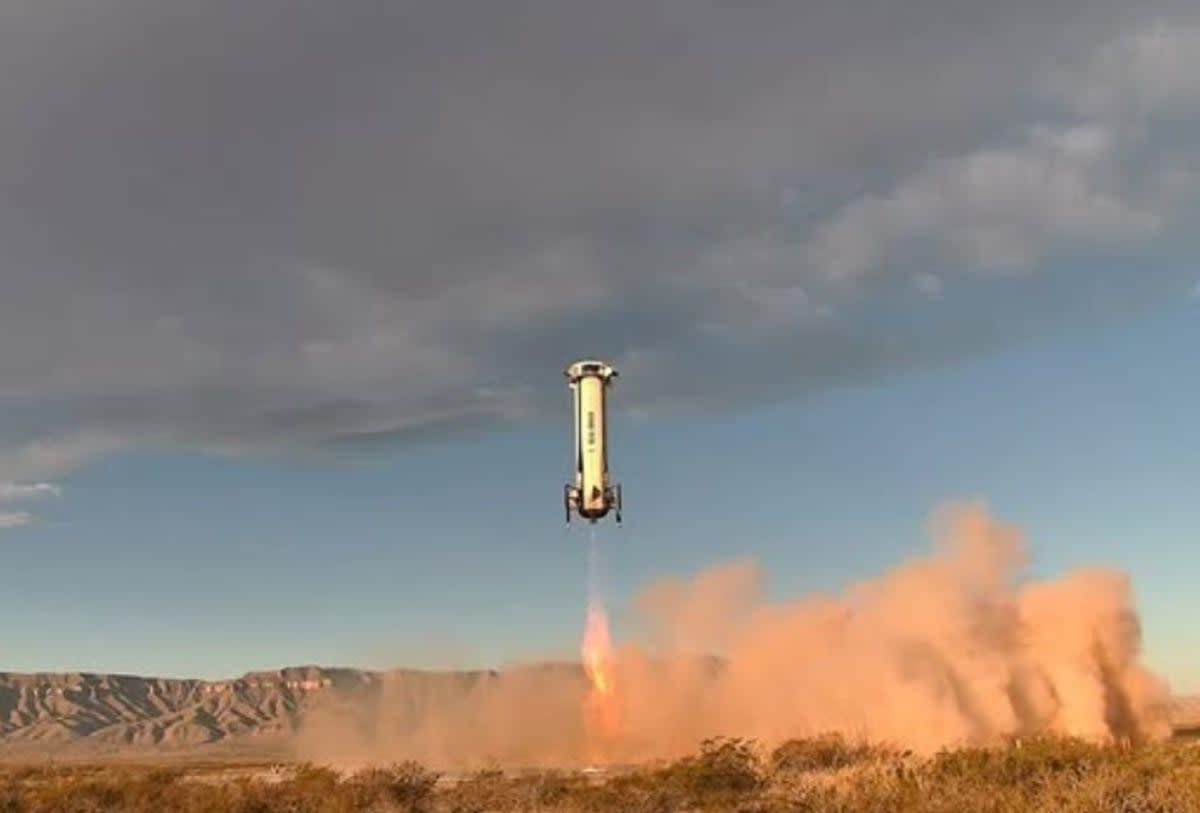
A snapshot from the NS-37 mission, as shared by Blue Origin
On December 20, 2025, at about 8:15 a.m., the space capsule, named New Shepard NS-37, launched from Bezos’ property in West Texas, per DW. Many celebrities have traveled to space with Blue Origin, including the singer Katy Perry and the actor William Shatner. But this is the first time the capsule had a disabled woman as a passenger. But according to the engineers, it didn’t take them truckloads of labor to include her in the trip. Only minor adjustments were required. Jake Mills, a Blue Origin engineer who trained the crew and assisted them on the launch day, shared that the autonomous capsule was designed with accessibility in mind, making it “more accessible to a wider range of people than traditional spaceflight."
During liftoff, there was also a “patient transfer board,” so Benthaus could scuttle between the hatch and her seat. At the launch pad, an elevator was ready to ascend the seven stories to the capsule, which was perched atop the rocket. The spacecraft shot to an altitude of approximately 62 miles in space. For Bezos’ firm, Blue Origin, this was the 16th crewed flight, but first involving a passenger on wheelchair. Previously, though, it has carried passengers with limited mobility and impaired sight or hearing.
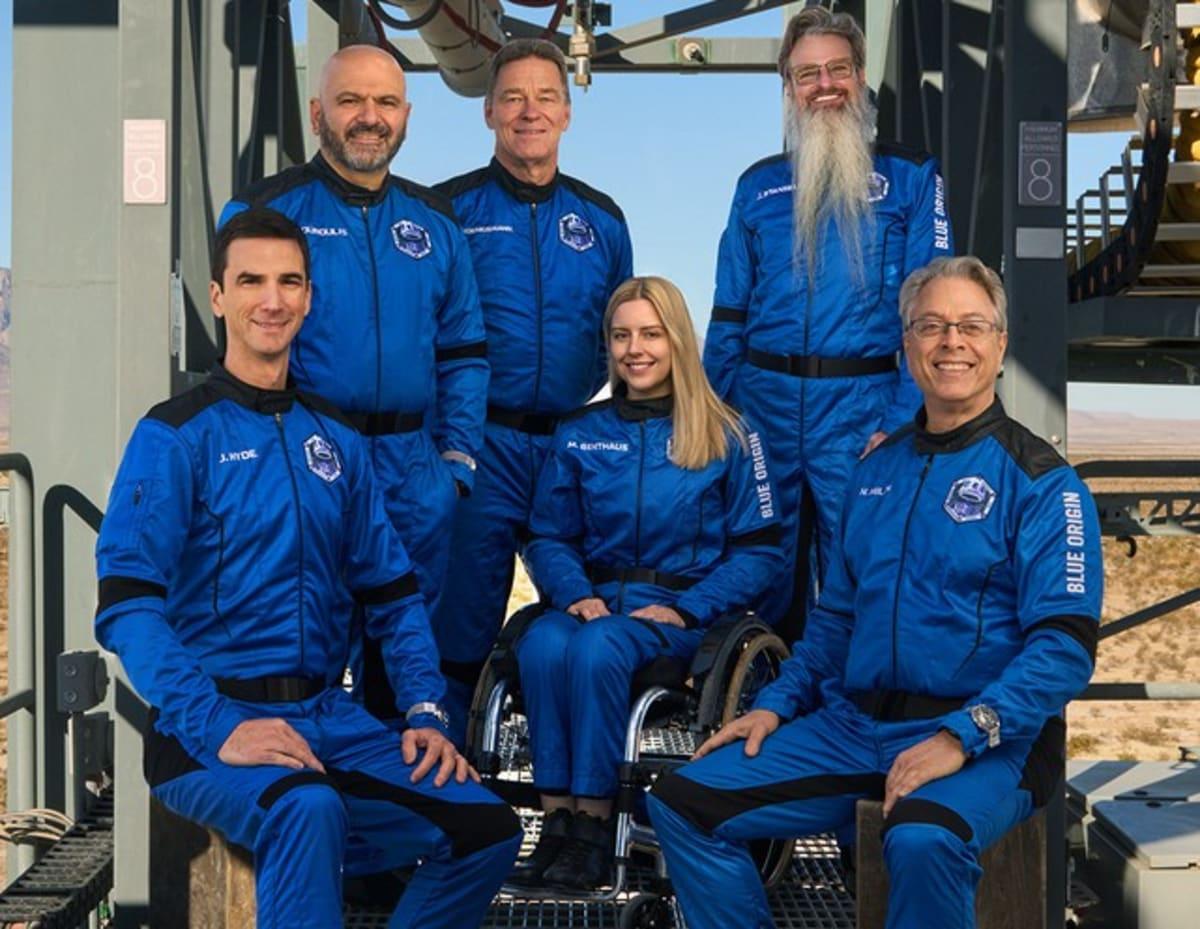
A photo of the crew: Michaela Benthaus, Joey Hyde, Hans Koenigsmann, Neal Milch, Adonis Pouroulis, and Jason Stansell
Benthaus, part of the European Space Agency's graduate trainee program in the Netherlands, was with five other passengers on board the spacecraft, including Koenigsmann. It was Koenigsmann who helped organize and co-sponsored her trip. Moving ahead, Benthaus is now inspiring others to fulfil their dreams and to never stop chasing them. "I think you should never give up on your dreams. There's also sometimes just a low probability that it comes true," she said.