
5,000-Year-Old Frozen Bacterium Could Help Solve an Antibiotic Crisis. But It Comes with Risks
Published Feb. 18 2026, 6:41 a.m. ET

Scărișoara Ice Cave in Romania.
Scientists tested the antibiotic resistance of an ancient bacterium found within 5,000-year-old ice layers. According to the study published in Frontiers in Microbiology, the bacterium called Psychrobacter SC65A.3 was extracted from Scărișoara Ice Cave in Romania from about 82 feet below. After testing the strain against 28 antibiotics, the researchers found that it was resistant to 10 of them, across 8 different classes. The bacterium excavated from ancient ice, having resistance against a range of antibiotic classes, was a promising find. Moreover, analyzing the resistance profile of a bacterium characterized from an ice cave makes this an unprecedented study. This also shows that antibiotic resistance was an ancient adaptation, likely fostered in extreme environments.
“The 10 antibiotics we found resistance to are widely used in oral and injectable therapies used to treat a range of serious bacterial infections,” said Dr. Cristina Purcarea of the Institute of Biology Bucharest of the Romanian Academy, in a statement. “Studying microbes such as Psychrobacter SC65A.3 retrieved from millennia-old cave ice deposits reveals how antibiotic resistance evolved naturally in the environment, long before modern antibiotics were ever used," she added. The researcher was surprised by the ancient bacterium showing resistance against many modern antibiotics and carrying over 100 resistance-related genes. "It can also inhibit the growth of several major antibiotic-resistant ‘superbugs’ and showed important enzymatic activities with important biotechnological potential," she revealed.
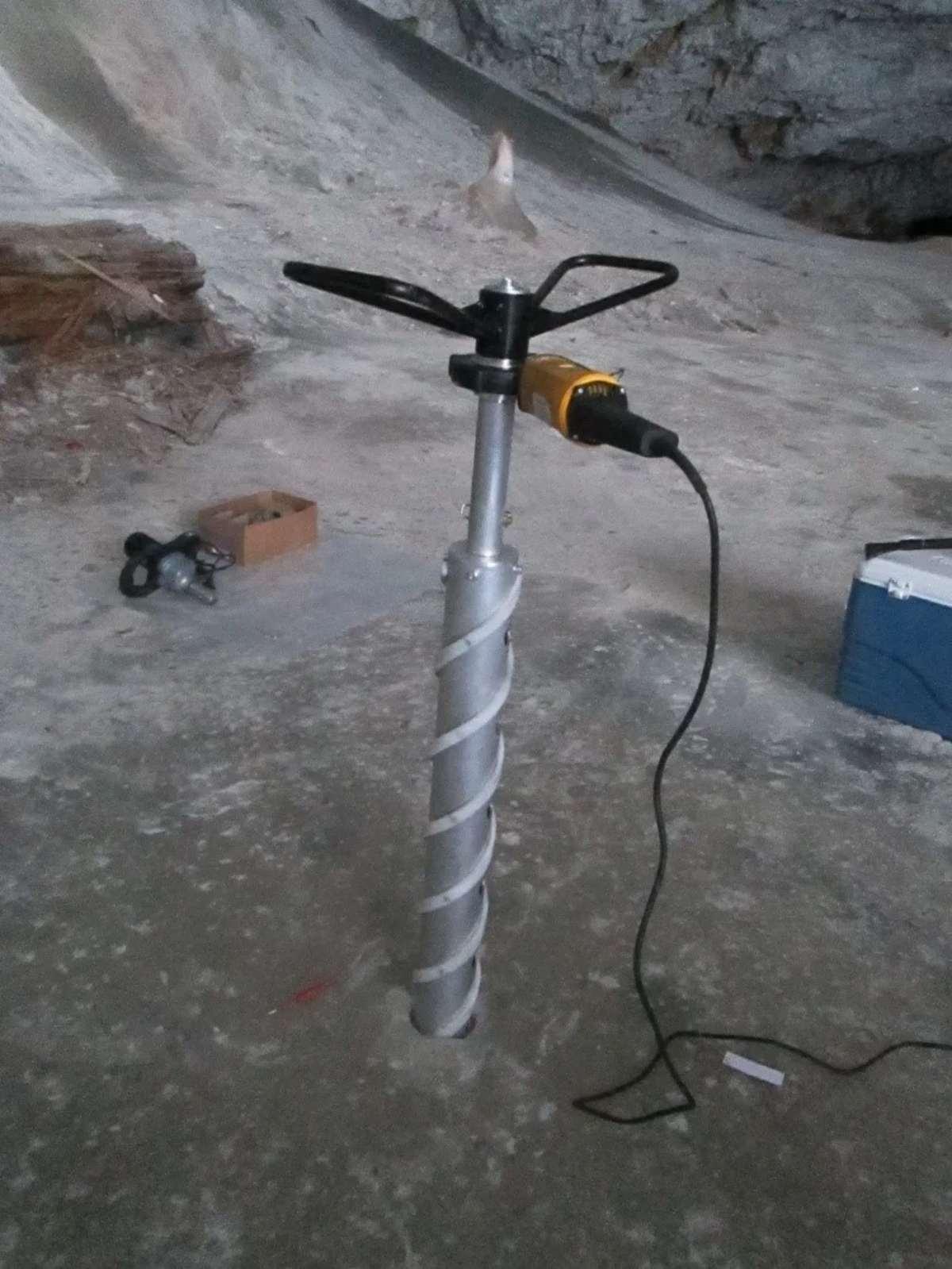
The team drilled an 82-foot ice core from the area of the cave known as the Great Hall.
To extract the bacteria-laden ice layer, researchers drilled an 82-foot ice core from the Great Hall, an area within the cave. The ice segments pulled out from the experiment were immediately placed in sterile bags to avoid contamination. The bags were kept frozen until the samples reached the lab for further analysis. Once there, the scientists isolated various bacterial strains and sequenced their genomes. The result, as mentioned above, highlighted the incredible antibiotic resistance of Psychrobacter SC65A.3.
While it's a remarkable discovery for biotechnology, it has some dangerous downsides as well. If the bacterium mixes with modern bacteria, it can cause resistance against antibiotics that are used to cure major diseases. Psychrobacter SC65A.3 showed resistance to antibiotics used to treat UTIs, infections of the lungs, skin, or blood, and the reproductive system. These include trimethoprim, clindamycin, and metronidazole. Moreover, it resisted antibiotics used for oral and injectable therapies. Scientists fear that if this resistance seeps into the human genome, it can cause more harm than good. “If melting ice releases these microbes, these genes could spread to modern bacteria, adding to the global challenge of antibiotic resistance,” Purcarea said.
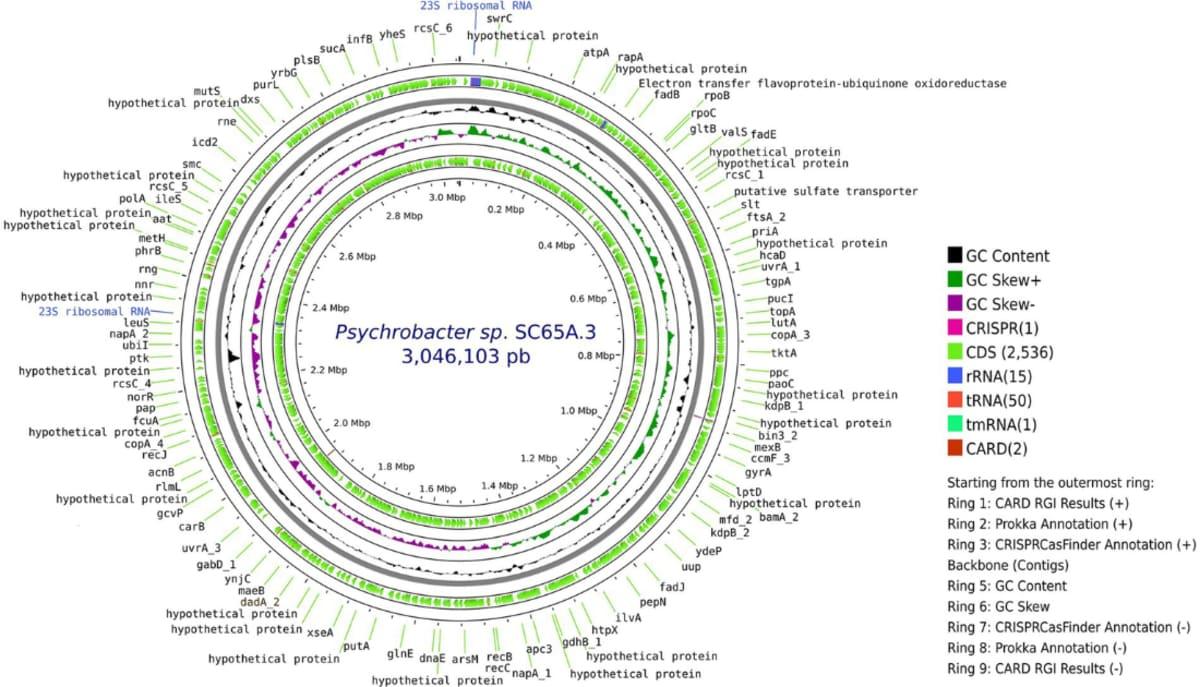
Circular representation of the complete genome of Psychrobacter sp. SC65A.3.
On the other hand, these bacteria produce unique enzymes and antimicrobial compounds that could be leveraged to build more antibiotics, industrial enzymes, and other biotechnological innovations. The analysis of the Psychrobacter SC65A.3 genome revealed that it consisted of almost 600 genes with unknown functions. This discovery highlighted the untapped potential of highly resistant bacteria. The study also found 11 genes with the potential to kill or stop the growth of other viruses, bacteria, and enzymes.
“These ancient bacteria are essential for science and medicine,” Purcarea said. "But careful handling and safety measures in the lab are essential to mitigate the risk of uncontrolled spread," she concluded. “As glaciers melt, ancient microbes may be released back into the environment,” Purcarea told IFLScience. “For resistance to become a public health problem, [however], genes must transfer to pathogenic bacteria and be maintained under modern selective pressures (like antibiotic use). Therefore, discovering microbes with specific defense mechanisms in extreme environments is more of a scientific opportunity to advance medicine than an environmental threat," she explained.