
Yellowstone Visitors are Banned from Making This Particular Sound at the Park
Updated Dec. 10 2025, 5:42 a.m. ET

Mammoth Hot Springs at Yellowstone National Park
Noise is disturbing. Whether a human or an animal, every living organism needs a space where they feel safe and their ears are not constantly assaulted by din and clamor. In Yellowstone National Park, when the skies dress up in twilight or while the night is glowing with a full Moon, packs of timber gray wolves saunter out on the mountaintops and yell out high-pitched howls that carry over far and wide. At this moment, the temptation to howl back at them can be too strong to resist, but by all means, you should avoid making a sound.
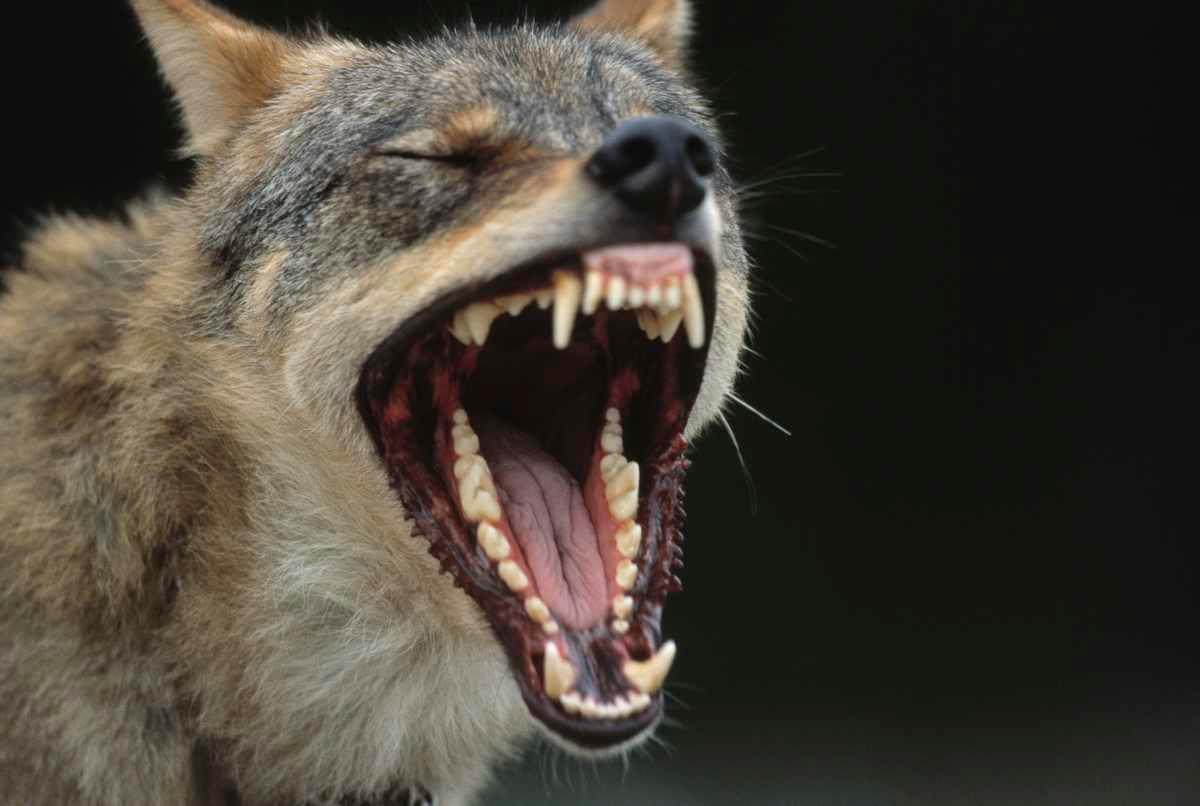
Gray wolf howling
Though utterly hypervigilant, these apex predators are extremely wary of humans. Even the slightest of movements can perturb their peace, triggering a sense of self-preservation. Therefore, Yellowstone National Park's regulations have banned visitors from imitating howling noises to attract the wolves' attention, with violators being fined a fee of $100. Not that your earsplitting howl is too unpleasant for the animal’s ears, but simply because they might not appreciate you violating their protective soundscape.
Wolves have had a tumultuous relationship with Yellowstone. In the 1920s, North America thoughtlessly exterminated them, saying that they needed to create a “civilized” society. After they went away, people realized that they were actually missing the wolves. The growing elk population was making things difficult for Yellowstone. As National Geographic Animals explains, the elk were overgrazing the fields. In 1995, officials reintroduced wolves to the park. Ever since then, Yellowstone’s ecosystem has restored to balance. Now that the majestic predators are back in the game, Yellowstone is proactive in protecting their space and fulfilling their needs.
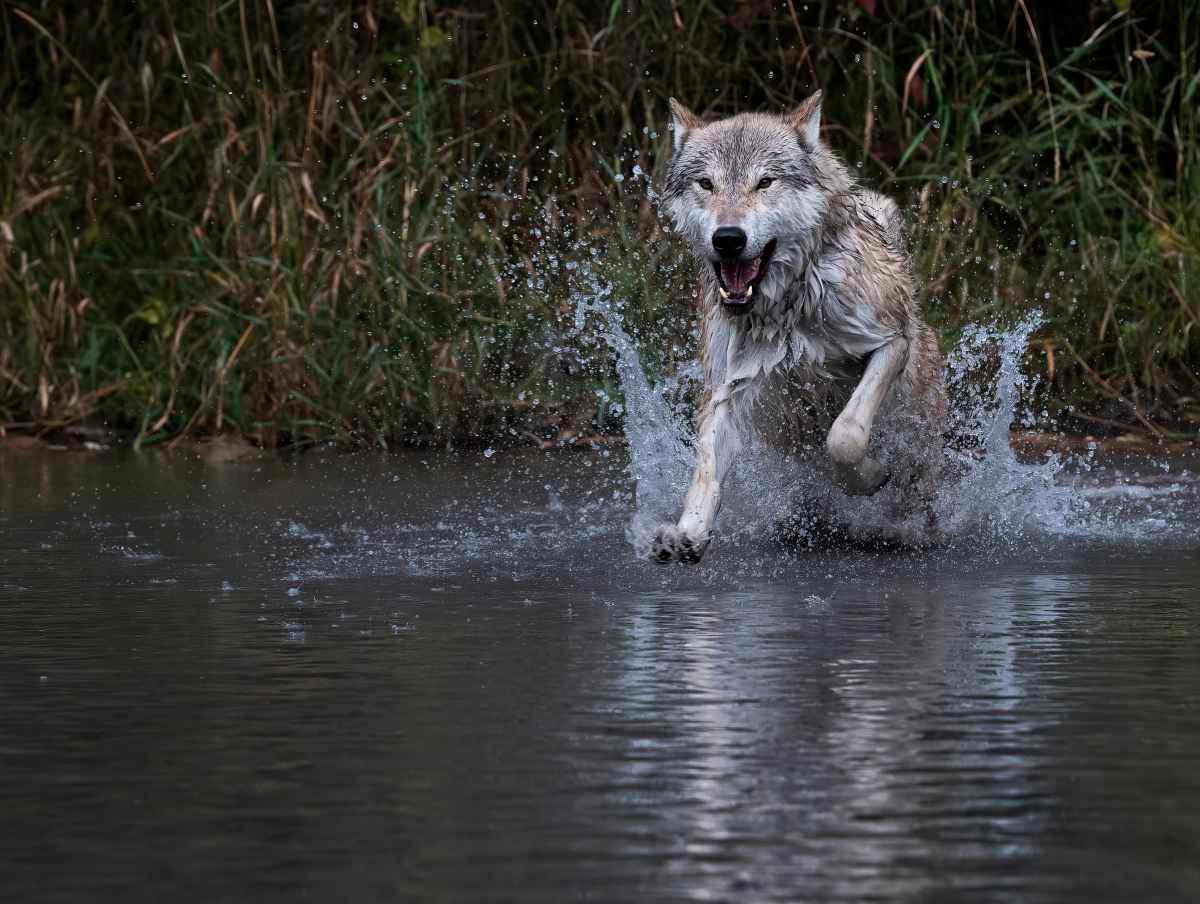
A wolf running in water.
The outlet explains that Yellowstone has put a “howling ban,” cautioning visitors to avoid howling back at the wolves when they hear them howl. This might sound too bizarre for a park’s rulebook, maybe even hilarious, but this ban has actually stemmed from federal law. When watching Yellowstone wolves from a distance, howling back at the animals or making any sound whatsoever can disturb the predators. When hearing the honking of a car horn, the wolf can temporarily abandon a carcass and flee to the security of its pack. Many of them become hyperalert, might even flee the scene, or issue a sound to alert their packmates.
For these predators, howling relates to specific psychological triggers or simply signals of communication they send out to their pack buddies. Howling back at them can be “frightening or intentionally disturbing” for them. In addition to Yellowstone’s regulations banning howling, the U.S. Code of Federal Regulations Title 36 §2.2 prohibits "feeding, touching, teasing, frightening, or intentionally disturbing wildlife."
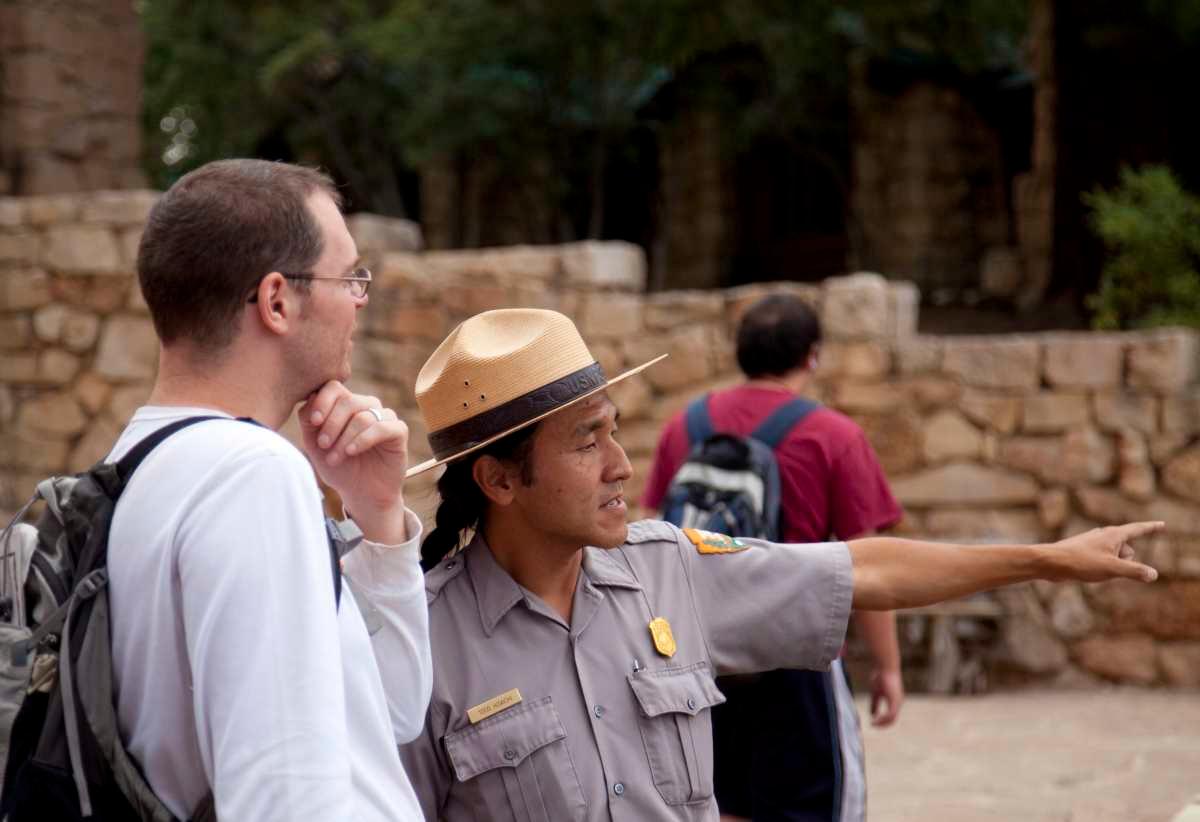
A park ranger is guiding a tourist at the North Rim of the Grand Canyon.
For the national park officials, it’s a recurring challenge. They need to maintain a specific decorum and a crucial balance between entertaining millions of visitors who visit the park each year and preserving the park's precious features, while also protecting wildlife from human intrusion. Whether it is bison, bear, elk, moose, mountain lion, or wolf, every animal has its own space, and disturbing it doesn’t make them feel good. A human violating their boundaries can even get fined. According to U.S. Code of Federal Regulations Title 36, violations of the imposed bans may incur "a fine of not more than $5,000 or imprisonment for not more than six months or both."
Violation is not just by sound. Shining bright lights at them, driving your vehicle too close, or using wolf tracking devices can also disrupt their peace. Ultimately, the rule calls visitors to understand that wild animals are better observed from a distance. Go too close, and they might show you that they are better at being wild than you are.