
An Active Geyser in Yellowstone National Park Has Gone Quiet — and Experts Are Not Sure Why
Published Dec. 9 2025, 2:05 a.m. ET

Tourists gather to watch a geyser eruption at Yellowstone National Park.
The tallest active geyser in the world sits in Yellowstone National Park's Norris Geyser Basin. The geyser that once erupted steaming-hot water hundreds of feet into the air has suddenly gone silent. Scientists have dug deeper into this mysterious pause, but the reason seems inconclusive. The Steamboat Geyser was most active between 2018 and early 2023, erupting about 165 times in the period. However, according to reports, the geyser has now entered a state of stagnation. Although there have been two eruptions in 2025, no movement has been noted in more than 230 days. Mike Poland, a geologist and scientist-in-charge at the Yellowstone Volcano Observatory, has claimed that the stagnation of Yellowstone's geyser is different than the usual silent periods.
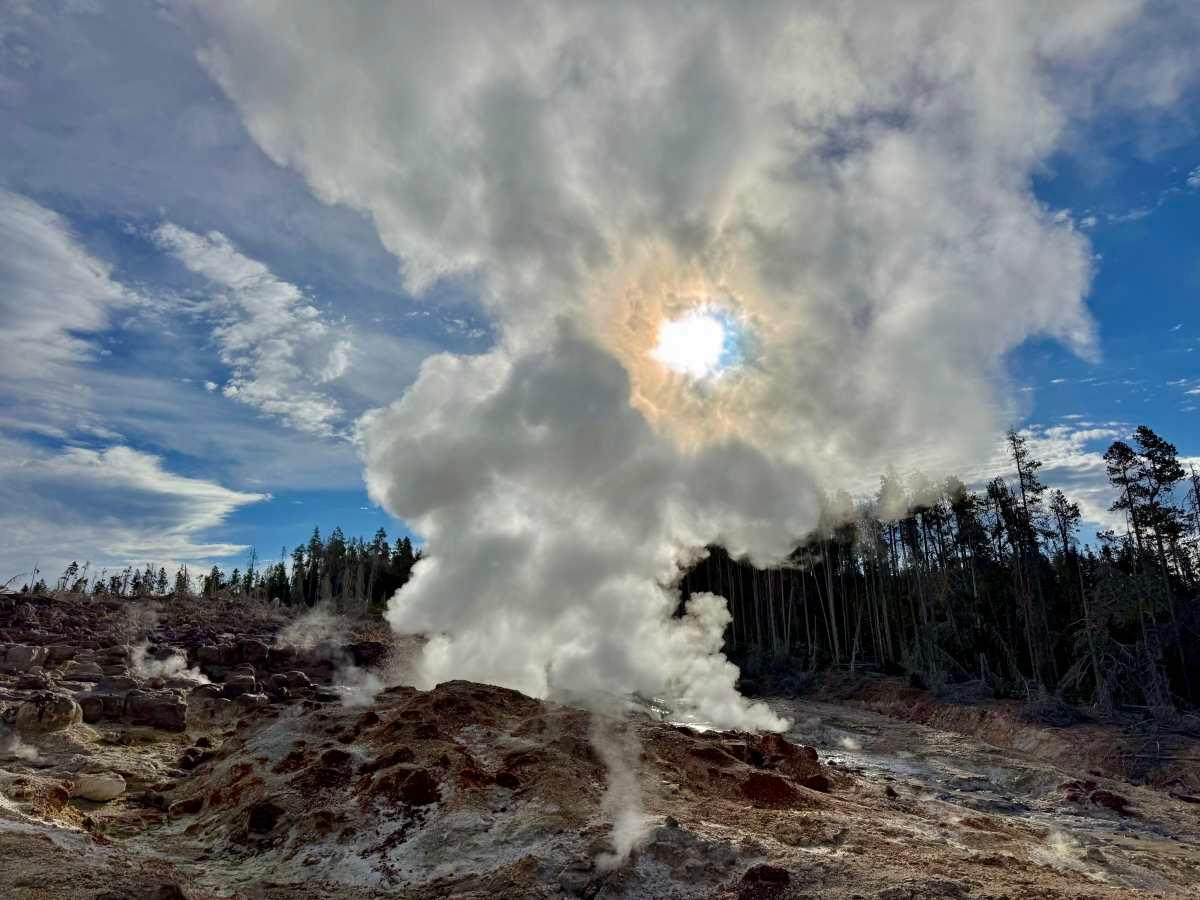
Steam erupting from the Steamboat geyser in Yellowstone National Park
“In the past, we would see a buildup of minor activity that would culminate in a major eruption. Now, we’re not seeing those minor eruptions lead to anything,” Poland told Cowboy State Daily. "There’s a period of minor activity, then it might go quiet for a while, then a period of minor activity, and it’ll go quiet again," he added. The scientist has listed various possible reasons behind the pause in the eruption. The geyser vents could be clogged due to mineral precipitation, or the heat source of the geyser may have migrated elsewhere. However, he and his team were unable to clearly determine the actual cause behind the geyser's change in behavior. “It’s still an active system, but it’s broken the pattern that it had when it was actively erupting," he revealed.
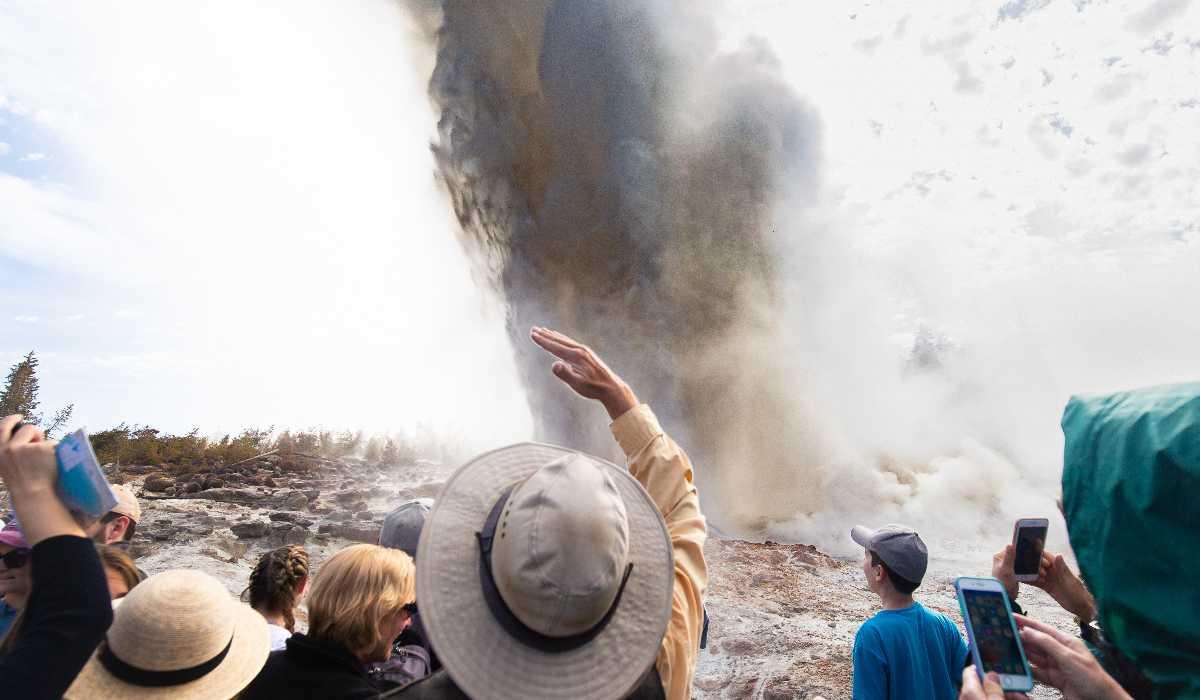
A crowd of people witnesses the eruption of Steamboat Geyser. (Image Source: Getty Images | Tara Kaestner
The recent study further confirmed the unpredictable nature of the Steamboat Geyser. National Park Service (NPS) records dating back to 1878 show that the world's tallest geyser has been anything but predictable. It experienced an extremely active phase between 2018 and 2023 (32 times in 2018, 48 times in 2019 and 2020, 11 times in 2022, and 9 times in 2023), but before that, the geyser had remained silent for years. The uncertain nature of the Steamboat is completely in contrast to the behavior of Yellowstone's more famous geyser, Old Faithful, which has a periodic eruption rate and lasts about 90 minutes every time. Although researchers couldn't figure out the definitive reason behind the sudden stagnation of the Steamboat Geyser, history says that this isn't the first time.
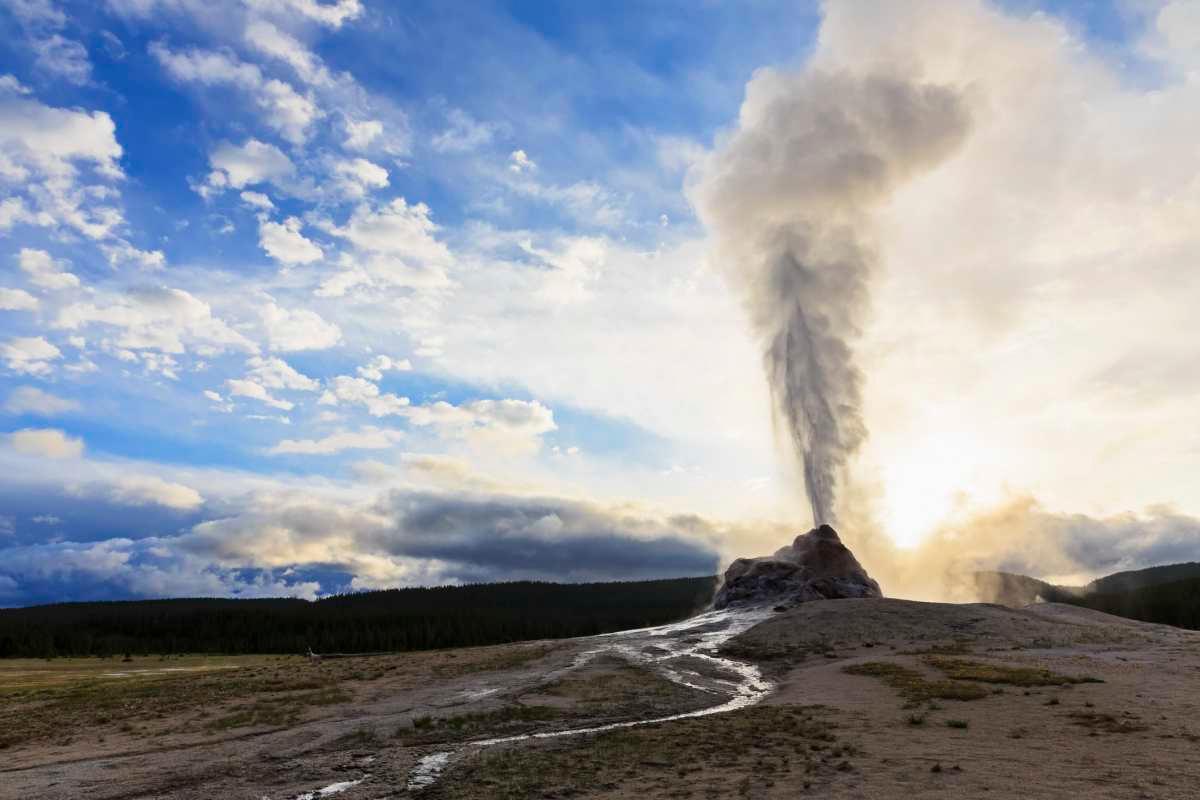
Fountain geyser erupting into billowing steam
The geyser didn't majorly erupt for 50 years straight between 1911 and 1961. Again, between 1991 and 2000, there was an 8-year-long stagnation. A similar period occurred between 2007 and 2013 (6 years without eruption). These instances show that the geyser's eruption rate hasn't been stable, and it's not easy to predict the next eruption. Although there's still the question of what causes the pause, it seems to be an inherent nature of the geyser. Poland explained that after a long period of eruption and high activity, they “basically go to sleep.” But the geyser wouldn't be considered dormant because active steam continues to rise through the vents. "Steamboat might erupt within the next few days, but now we know that using the pattern that indicated an imminent major eruption isn't going to be possible anymore," Poland said. "It's unpredictable, but that's its normal pattern," he added.