
Yellowstone National Park's Winter Season Begins Next Week — What You Need to Know
Published Dec. 11 2025, 4:06 a.m. ET

Woman walks on a snow-covered boardwalk in Yellowstone with two kids.
With the peak of winter approaching, Yellowstone National Park settles into a tranquil quietude. Except for the whispers echoing from the small number of visitors, everything plunges into a meditative mode. With limited cell phone connectivity and no honking of car horns, Yellowstone emerges like a fantastical Disney poster, waiting to be witnessed by those who come despite the stinging cold. This year, the park recently announced that its official winter season will begin on Monday, December 15. Heavy snowfall has blocked most of the locations, but some of them will remain open for the visitors—the illustrious Mammoth Hot Springs, for instance.
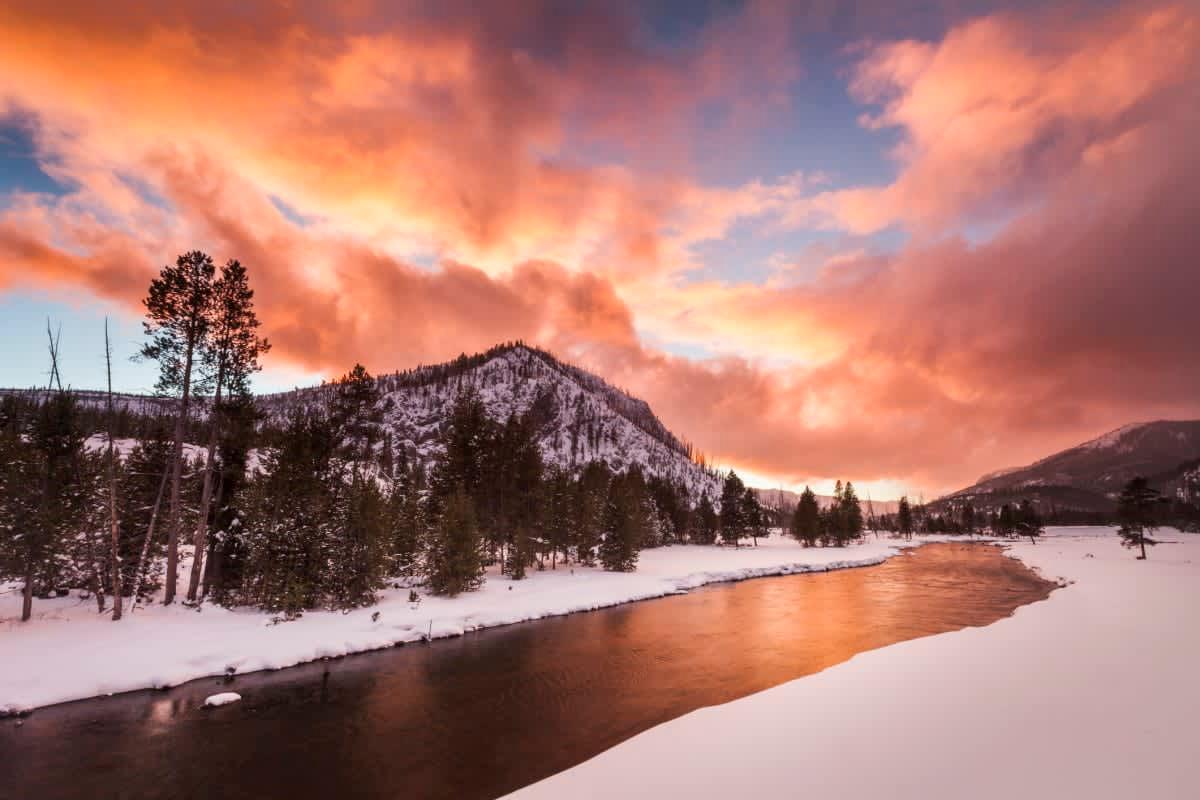
Fantastical landscape of Yellowstone glowing orange and white at sunrise
The howling snow-carrying winds of winter turn Mammoth into a canvas that makes you think of magical worlds and fantasy islands. Everything slows down, and therefore, every little element that is there to see materializes in full spotlight. Cascading travertine terraces spill down from the hillsides, backdropped by a towering cluster of mountains dusted with snow and peppered with dozens of spiky pine trees. The pines, though scarred by the blazing spring waters, rise to the mountaintops, lifting steaming mist. Bison and bighorn sheep scramble down to lower elevations to dig up snow and pluck out little scrubby plants or something to eat. Around the gift shops, a visitor or two can be seen with fresh hot dogs wrapped in their hands.
Along the Madison River, yellow snow coaches can be seen, their rolling wheels leaving trails of tire marks on the snow-covered roads. The pack of snow, though, differs from road to road. This winter, the park said, visitors can travel most of the roads from the West, South, East, and North entrances by “commercially-guided snowmobiles and snowcoaches and via non-commercially-guided snowmobile access program,” from mid-December until mid-March.
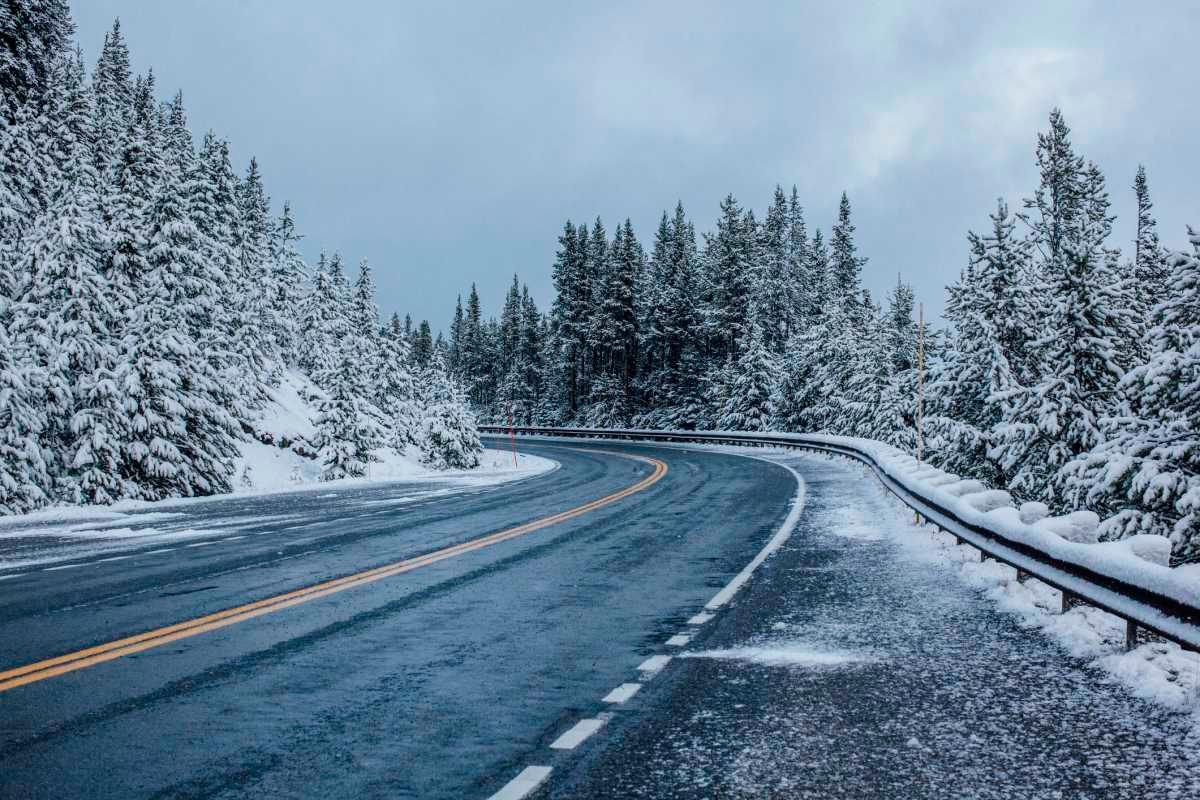
Road covered in snow during winter at Yellowstone
The park also shared a list of guidelines instructing the visitors to stay cautious while exploring Yellowstone’s features amidst the whipping eddies of wintery breeze. First things first, anticipate road closures. Most roads will remain closed to vehicles during the winter. The only roads open year-round are the ones snaking between the North Entrance in Gardiner and the Northeast Entrance in Cooke City or Silver Gate, via Mammoth Hot Springs, Tower, Junction, and the snow-capped Lamar Valley.
During the winter months, the park wakes up to a sunrise that brings new surprises each day. Brown-green mountains disappear behind the blanket of milky white snow that glitters in the golden daylight. Roads that only displayed the ashy palettes of charcoal, cobblestone, or asphalt suddenly vanish beneath thick cladding of icy white that can cause cars to slip or tumble onto the side. The park, therefore, urges visitors to check the road status map before bringing their vehicle into the park. And, if you bring a vehicle, drive cautiously.
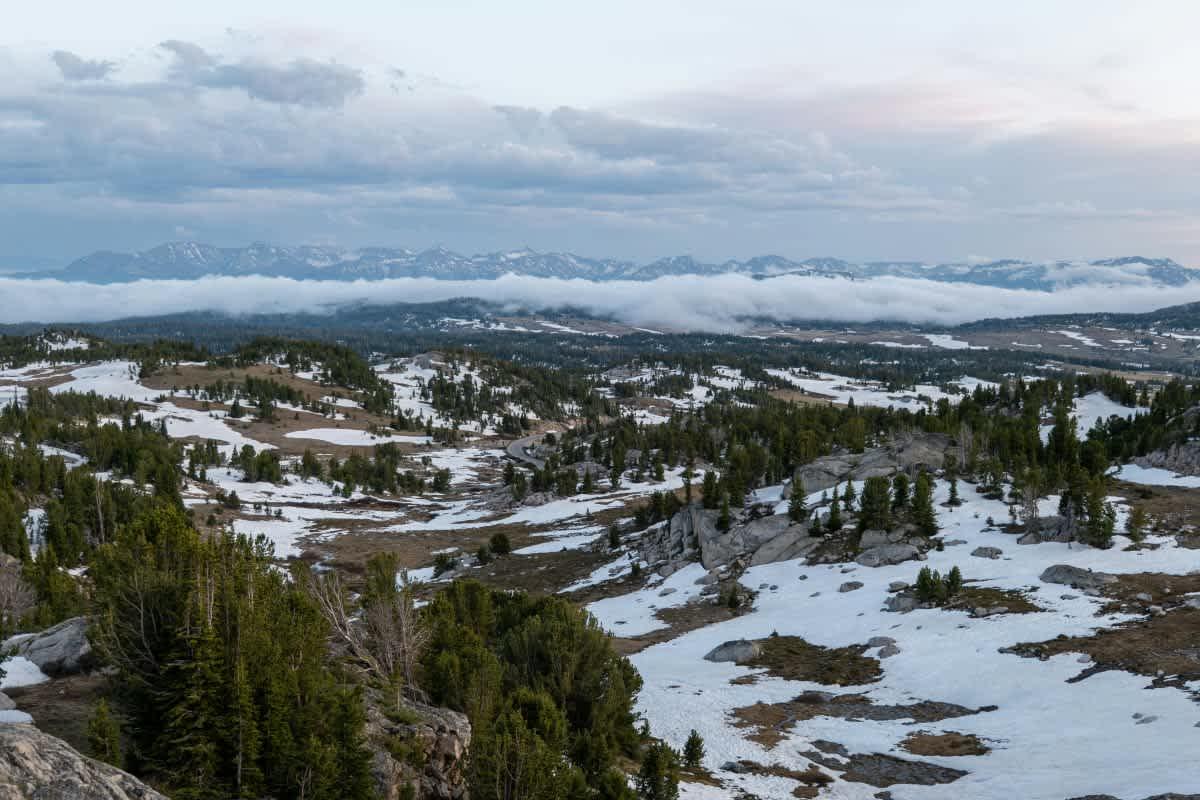
Snowy landscape in Yellowstone National Park (Representative Image Source: Pexels | Mark Direen
Like roads, most facilities are also shut down during the winter. If you are planning to visit the park’s stores, restaurants, warming huts, lodges, or visitor centers, check the operating dates in advance. Lodging and camping are also limited, but Old Faithful Snow Lodge and Mammoth Hot Springs Hotel remain open. Another tip is to watch wildlife from a distance. Yellowstone's animal residents, like ravens, bears, foxes, and coyotes, are notoriously intelligent.
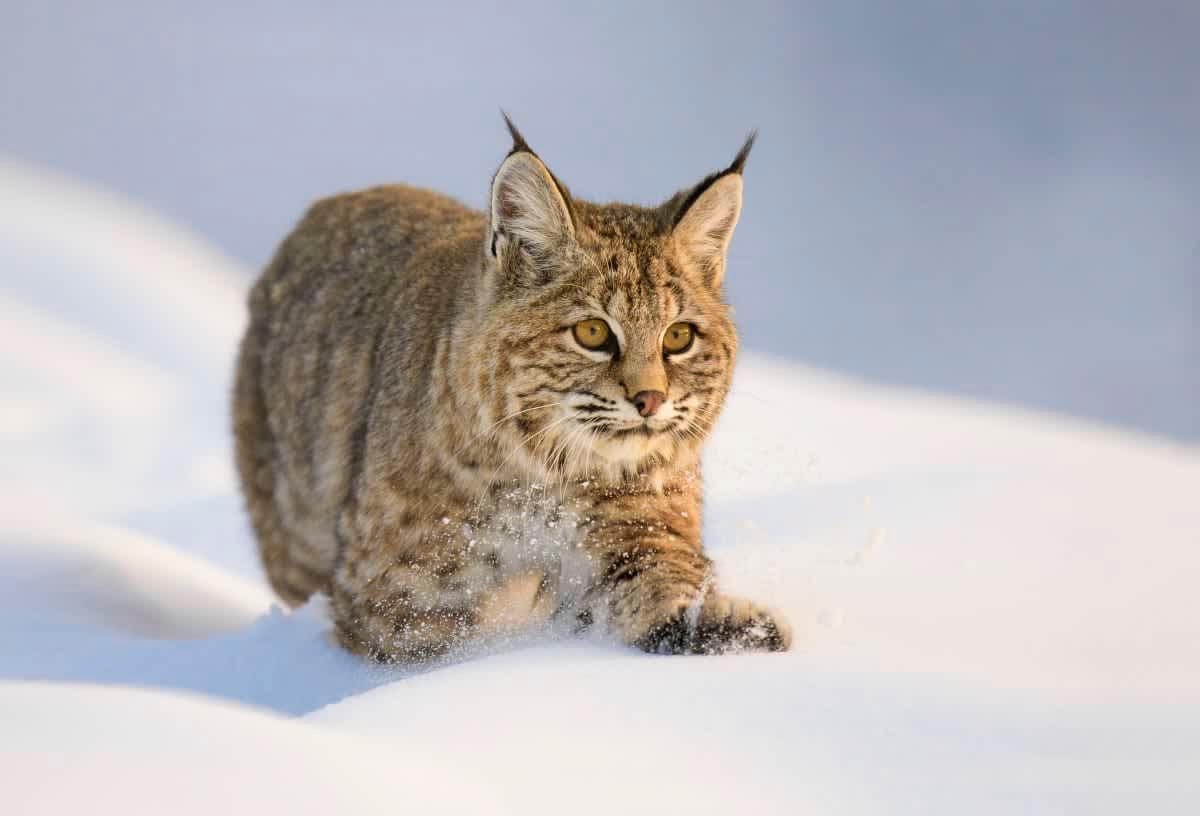
Bobcat in snow-capped land in Yellowstone
Park’s rangers also caution visitors to bring bear spray in case they run into a bear. During winters, the furry flesh of most animals is powdered with flakes of snow, which sometimes makes them invisible to a distant observer. If you are visiting a thermal basin, hot spring, or geyser, you might also find these animals lurking around there to catch up some steam. So, stay on boardwalks. The park advises people not to go too close to the hot water as the snow on the boardwalks might cause them to slip and burn.