
Loneliness Isn't Punch, The Monkey's Only Problem. His Zoo's Poor Living Condition Is Now Flagged
Published Feb. 25 2026, 4:16 a.m. ET

Punch, the baby macaque with his stuffed toy
Punch, the baby macaque, has taken over social media with his heartbreaking story. Abandoned at birth, the monkey found comfort and security in an orange, wide-eyed orangutan plushie. Whenever he gets bullied by older macaques, he clings to the stuffed toy and treats it as a surrogate mother. However, Punch’s story is now part of a bigger conversation, involving the conditions of zoos and animal welfare. He is housed at the Ichikawa City Zoo in Japan, and it is raising questions about the facility’s barren enclosure. The rising visitor crowds are adding new stress to an already vulnerable animal.
Viral clips of Punch from the zoo have been circulating on the internet, and people cannot help but wonder about the type of conditions he and the other macaques have been living in. Critics and animal welfare advocates have pointed out the very apparent lack of a stimulating environment for the macaques to develop natural social behaviors. After taking a closer look at videos and photos of the enclosure, many viewers began pointing out what they described as a noticeably bare habitat with limited greenery and very little natural shade. The landscape is dominated by large sections made up of rocks and concrete.
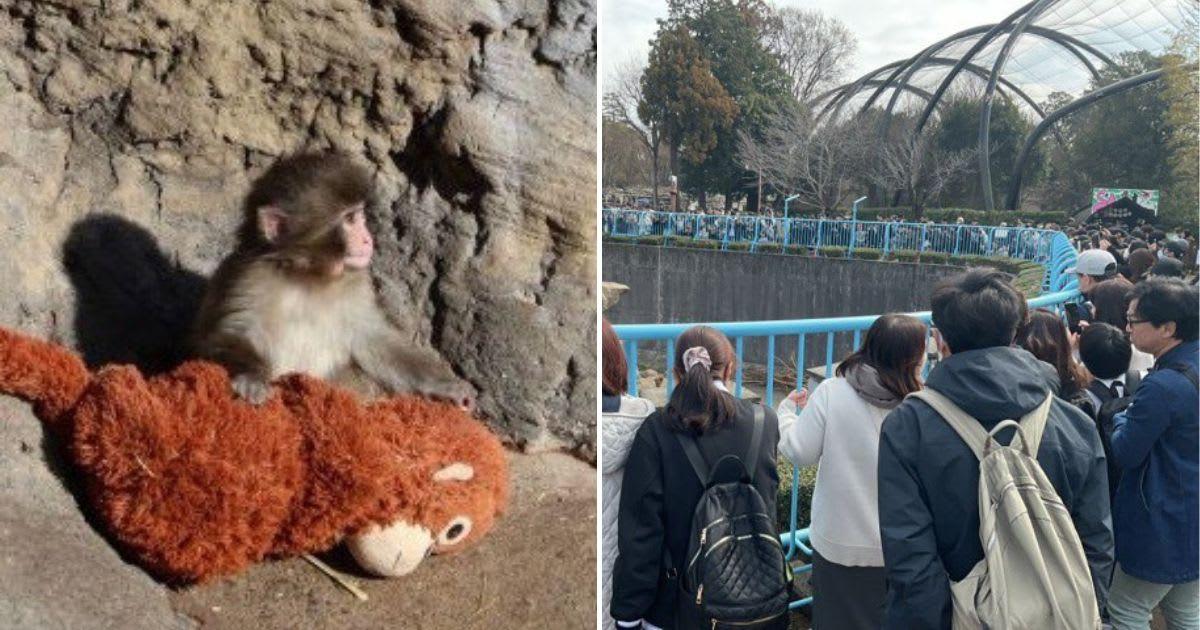
Large crowds gathering to see Punch
Moreover, the zoo also lacks visible enrichment features such as climbing structures and water elements like a pond. Such features are especially important for Japanese macaques as they rely heavily on interaction, exploration, and social learning within their groups. But those challenges have become even greater for someone like Punch. Because he was raised by humans after being rejected by his mother, he missed out on early bonding. It typically helps young macaques understand social boundaries and behavior inside a troop.
On the other hand, Punch’s growing virality is not helping either. The number of visitors at the zoo surged after his story spread worldwide, drawing crowds eager to see the internet-famous monkey in person. Even though the officials of the facility later introduced guidelines, the constant noise, cameras, and attention could add stress for a young animal already trying to adjust socially. Online discussions and social media posts have turned Punch’s story from a sad story into a broader conversation about captive animal environments.
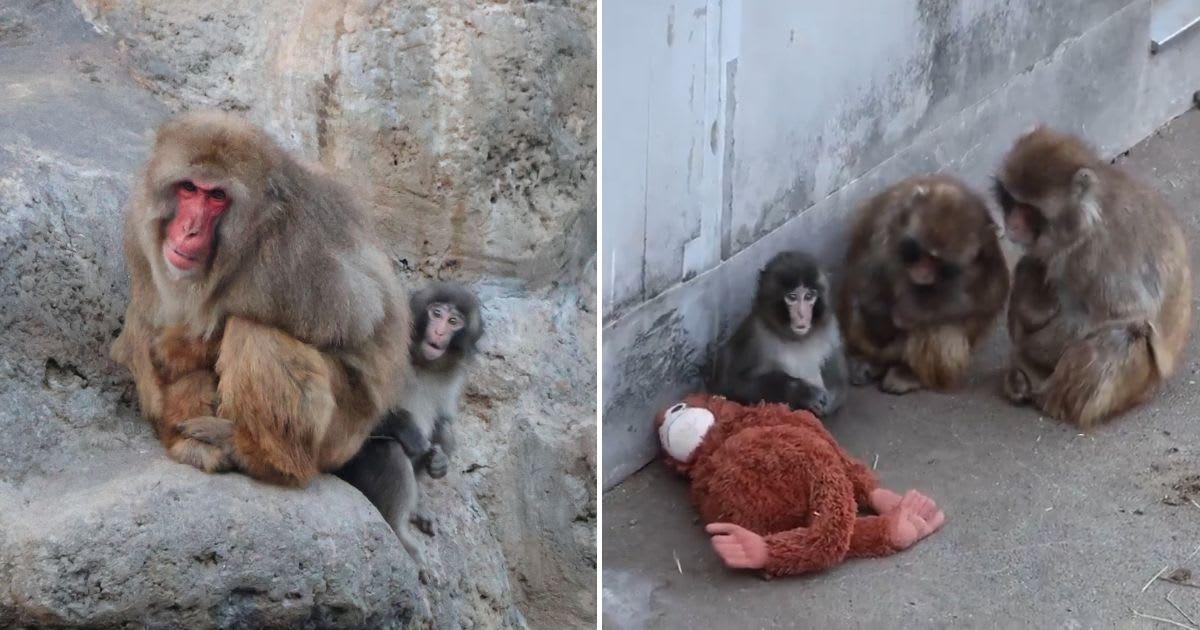
Punch with other macaques in the zoo
The concerns about how Punch is being raised did not just come out of nowhere. Animal activists have been criticizing Japan’s captive animal industry for years. Zoos and animal cafes tend to focus more on visitor experience than on creating natural living spaces for animals. Animal cafes have been part of the country since 2004 and it became extremely popular among citizens and tourists. However, many hygiene issues came up after a survey done by World Wide Fund for Nature (WWF) Japan and Hokkaido University. Reports from whistleblowers also point out that the lack of proper care led to the death of many animals.
People are also reminded of Hanako, an Asian elephant who lived for decades at Tokyo’s Inokashira Park Zoo. Often referred to as Japan’s “loneliest elephant,” Hanako spent more than 60 years alone in a mostly concrete enclosure. Ichikawa City Zoo has maintained that Punch’s experiences with other macaques are normal social behavior, and the rough interactions are part of how young monkeys learn hierarchy. Officials have also said Punch is gradually adjusting and continues to be monitored by caretakers. Still, people remain divided between trusting the zoo’s assurances and questioning the environment in which he is growing up.