
A Cannibalistic War Is Brewing Among Pacific's Killer Whales. And Biologists Just Found Proof
Published March 5 2026, 4:06 a.m. ET

Researcher Sergey Fomin found orca fins covered in bite marks on Bering Island in 2022 and 2024
Inside the unforgiving, violent rollers of the North Pacific waters, Resident killer whales and Bigg’s killer whales are those two neighbors that prefer to avoid each other and keep a distance. While residents have strong family structures where individuals live in tight-knit groups, leaving only a few hours to mate before returning, Bigg’s whales swim in loosely knit units. Let alone casual interaction, socialization, or interbreeding, the two groups would rather not confront each other.
But in a report published in Marine Mammal Science, researchers propose that this may not be true. There, in fact, is a ferocious brawl erupting between the two. Blood-spattered orca fins are scattered all around. Vicious killer whales are aggressively launching a cannibalistic civil war against the other species. Are they just hungry, or is there another reason? That’s a mystery to be solved.
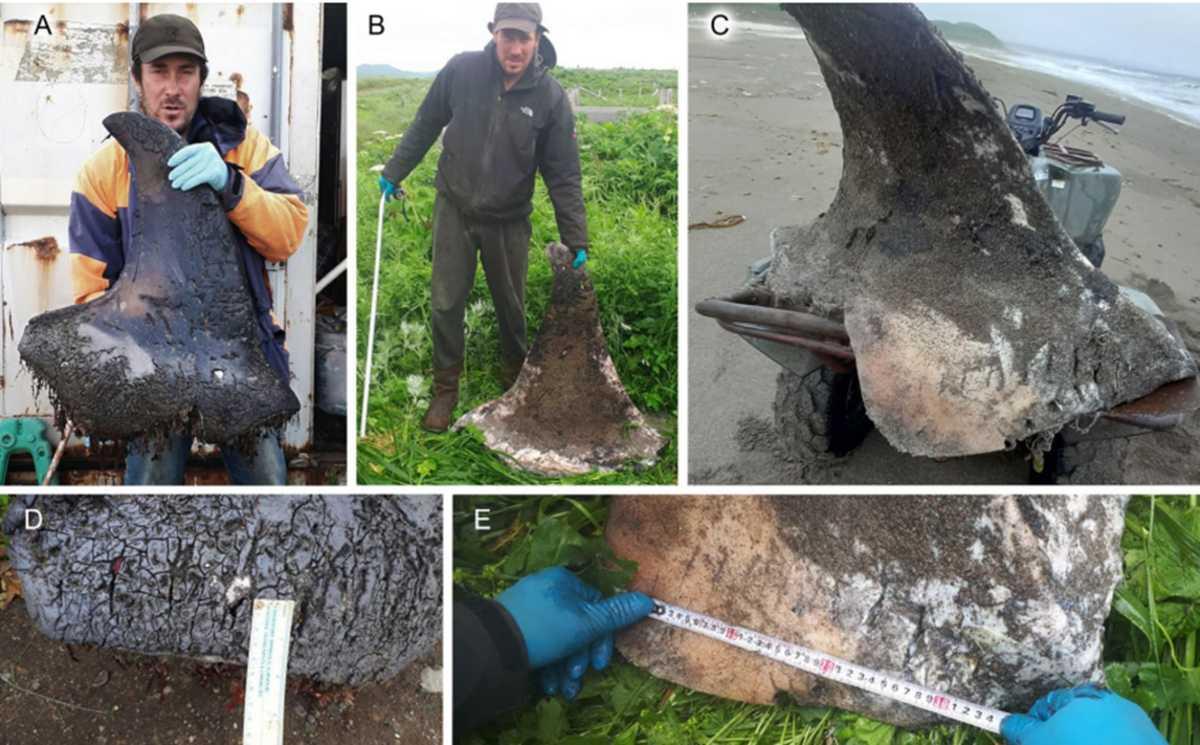
Killer whale dorsal fins found in 2022 (A and D) and 2024 (B, C, and E). (A and B) general appearance, (C, D, and E) close-up views with visible scars from killer whale teeth.
The bloody violence came to attention for the first time in August 2022 when co-author Sergey Fomin noticed an orca fin lying on a beach on Bering Island. The fin was badly bloodied with tooth marks scratched into it. It wasn’t something unusual to find the blood-covered fins washing up on the shore, but from what Fomin knew, these fins usually belonged to either Baird’s beaked whales or minke whales that were killed by Bigg’s whales. An orca's fin was unexpected. The surprise amplified when he found a second orca fin in the summer of 2024. Something fishy was going on in the waters.
Lead author Olga Filatova, a whale researcher at the University of Southern Denmark, suspected that there was a pattern showing up in the fins. Typically, the tough fins would prevent the predator from eating the muscle and blubber under them, so killer whales discard them. If it were just aggression, they wouldn’t bother to tear off the fin. This suggested that, beneath the churning waves, a brutal clash was playing out between the two deadly species.
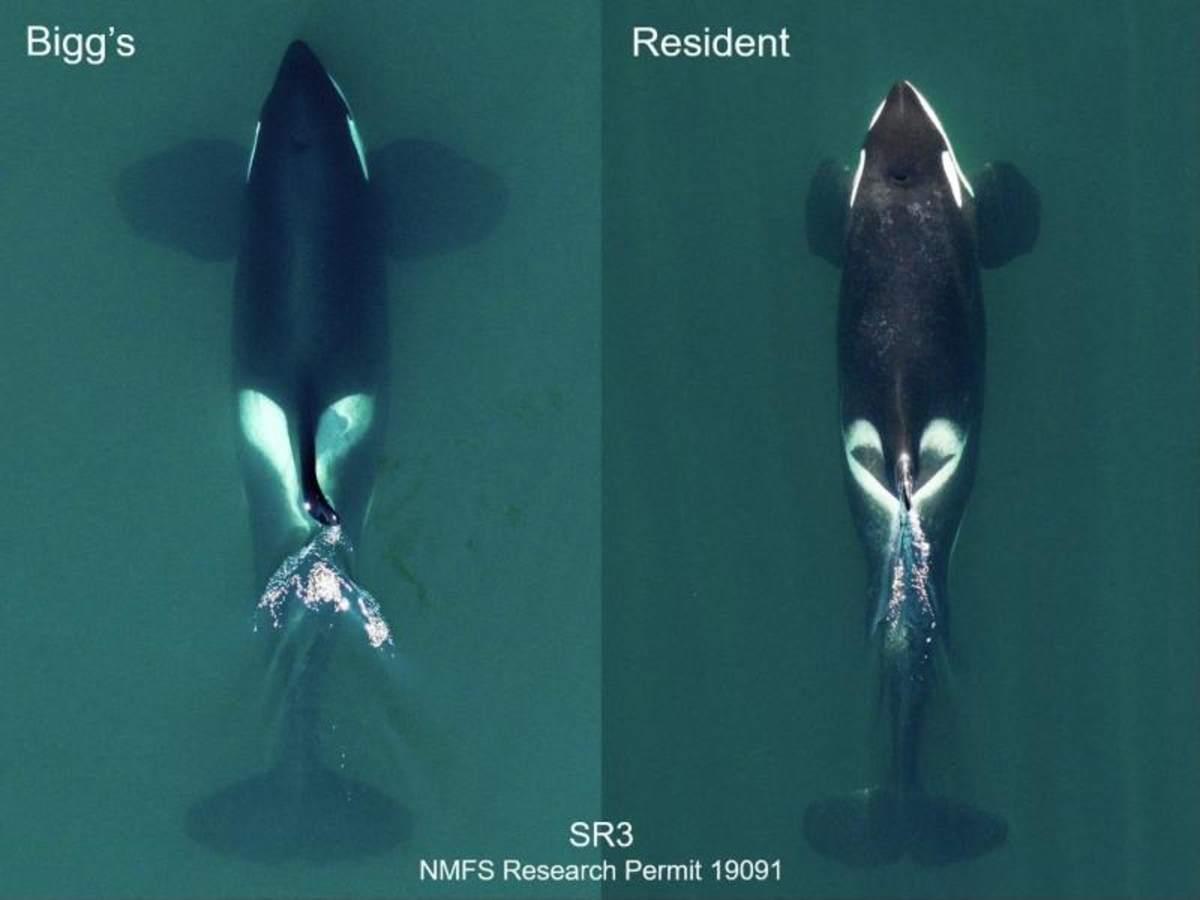
Aerial images comparing the sizes of adult male Bigg’s and Resident killer whales, both taken in the Salish Sea off southern Vancouver Island. (Image Source: US National Marine Fisheries Service (NMFS)/John Durban and Holly Fearnbach)
It was, at first, shocking. Cannibalism, among these two species, is extremely rare, if at all. One documented evidence dates back to 2016, when researchers observed two Bigg’s orcas chasing and killing a newborn, potentially to force the mother to become sexually receptive. Another instance dates back to the whaling era, when the remains of killer whales were discovered in the stomachs of two individuals from the same group, in the warm waters of the Southern Hemisphere.
In this case, this lingering conflict might be one of the reasons why resident orcas travel in large family groups. This grouping could be a social structure doubled up as a defense strategy. Rather than stable family ties, the structure might be driven by hunting needs.
While investigating the mystery of the fights, clues came from different tests, including genetic testing, ecotype identification, and DNA sequencing of skin samples. Genetic tests further revealed that the fins came from Southern resident orcas. These candidates are known for wearing salmon on their heads and giving each other soothing massages with kelp.
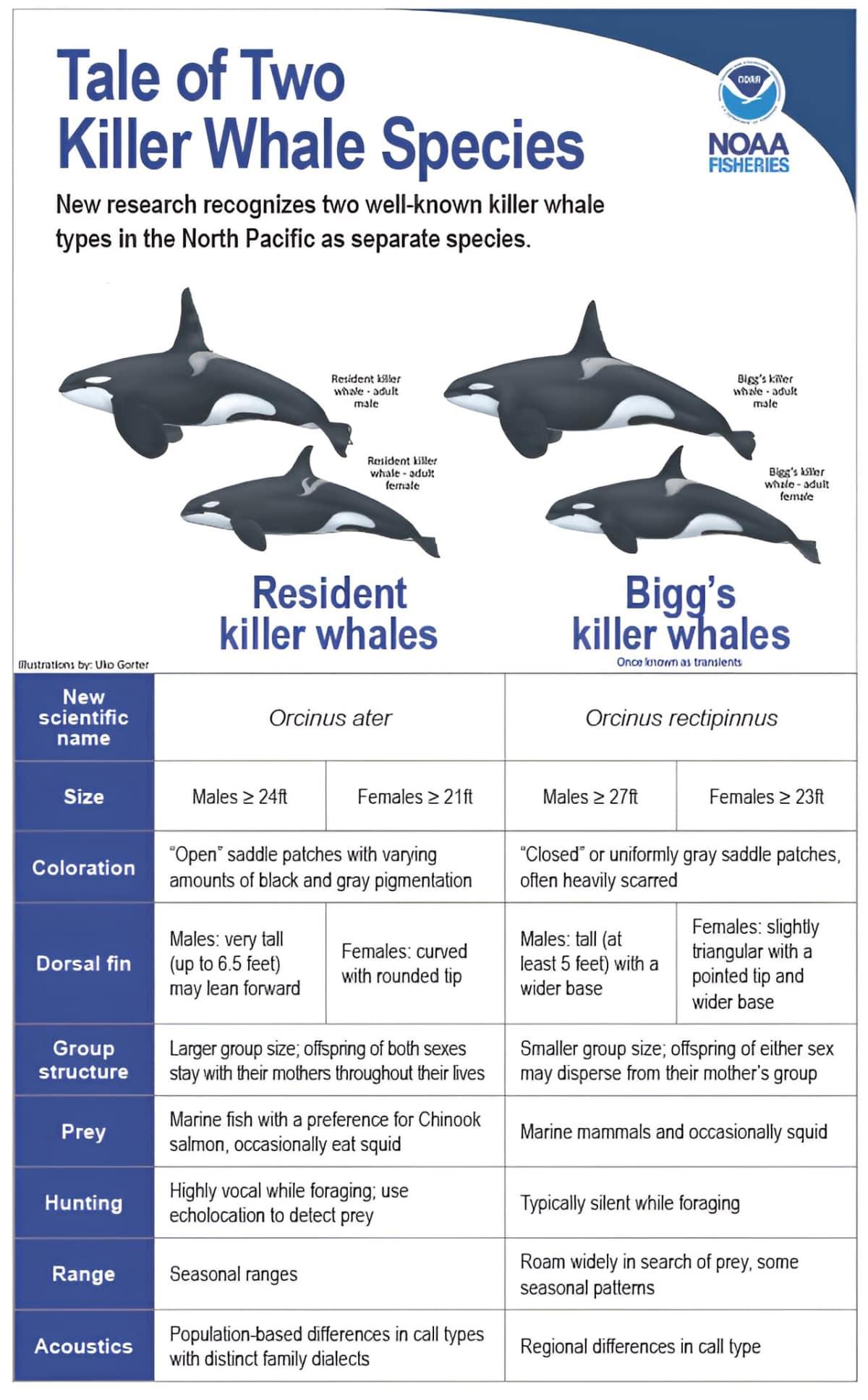
Differences between two killer whale types in the North Pacific Ocean.
Some, like the biologist Luke Rendell, expressed skepticism. "I think the observations of tooth marks on fish-eating whale carcasses are interesting and the idea is worthy of further investigation, but there's not yet enough evidence to build a solid account of the social evolution of fish-eating orcas," Rendell told Live Science.
Another hypothesis, according to Filatova, is that the killer whales are just hungry. For them, it’s not cannibalism, just scavenging. Otherwise, the two neighbors never socialize or spend time together. Residents feast on fish, while Bigg’s prefer a menu of whales, dolphins, seals, sea lions, or porpoises, a diet that requires stealth and coordinated hunting tactics. But when the rookeries are empty, the killer whales may turn to their unassuming relatives. “If they can’t find any food, and there’s a young tasty resident killer whale alone, why not?" said Filatova.