
This Wyoming Glacier Has Been Around for 20,000 Years. New Images Reveal Its Alarming State Today
Published March 3 2026, 7:59 a.m. ET

Sunlight Peak Glacier, located in Wyoming
Near Sunlight Peak, Wyoming, this glacier has been sitting frozen since the Yellowstone region’s last big ice age around 20,000 years ago. The ice remained tucked away for thousands of years in the northern Rockies without much change, until now, according to researchers from Washington University in St. Louis. The team recently released a study, published in Annals of Glaciology, stating that the glacier is melting faster than expected. The research found that Sunlight Glacier is losing up to 50 centimeters of ice every year. In some spots, only about 5 to 20 meters of ice remain. At this pace, certain parts of the glacier could be completely ice-free within a decade.
The research team is led by Tyler Meng, a postdoctoral researcher in the radar geophysics lab of Roger Michaelides at Washington University. To understand what is really happening to Sunlight Glacier, they used ground-based instruments and analyzed satellite data. They even developed new techniques to piece together more than 100 years of records tracking the glacier’s rise and decline. The study goes beyond just measuring how much ice is left and aims to find new ways to monitor glaciers. Also, they combined detailed surface images captured by drones with microwave data collected by Synthetic Aperture Radar (SAR) satellites. They were able to get a clearer picture of how the glacier changed over time by using these methods.
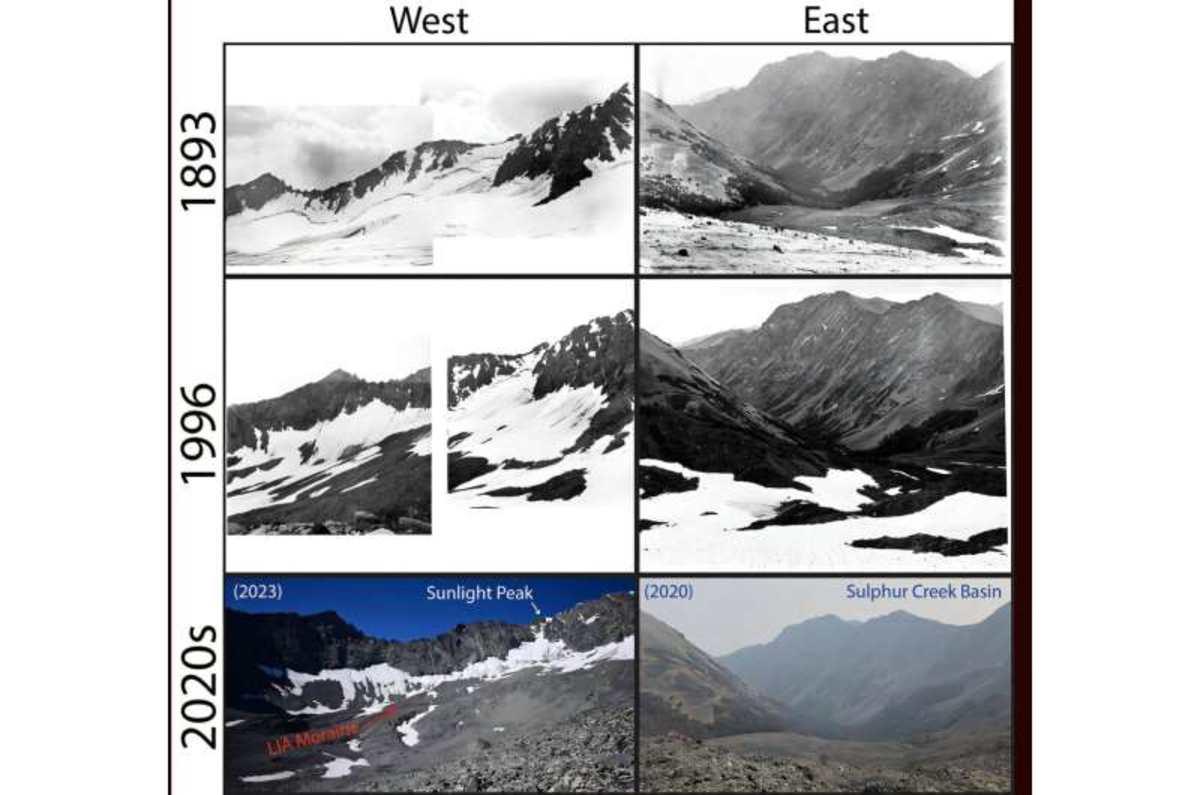
Late summer photographs of Sunlight Peak (west) and the Sulphur Creek basin (east) capture glacier views
Studying and documenting Sunlight Glacier is not just about one patch of ice. Meng and Michaelides say it helps demonstrate how melting glaciers can impact natural environments and nearby communities. “These features are more local than people think, and they do have measurable changes on the local environment,” Michaelides said, per WashU Magazine. The team’s research goes beyond Wyoming and serves as a blueprint for studying other glaciers worldwide that may face similar futures.
Sunlight Glacier itself has been on scientists’ radar for more than a century. The glacier has been studied since the late 1800s, and researchers have carefully tracked its changes ever since. In the study, a photo of Sunlight Glacier dates to 1893, taken by the U.S. Geological Survey (USGS). Scientists have been collecting data year after year to understand how it is evolving. However, the area will not stay frozen for long, according to Meng, “In some of these areas where there's exposed ice, especially susceptible slopes, the ice has already completely disappeared. There are only a few decades for those areas of thinnest ice remaining.”
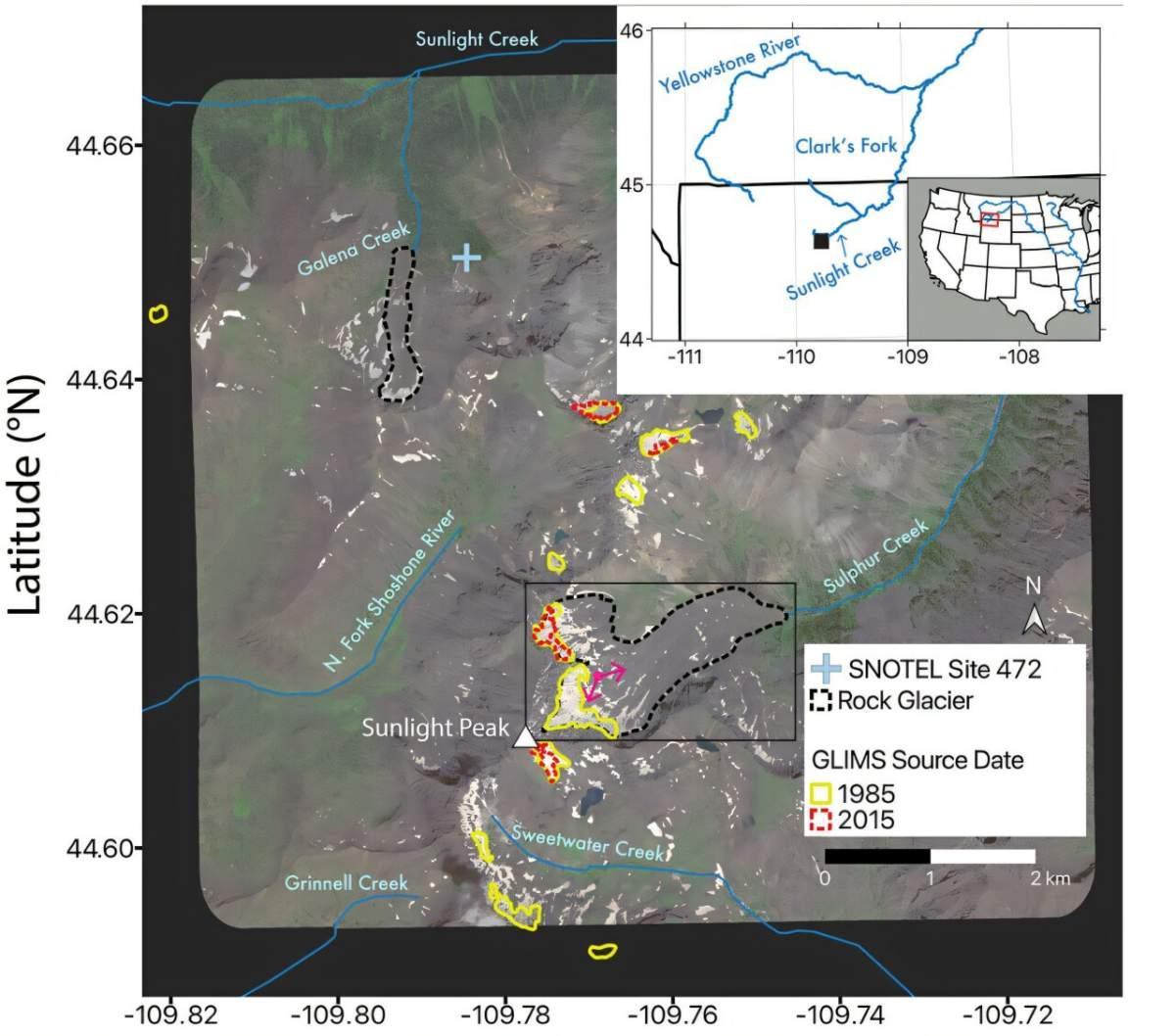
This map details the location of Sunlight Peak
Glaciers seemed permanent, like they would never disappear. However, that is not the case anymore. Meng remembers the moment it really sank in for him. Early in his research, he came across data indicating that one section of the glacier had just four meters of ice left. “I was surprised it was that thin. This is an area that's melting rapidly,” he said. It can feel surreal to watch something disappearing that has been around for thousands or even millions of years.
When glaciers melt, the water resources found in the high mountains begin to disappear. Furthermore, it also creates safety risks because as soon as the ice disappears, the slopes become unstable and the risk for landslides increases. “The change in the landscape is a big factor. How people will interact with the land over time is going to change,” Meng said. The people living near Sunlight and other mountain regions of western North America have also been experiencing a phenomenon called “snow drought.”