
Scientists Are Doping Up Mountain Lions in Yellowstone. And It’s For the Simplest of Reasons
Published March 2 2026, 8:54 a.m. ET

Expert climbing up to bring the mountain lion down
Yellowstone scientists are using some intriguing methods to investigate mountain lions in the facility. They are dosing the creatures with ketamine and then bringing them down with harnesses, according to Cowboy State Daily. Wesley Binder, a doctoral student at Oregon State University, was one of the researchers involved in the examination. The objective of this analysis is to determine how wolves and mountain lions have adapted to each other’s presence. The usage of ketamine in this process often startles even the professionals. “It’s definitely a little wild. And the first few times I did that, it was intimidating," shared Binder.
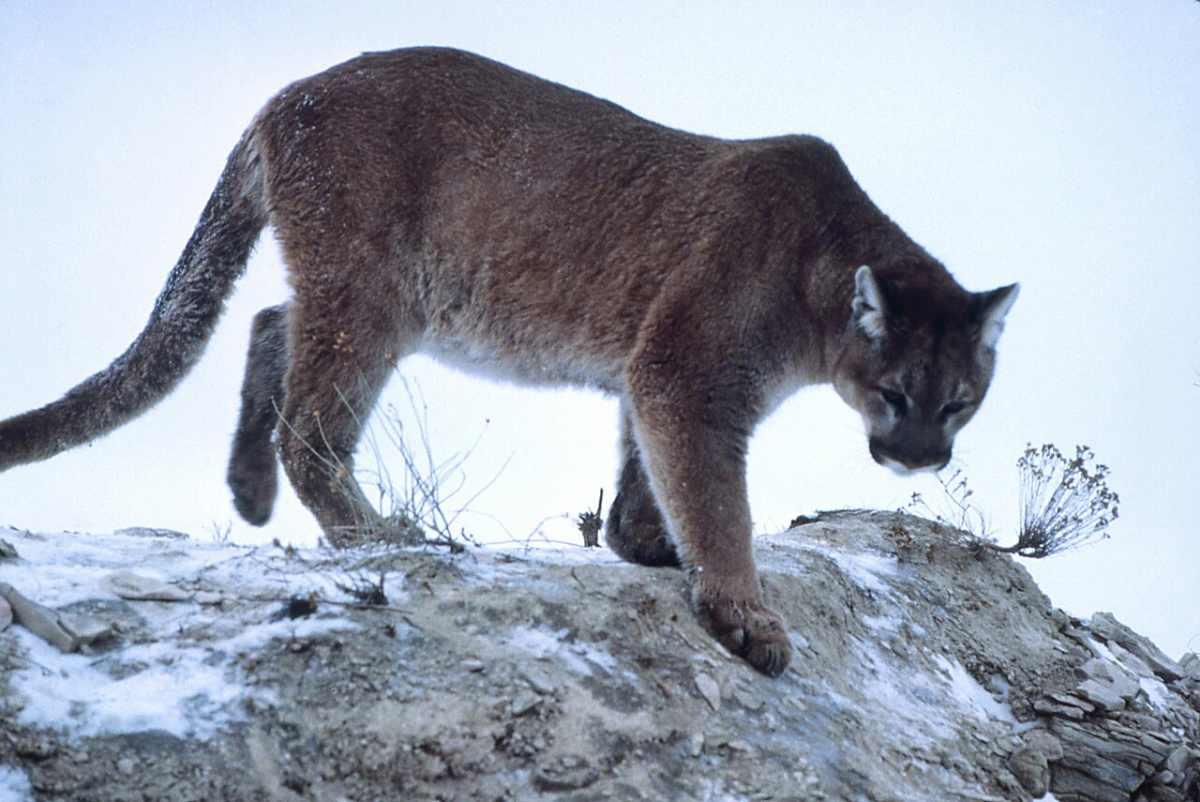
Mountain lion climbing down a rock, Yellowstone National Park
Researchers usually take the help of a houndsman to deliver ketamine to mountain lions. A houndsman directs packs of trained hounds behind mountain lions. Through this exercise, the mountain lions are forced to climb trees to protect themselves. Thereafter, the creatures are hit with ketamine using darts. Not all trees are suitable for this step. If a mountain lion climbs the wrong tree, then the team either throws snowballs or sticks at it to force the creature to come down. The hounds again chase the mountain lions, and the process continues until it ends up on the right tree. “On average, we ran each cat up three or four trees,” Binder stated.
After the mountain lion gets up on the right tree, the dart is aimed. Researchers wait a while to ensure that the ketamine is doing its magic. Sometime later, one of the experts goes up and puts the creature into a harness. The mountain lion is brought down, where it is given another sedative to knock it out completely. This allows for a more hands-on investigation.
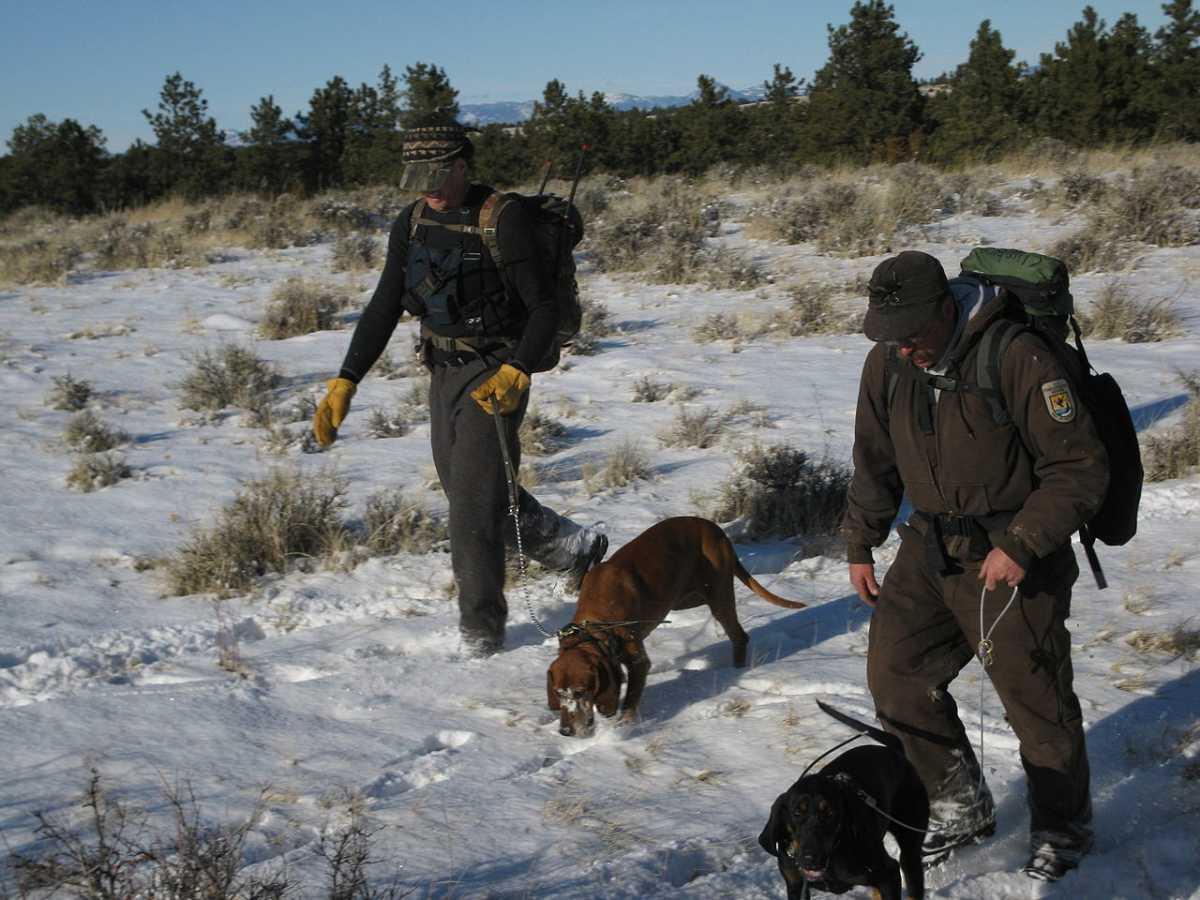
Charles M. Russell NWR staff track lions with the help of hounds
Researchers use ketamine because it is a dissociative anesthetic. This implies that even after receiving the sedative, mountain lions feel droopy, but some of their physical senses are still intact. This allows the mountain lion to hold on to the tree of their own volition, before the team makes arrangements to bring it down. “They don’t really know what’s going on, but they still can hang on. You can see them bobbing their heads, but they’re holding on,” Binder explained.
Robert Crabtree, the founder, chief scientist, and president of the Yellowstone Ecological Research Center, who has injected ketamine into many other species, claims that the dosage is vital. Researchers still do not know what exactly the animals feel under its effect. Crabtree speculates that they are somewhat conscious of their surroundings, but may be undergoing a psychedelic, psychotic, or paranoid experience during the whole process.
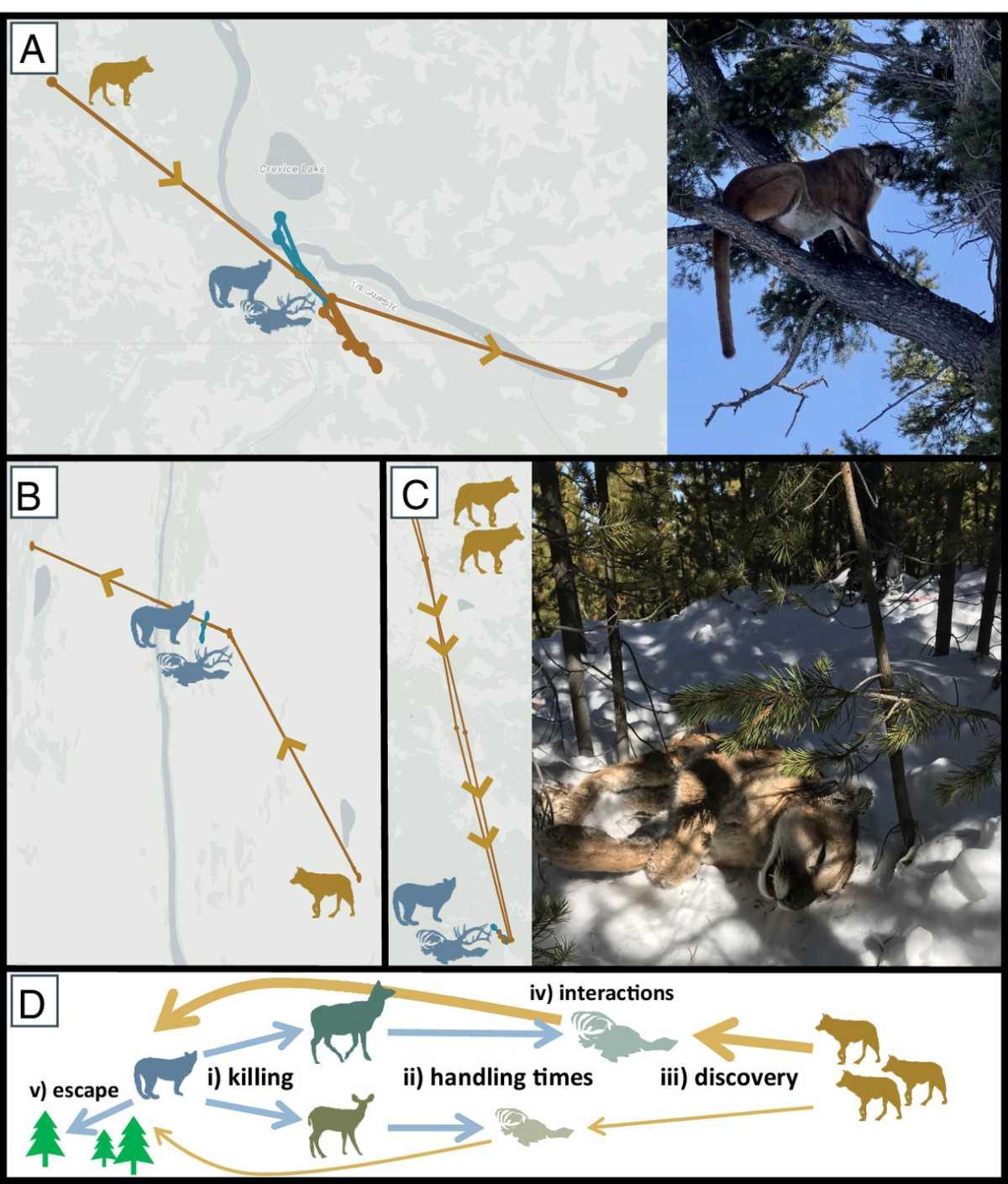
GPS fixes associated with wolf (brown points/lines) kleptoparasitism of cougar (blue points/lines) kills
Crabtree warned that the team involved in such experiments should keep an eye on creatures coming out of ketamine, as they may “cycle back” into a drug trip. He once used the drug on a coyote, who, after coming out of it, cycled back near some water. It apparently got “jitters” and almost drowned.
Binder used the findings from these ketamine examinations and published a study in PNAS. According to the study, wolves (Canis lupus) and cougars (Puma concolor, also known as mountain lions and pumas) exist harmoniously in the facility, as the latter have shifted to eating small prey, like mule deer. It has decreased competition over elk, which remains a favorite of wolves. Prey diversity, combined with the availability of escape terrains for wolves, has resulted in an ecosystem where both predators are thriving.