
This Startup Beamed Power from Moving Aircraft to Earth — a Big Step Toward Space Solar Energy
Published Jan. 15 2026, 3:34 a.m. ET

The Cessna taking off for Overview's flight test
A U.S. startup called Overview Energy successfully carried out a wireless power-beaming test using a moving aircraft in November 2025. A Cessna plane flying over Pennsylvania, roughly 16,404 feet above the ground, transmitted electricity down to a ground-based receiver using a laser system in a demonstration. This event is taking an important step towards harvesting solar energy from space. Although only a small amount of electricity was beamed and no space hardware was involved, it closely replicated real-world conditions. Moreover, the event is now the first known instance of electrical power being wirelessly sent from a moving platform to the ground.
Marc Berte, the CEO of the company, said in a statement, “Not only is it the first optical power beaming from a moving platform at any substantial range or power, but also it’s the first time anyone’s really done a power beaming thing where it’s all of the functional pieces all working together.” The company’s main goal is to find a way for satellites to beam energy 24/7 from space. However, the biggest challenge in space-based solar power is not collecting sunlight but sending that energy back to Earth safely, accurately, and continuously. And since the demonstration already showed that a moving airplane is able to do it, then hitting a laser beam from space can also be done.
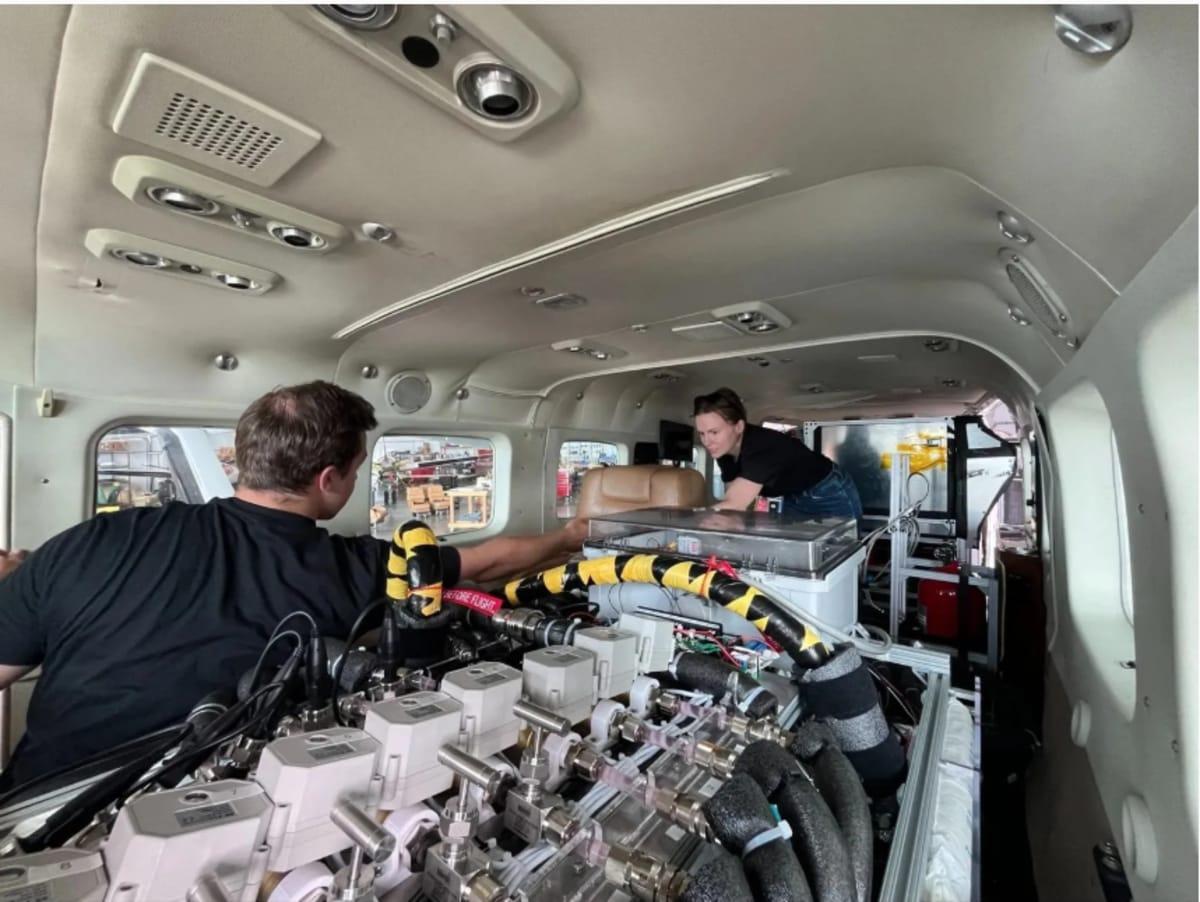
Overview’s energy-transmitting hardware inside the aircraft
Moreover, the company has long-term plans for this project. Their vision is to place solar-collecting satellites in geosynchronous orbit, approximately 22,000 miles above Earth. At that altitude, satellites can remain almost constantly exposed to sunlight and will also be able to avoid the day-night cycle and weather disruptions. It will not have the same limitations as solar panels on the ground. These satellites would convert sunlight into electricity and then beam it down to Earth using low-intensity infrared lasers. It would be received by existing solar panels, and the area can be turned into solar farms. This eliminates the need for additional infrastructure.
If the mission is successful, round-the-clock renewable energy would be available for use. This steady flow of energy could help keep power grids more stable and reliable, especially when demand is high. Over time, it could also reduce the need for coal, oil, and gas, making electricity systems cleaner and less dependent on fossil fuels. But there are still big challenges to overcome. Sending equipment into space is very expensive, and engineers also need to make sure the system works efficiently. In addition, strict safety rules would be needed to ensure the energy beams are safe for people, aircraft, and wildlife. “Imagine sunlight collected 36,000 kilometers [around 22,369 miles] above Earth, then arriving as clean energy wherever the grid needs it. That’s what we’re making real,” Berte said.
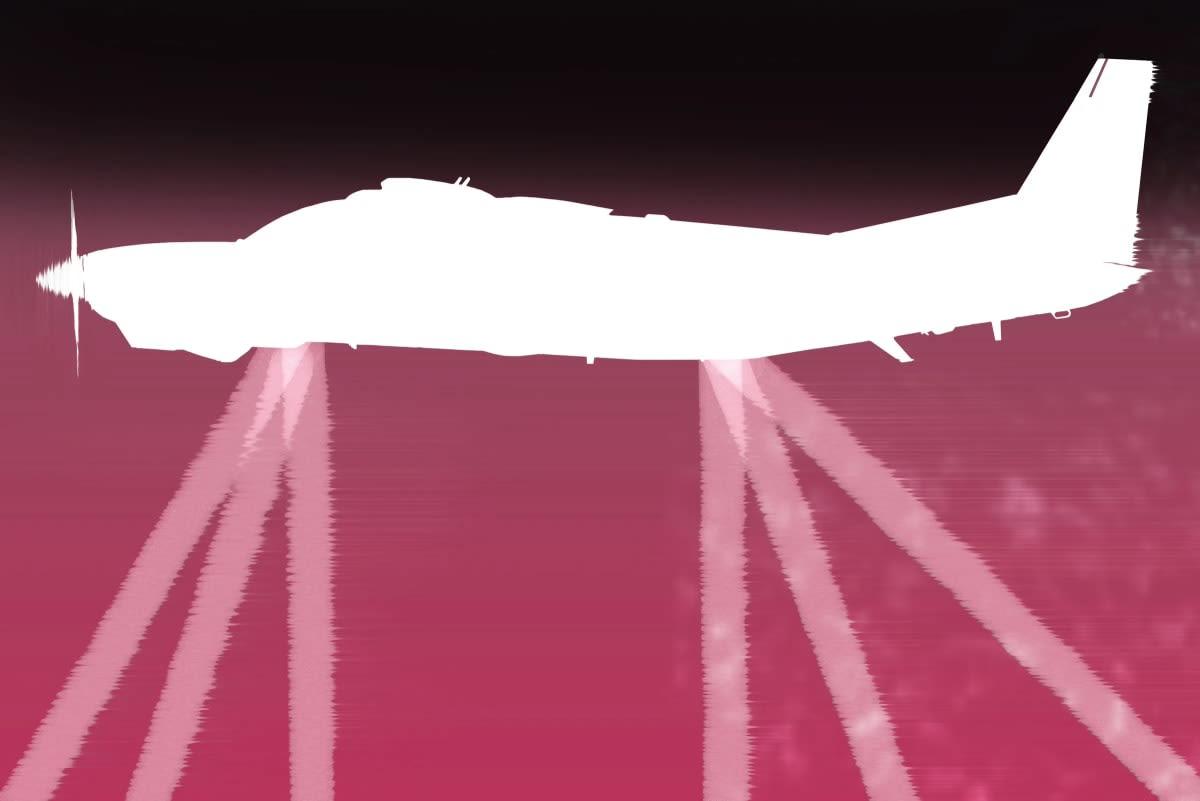
Near-infrared waves can be beamed from a moving aircraft to receivers on the ground, researchers have demonstrated.
The company has raised around $20 million, with support from groups like Aurelia Institute, Earthrise Ventures, and Engine Ventures. Overview Energy describes its plan as “crawl, walk, run.” The airplane test was the crawl, meant to prove the basic idea works. The next step, the walk, is a small test satellite in low Earth orbit planned for 2028. If that goes well, the final run phase would begin around 2030, with a commercial satellite in geosynchronous orbit designed to beam large amounts of power back to Earth. Power-beaming expert Paul Jaffe said, "This actually sounds like it could work. It really seems like it gets around a lot of the showstoppers for a lot of the other concepts."