
The Moon Is Lopsided, and a Rare Lunar Rock May Help Explain Why
Published Jan. 15 2026, 3:19 a.m. ET

The crescent arc of the Moon glows with light as the other side remains shadowy and dark
In the night sky, it gleams like a white jewel, dusting the world below in silver light. Beyond this luminous glow lurks a shadowy land, just as elusive as it is mysterious. When humans first visited the Moon in the 1960s, their jaws dropped open as they witnessed the dark seas of shadows rolling over an undulating landscape crammed with metallic-glassy powder. As explorations and our knowledge about the Moon grew, researchers found themselves facing a remarkable mystery: the far side of the Moon is draped in a thicker blanket of dust and metals than the side that faces our planet. In a new study published in "Proceedings of the National Academy of Sciences," Chinese scientists documented the mystery of why our Moon has two different faces.
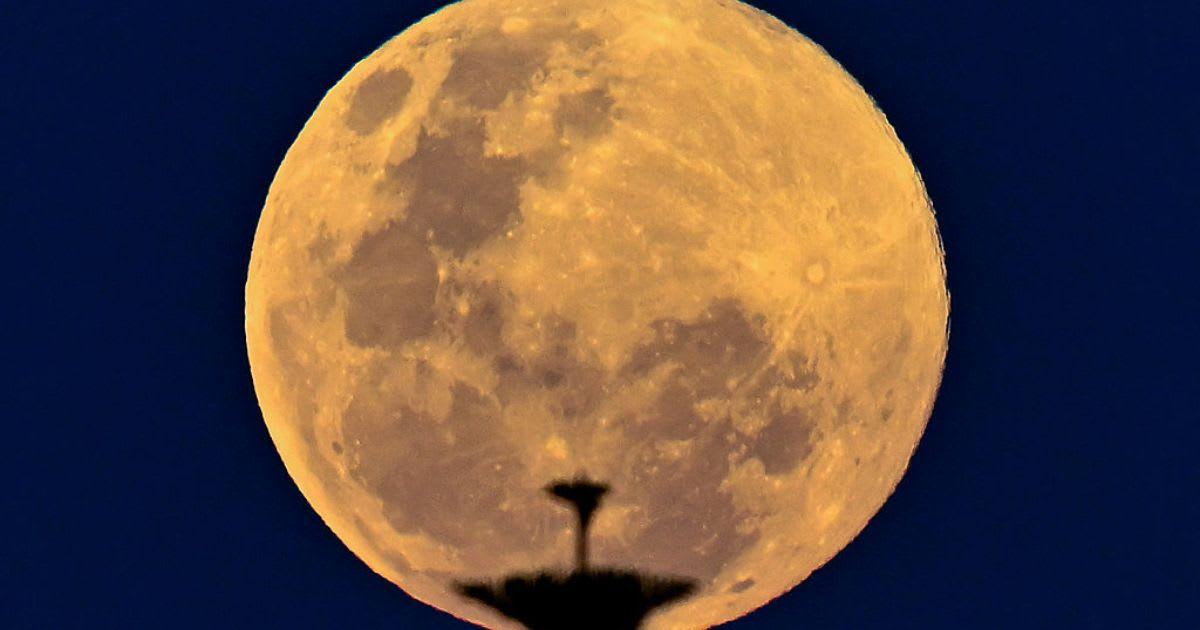
A photo of the Moon against the backdrop of a silhouette
Billions of years ago, the Moon was just like Earth, with a solid core, molten mantle, and low-density rocks stuffed in its outer crust. A series of violent impact events, like asteroid collisions, caused heavy materials like iron and nickel to sink into its center, while the softer materials drifted to sit on the surface, making the Moon quite like a chocolate-dipped orange. Today, the lunar landscape is carpeted with layers, each layer carrying a whole different world. When astronomers on NASA's Apollo 17 mission collected and examined a rock from the Moon, they detected traces of a greenish gem called olivine.
Luxurious aggregates of elements deposited in the outer crust have shaped whitish-grey highlands and volcanic dark titanium-rich depressions called "maria" over the years. Cracks called "rilles." cooled lava domes, wrinkle edges, house-sized boulders, rock chips, mineral fragments, volcanic glasses, and features like these are peppered across the lunar terrain, not to forget the cute boot prints left by moonwalkers from lunar missions.
A photo of the Moon lighting up clouds in its silver white light
All these features are noteworthy, but the feature that kept scientists up at night for several decades was the asymmetrical lunar surface. Orbital observations revealed that the lunar crust is thinner on the near side and thicker on the far side. To decipher this lopsided dichotomy, researchers from the Chinese Academy of Sciences investigated a moon rock that scientists from China's Chang'e-6 mission had collected. The rock was sitting in one of the biggest impact craters on the far side, the South Pole-Aitken basin.
By studying the rock's chemistry and composition, researchers were aiming to solve the mystery of the Moon's two-faced architecture. Their primary clue remained "isotopes" loaded inside the rock. Isotopes are the elements of the same family with the same number of protons and a different number of neutrons. Like siblings of the same parent, isotopes derive their similarity from the identity defined by protons and maintain their individuality by different atomic masses defined by their neutrons. They analyzed the isotopes from the rock to understand the chemistry of the material and decode the backstory of what led to the Moon's two-faced mystery.
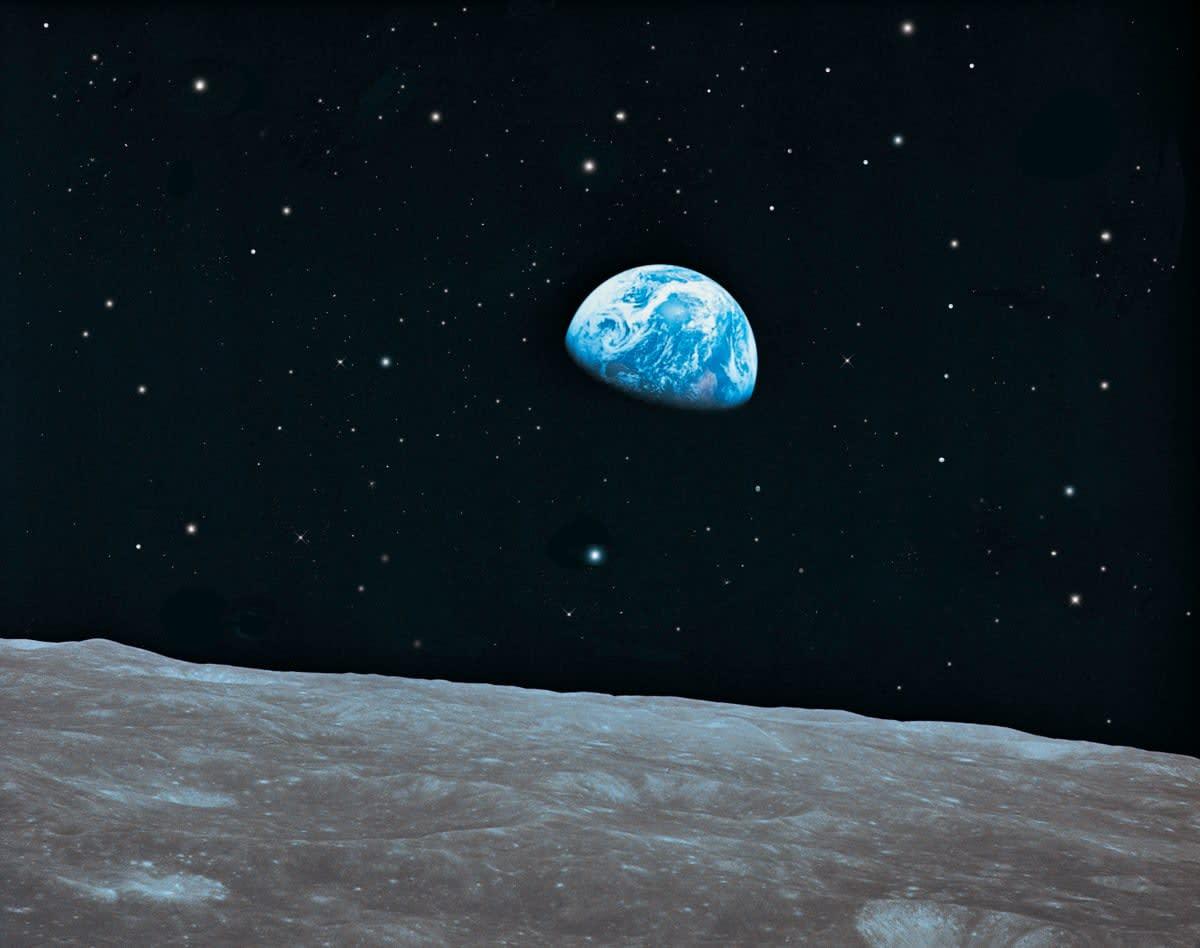
A representative picture of Earth as seen from the lunar surface
In 2012, NASA's GRAIL mission had already recorded some clues that depicted why the Moon's two sides have different thicknesses. In 2019, a study published in the "Journal of Geophysical Research: Planets", rooted in the widely accepted "giant-impact theory" that a Mars-sized object named Theia collided with early Earth, forming the Moon, suggested that a subsequent large impact event on the Moon's near side could explain its unique features. In the latest research, researchers studied four rock fragments using high-precision mass spectrometry. Hints emerged from the isotopes of potassium. Billions of years ago, the lighter potassium isotopes vaporized due to intense heat and left behind chemical signatures of heavier isotopes.
The far side "experienced a magma ocean evolution similar to the near side." But while the near side became concentrated with heat-provoking elements, the far side remained cooler, becoming about 12 miles thicker than the near side. Meanwhile, the impact was probably dramatic enough that it punched the Moon with so much force that the South Pole-Aitken basin was gashed into the lunar landscape. Today, this giant swinging bowl stabbed into the far side sits as a narrator of these riotous cosmic events that whittled down our beloved nightly satellite.