
NASA Could Roll Out Artemis II Rocket This Weekend — Moon Mission Enters Final Phase
Published Jan. 14 2026, 4:41 a.m. ET

NASA’s Artemis II Orion spacecraft with its launch abort system, is stacked atop the agency’s SLS (Space Launch System) rocket at NASA’s Kennedy Space Center.
NASA is gearing up for the Artemis II mission, its first crewed flight around the Moon in over 50 years. In the upcoming days, the agency will roll the massive Space Launch System (SLS) rocket and Orion spacecraft to the launch pad at Kennedy Space Center in Florida for crucial final tests and rehearsals. This rollout will mark the start of final integration work, system testing, and launch rehearsals ahead of the mission, indicating that the final assembly, verification procedures, and preparatory countdown drills will commence before the mission begins.
NASA is targeting a start date no earlier than Saturday, January 17. The crawler-transporter-2 slowly hauls massive rockets about four miles from the Vehicle Assembly Building to Launch Pad 39B, a journey that can take up to 12 hours. The date could shift if additional technical work or weather conditions require more time. However, teams are working continuously to complete the remaining tasks before the rollout. In a statement issued on January 9, Lori Glaze, the acting associate administrator for NASA's Exploration Systems Development Mission Directorate, said, "We are moving closer to Artemis II, with rollout just around the corner. We have important steps remaining on our path to launch, and crew safety will remain our top priority at every turn, as we near humanity's return to the Moon."
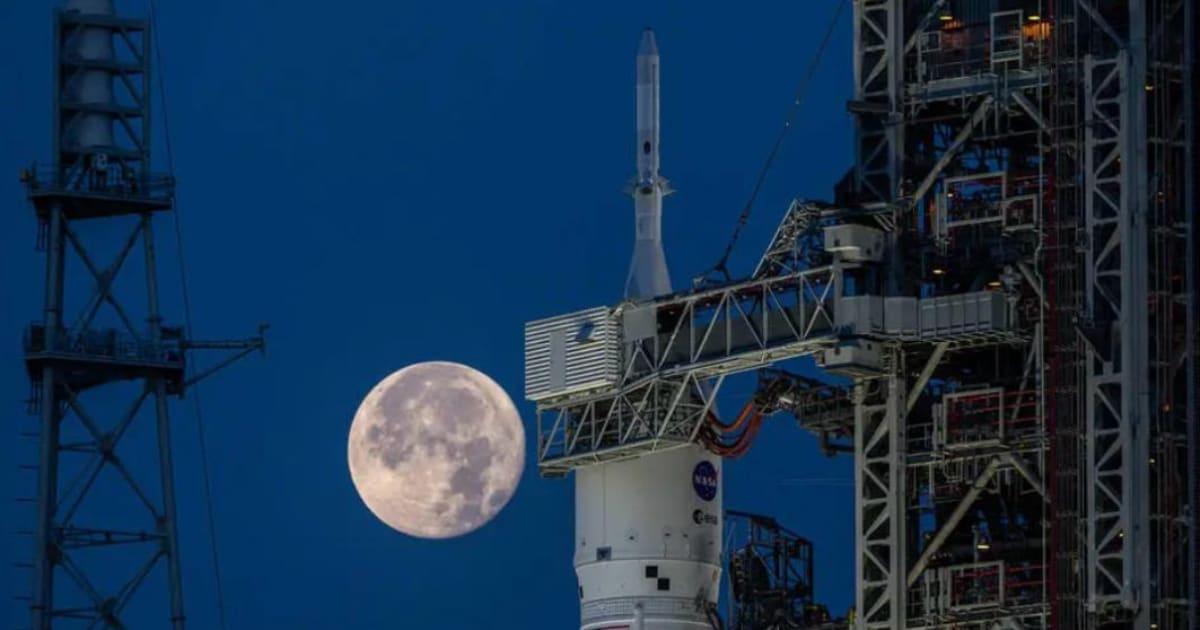
A snapshot of Artemis I SLS (Space Launch System) rocket and Orion spacecraft at Launch Complex 39B at NASA’s Kennedy Space Center in Florida
Once the rocket and spacecraft reach the pad, NASA will activate a comprehensive checklist, connecting critical ground support equipment, including electrical, environmental, and cryogenic fuel lines, to power up the entire system. Following this, the team will conduct an integrated systems test, powering up all systems at the launchpad for the first time. This crucial test will ensure that all flight hardware components are fully functional and operate correctly in communication with each other, the mobile launcher, and the ground infrastructure systems. After completing pre-launch checks, the Artemis II crew, including NASA's Reid Wiseman, Victor Glover, and Christina Koch, and CSA (Canadian Space Agency) astronaut Jeremy Hansen, will do a final walk-around inspection of the launch pad area before heading to the rocket for their lunar mission.
NASA will postpone the rollout if unfavorable weather conditions or technical issues arise. The space agency indicated its engineers addressed several pre-launch issues, including repairing leaky ground support hardware essential for supplying the Orion spacecraft with oxygen. Following the rollout, a crucial pre-launch test—the wet dress rehearsal is scheduled for the end of January, during which NASA will fuel the rocket with more than 700,000 gallons of cryogenic propellants. The test will also include a launch countdown, practice removing the rocket propellant, and safety procedures. Assuming all goes well, NASA will conduct a flight readiness review before committing to a launch date.
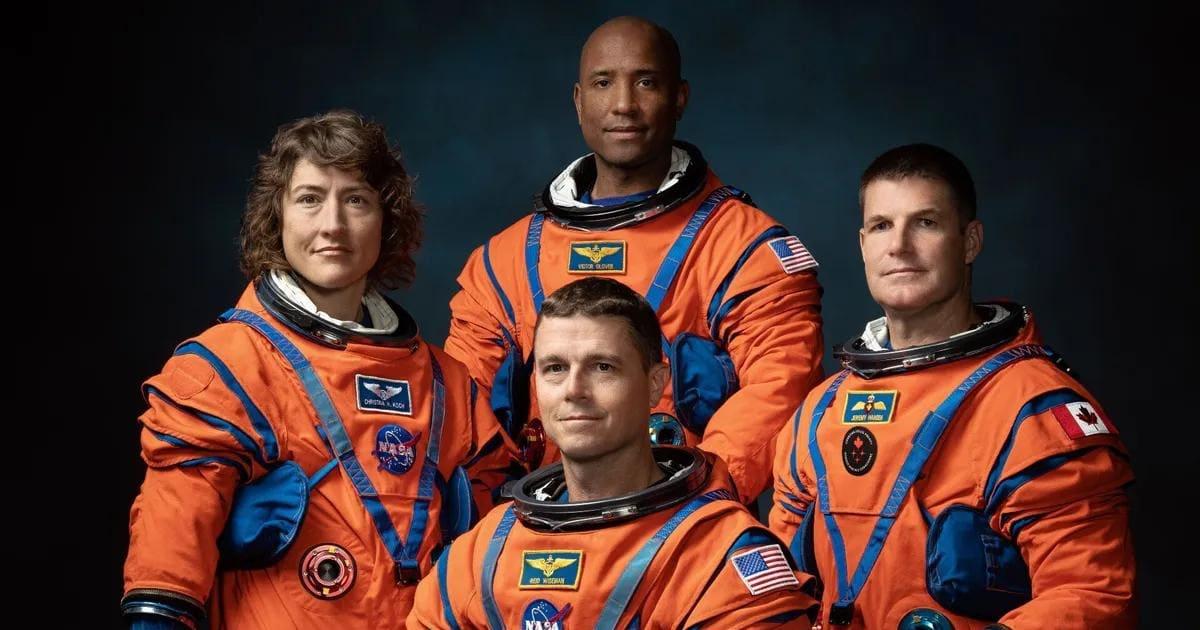
A snapshot of the four astronauts set to be a part of NASA’s first crewed Artemis Moon Mission
NASA has set the Artemis II mission launch window to open as early as February 6, 2026, with further opportunities extending through April 2026. It aims to send astronauts around the Moon, marking humanity's return to lunar space after the Apollo era. It will confirm the final launch date after completing final system checks and readiness reviews. Initial launch opportunities are expected to focus on early February, followed by periods in late March and April. The Artemis mission has previously experienced delays, and like all spaceflight missions, its proposed dates remain subject to change. The space agency's objective for the Artemis II program is to establish a sustained human presence on the Moon, which will also serve as a crucial staging point for the ultimate mission of sending astronauts to Mars.