
The 'Doomsday Glacier' Is Living up to Its Name as Experts Find More Warning Signs
Published Dec. 31 2025, 8:22 a.m. ET

A man standing in front of a massive glacier.
The Thwaites Glacier is appropriately dubbed "Doomsday Glacier" as its potential collapse would have a devastating impact. Unfortunately, the glacial retreat shows no signs of slowing down, and "doomsday" seems closer than ever. In a recent study by the International Thwaites Glacier Collaboration (ITGC), researchers from the University of Manitoba have identified disturbing signs in the glacier. According to the press release, the Thwaites Eastern Ice Shelf (TEIS) is supported by a point at its Northern terminus. Over a period of time, the TEIS experiences several dents and cracks from carrying the weight of the massive glacier, and now its structural integrity is compromised. The disintegration has progressed and accelerated over the past two decades, further increasing the glacial retreat.
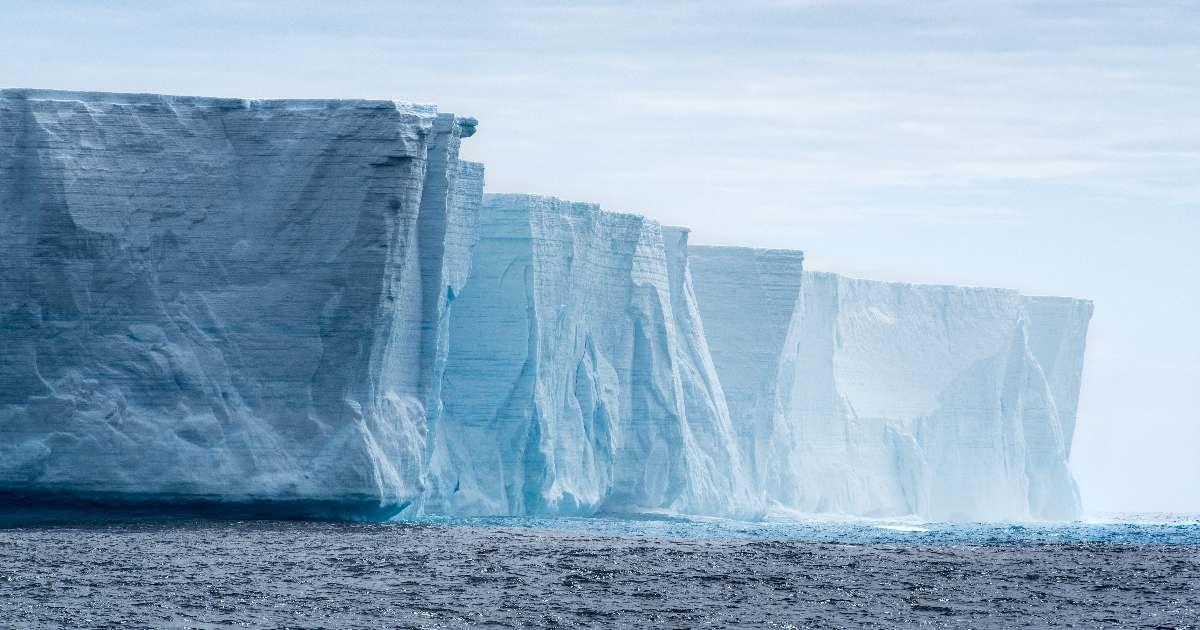
Giant glaciers surrounded by water.
Now, the new study led by Debangshu Banerjee used satellite data collected from 2002 to 2022 to closely observe how the cracks on the TEIS worsened over these years. “Over the past two decades, the shelf has experienced progressive fracturing around a prominent shear zone upstream of its pinning point, gradually compromising its structural integrity,” the paper read. The observation showed that the length of the fracture increased from 100 miles to 200 miles. The study provided insight into four distinct stages of the weakening process. "First, the fractures developed in two phases: an initial propagation of long, flow-parallel fractures, followed by shorter fractures-oriented perpendicular to the direction of ice flow," said the press release.
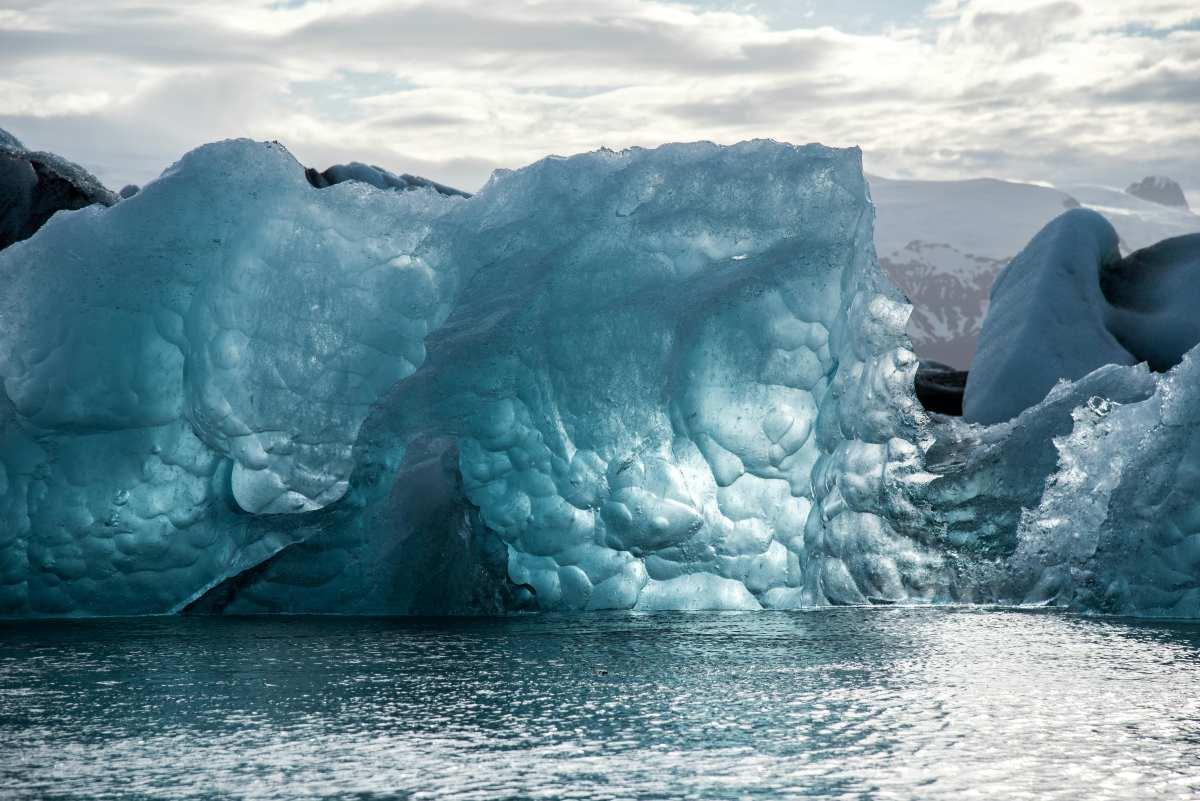
Melting glaciers due to global warming
"Second, the researchers found evidence for a positive feedback mechanism between fracture-induced damage and ice acceleration," it added. The research highlighted that the pinning point went from a stabilizing entity for the TEIS into a stressor that's weakening the structural integrity of the glacier. Another research published in Nature Geoscience observed a similar pattern of glacial retreat caused by another stressor. It focused on how the rising temperature of ocean waters is accelerating the melting of the ice shelf of Doomsday Glacier. According to the research, the changes were noticeable not just within a period of years but in just a few hours and days. This observation is enough to raise an alarm among scientists about the potential doom.
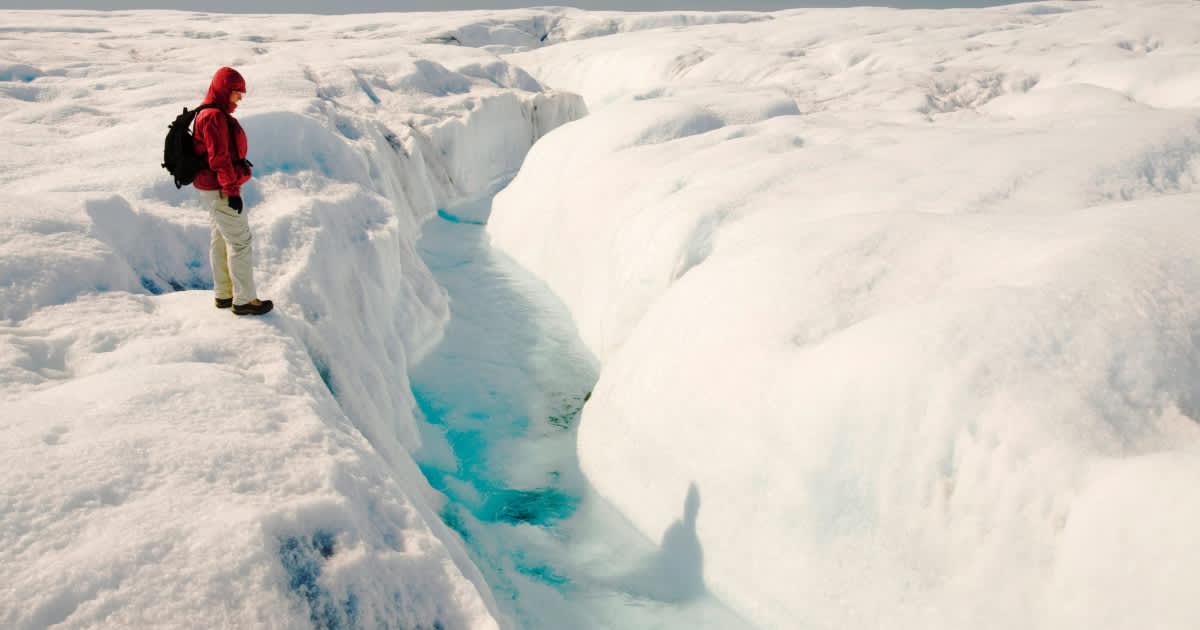
A man observing a melting glacier.
The researchers also identified a loop that can prove catastrophic. The cold-water melts from the glacier when mixed with the warmer and saltier water of the ocean, and turbulence occurs, even more ice melts. Speaking to CNN, coauthor and UC San Diego assistant professor Lia Siegelman revealed that the situation can worsen in the summer. “This positive feedback loop could gain intensity in a warming climate,” he said. Evidently, there is more than one stressor that is causing the glacial retreat to speed up. Moreover, the positive feedback loop is a vicious cycle that the Thwaites Glacier is stuck in, with very little hope of ever leaving it. Although there are still centuries left before the glacier fully melts, it can disrupt coastal communities and a large part of Earth's population.