
More than Half of Earth’s Glaciers Could Disappear Within the Next Two Decades, Study Finds
Published Dec. 29 2025, 7:03 a.m. ET

Valley splattered with rubble carved by a retreating glacier on the Adamello Peak in the Alps in Switzerland
In September 2019, hundreds of people hiked up the mountainside of the Swiss Alps, about 8,850 feet high, to mourn the death of Pizol glacier. With their black mourning robes billowing in the mountaintop air, they played alphorn music, exchanged heartfelt messages, and offered flowers at the passing of the 700-year-old glacier. More recently, in May, people in Nepal marched to the Hindu Kush Himalayan region to mourn the loss of Yala Glacier. They sang a chorus of Buddhist chants and offered granite plaques at the glacier’s deathbed.
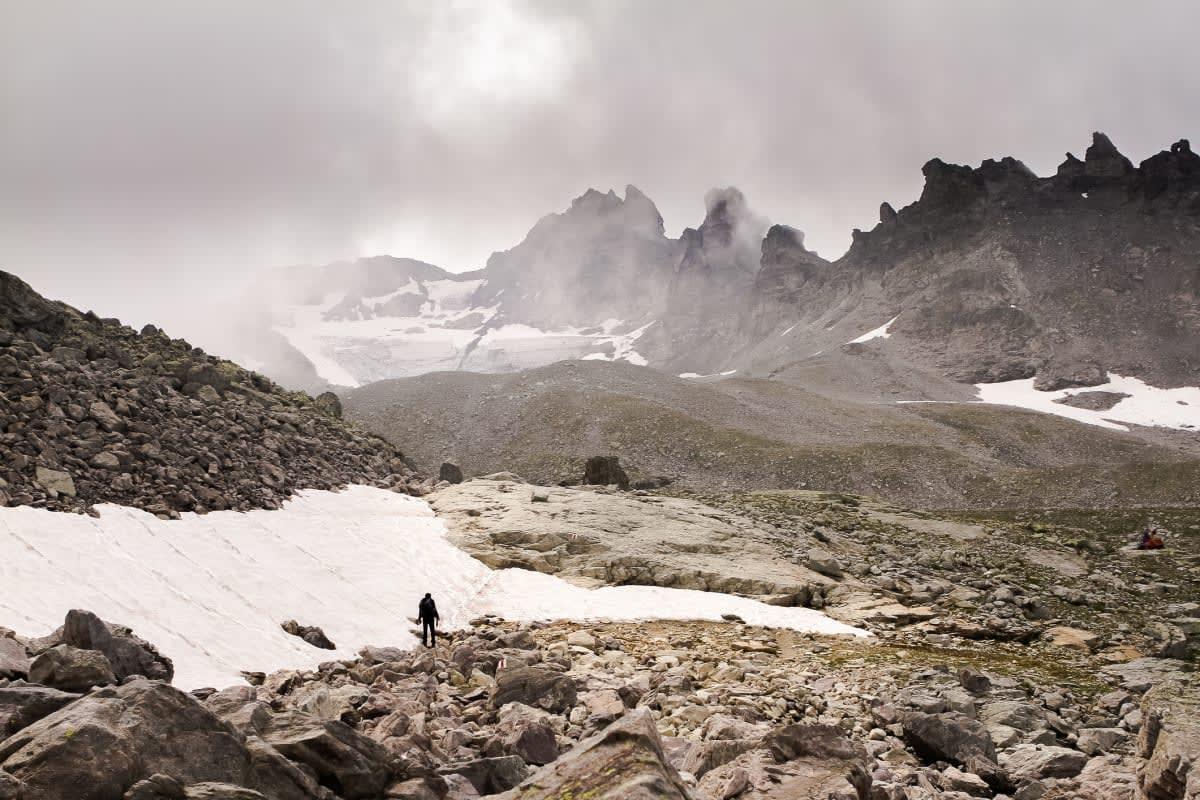
Person beholding Pizol glacier in Switzerland
Scientists in Switzerland have been quietly and meticulously monitoring the statistics of disappearing glaciers and changing glacier geometry. In a recent study published in Nature Climate Change, they projected that 2,000 to 4,000 glaciers will vanish each year until global warming is brought under control. While human activities provoke unfathomable amounts of global warming, our home planet gets drenched in this irreversible grief, leading to the rise in glacier funerals day after day.
A glacier is a hulking hunk of ice and icy slush that starts flowing along mountain slopes and valleys propelled by its own weight and gravity. Despite remaining frozen itself, a glacier feeds everything that comes in its vicinity. From providing water supply to ski resorts to inspiring local communities to continue their spiritual rituals and practices, glaciers keep the world intact. More than 200,000 glaciers are intermingled in a network that drapes the Earth in a zigzagging necklace of white ice that is both protective and cooling.
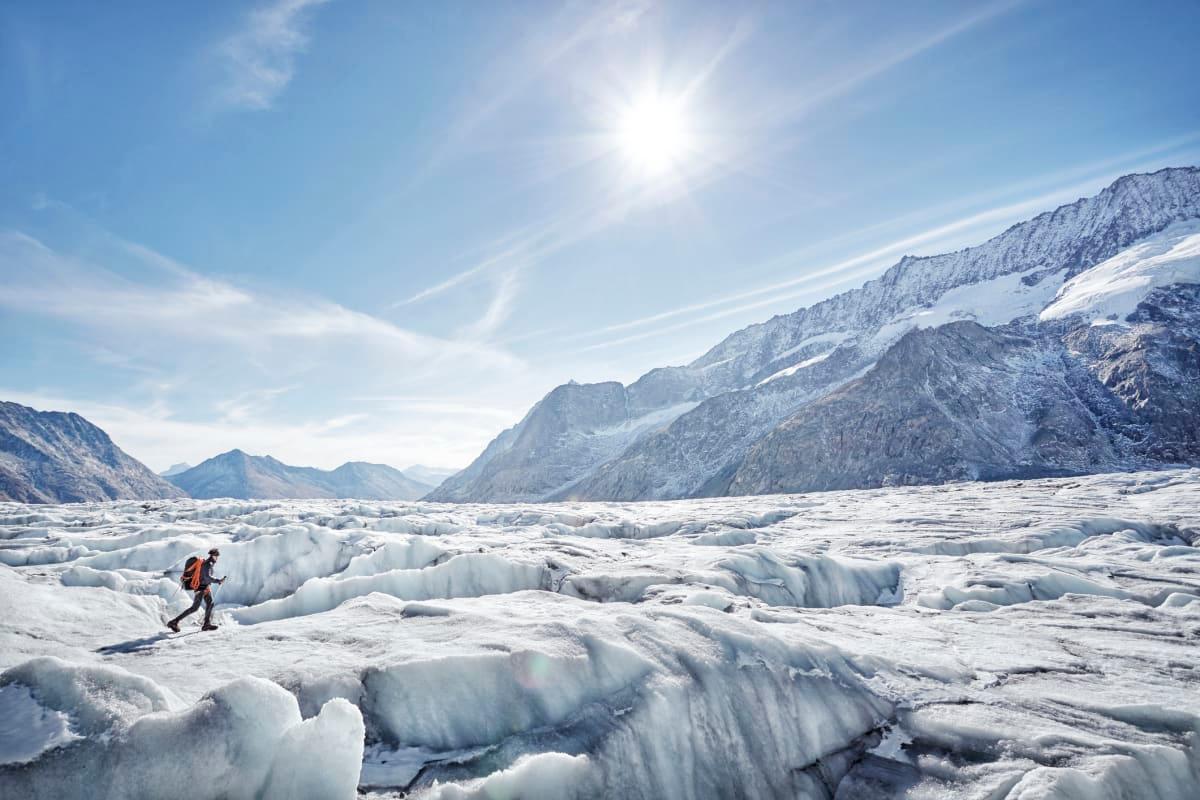
Backpacker wandering on a glacial peak
In the last few decades however, global warming has been secretly stealing the icy coolness of glaciers, causing them to melt, wither, and eventually die. Where there were lagoons of ice earlier, those glacial tongues are now splattered with wet and dusty rubble, except for some chunks of ice, which too, are weakening under the grip of rising temperatures. Iceland has even initiated a Global Glacial Graveyard that organizes glacier funerals to mourn the dying glaciers. Researchers from ETH Zurich mention that over fifty percent of the world’s glaciers are projected to disappear within the next two decades. It’s the “point of no return,” glaciologist Eric Rignot told CNN. Even the ambitious Paris Agreement of climate change failed in protecting them from getting swayed into the glowering trenches of heat.
It’s not just the matter of concern for nature and ecosystem; it’s also an alarming trigger for local dwellers whose very livelihoods and water access depends on these bodies of ice. “For the first time, we’ve put years on when every single glacier on Earth will disappear,” lead author Lander Van Tricht, shared in a press release. To project the yearly glacier change, researchers examined the mass and area loss in relation to sea level rise and water availability, using three global glacier models. Imagine having a billion bears in a forest, but just one fruit tree for them to feed. The situation with glaciers is not much different.
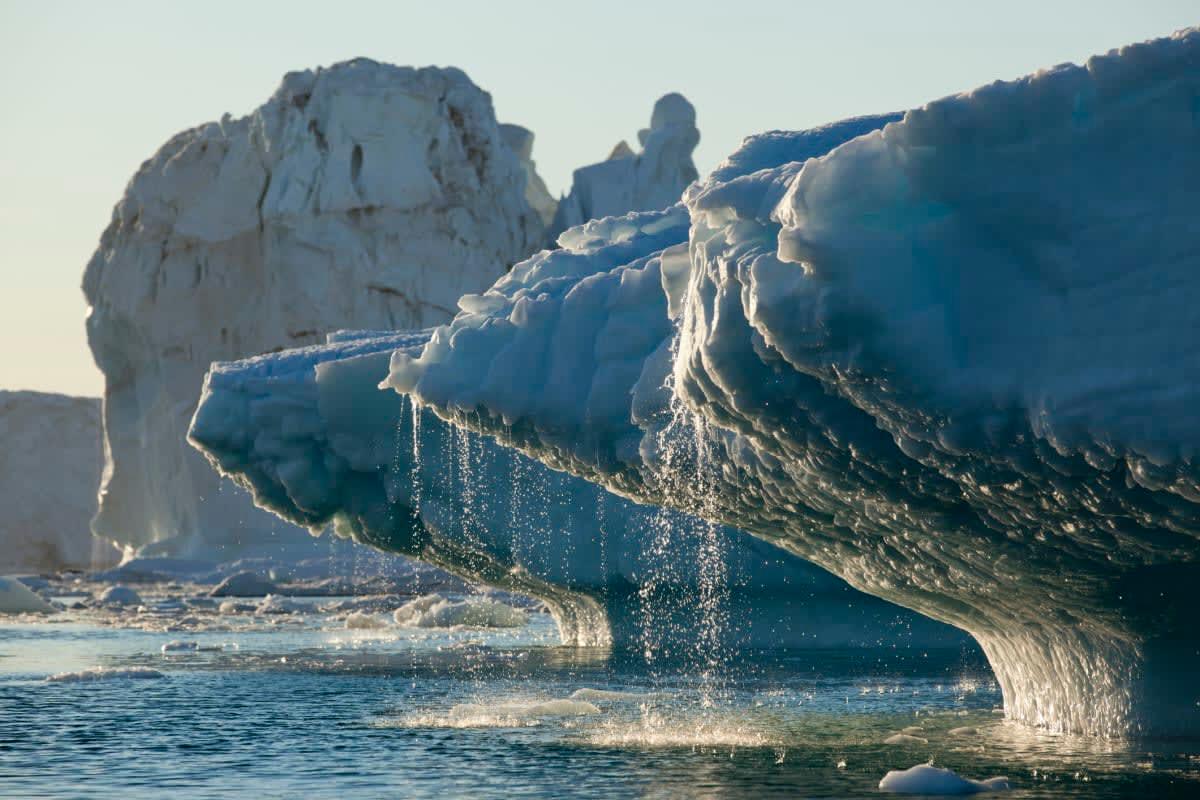
Melting iceberg in Greenland
Dying glaciers means lesser meltwater, towering sea levels, wild floodwaters, loss of Earth’s protective blanket; in other words, destruction. The most vulnerable glaciers, researchers mentioned, are at lower elevations or near the equator, including the Alps, the Caucasus, the Rocky Mountains, and of the Andes and African mountain ranges that lie in low latitudes. And regrowing glaciers manually cannot be classified as surviving, scientists asserted. Co-author Matthias Huss told CNN that climate change will not just lead to some ice melt, but to the complete extinction of a significant glacier population.
If humans fail to put restrain on climate crisis, these icy guardians will be compelled to surrender to the piping hot waves of heat. And ultimately, humans will befall into a complex, uncontrollable spiral of devastation.