
Gold Grows on Christmas Trees? Experts Discover This Hidden Treasure Sprouting in Spruce Needles
Published Dec. 4 2025, 4:06 a.m. ET

Young boy choosing a Christmas tree at an outdoor market
If you grew up listening to the saying that money doesn’t grow on trees, think again. A short distance away from where a gold mine sits in Lapland, the largest region of Finland, a grove of spruce trees is dripping with invisible gold, thanks to the tiny microbe residents that live on the trees. In a study published in the journal Environmental Microbiome, scientists documented that these little micro-organisms are genius workhorses that convert liquids bubbling in the plant’s veins into solid gold. Currently, only scientists with sensitive instruments can detect this gold. The mystery of this hidden gold was revealed when they investigated an area of spruce trees using biogeochemical methods. These are the same trees whose needles people find on their Christmas trees.
Woman decorating a Christmas tree
The study was conducted by researchers from the University of Oulu and the Geological Survey, who unveiled the hidden bounty of gold while combing Northern Finland’s boreal forests. In a university press release, lead researcher Kaisa Lehosmaa explained that the results of the study suggest that bacteria and other microbes living inside plants may influence the accumulation of gold in trees. This almost mystical connection between the glittering noble metal gold and the not-so-aesthetic microbe guys is a supporting link that opens up doorways of possibilities for biologists curious about mineral exploration.
Professor Anna Maria Pirttila described that plants typically hold a wide variety of microbes in their tissues. Dubbed “endophytic microbes,” these microbes are less than one-third the size of a grain of salt. But after understanding all that they are capable of, you won’t underestimate this size. Beyond every intelligent activity they contribute to the growth of the tree, the most interesting one is “biomineralization.” Biomineralization, as the name suggests, is a biological process related to minerals.
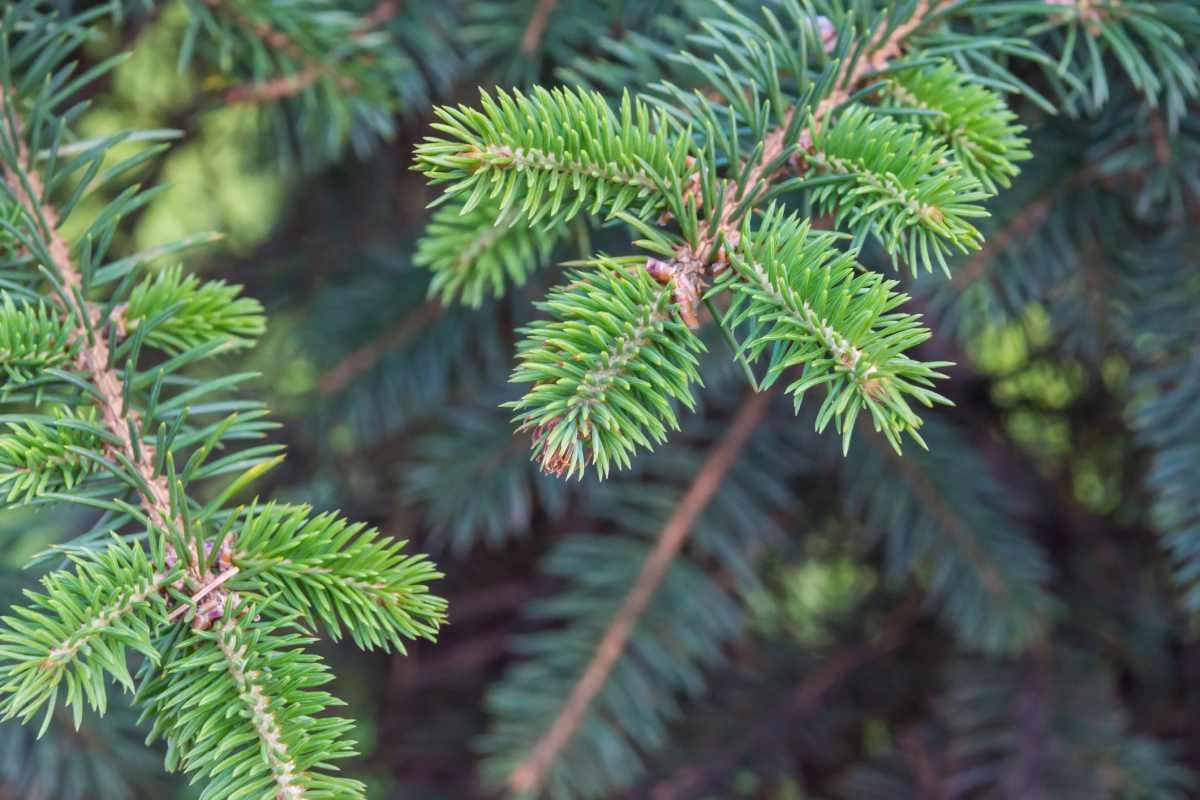
Spruce trees with prickly green needles hanging on branches
Biomineralization typically occurs when trees are present in locations where mineral deposits lurk under sediment cover or deep within the bedrock. When these metal deposits experience “oxidation,” they release flurries of ions that seep into the soils. When trees absorb water and nutrients from the soil, they unknowingly ingest liquid metallic particles. Encountering these particles, the microbes start their work.
With symbiotic processes like hormone production, these microbes precipitate gold back into solid, nanosized particles, explains Live Science. Over time, these particles are solidified within the plants, particularly hardening the lining of their cell walls. This metallic lining reduces the mobility and bioavailability of plants towards other toxic and heavy metals, acting as a defense mechanism.
Biomineralization allows the microbes to take control of the mineral assimilation in the trees using a variety of processes for an array of purposes. In this case, the goal of microbes behind biomineralization in spruce needles was, most probably, for detoxification. For the study, researchers collected 138 needle samples from 23 spruce trees on a satellite mineral deposit of the Kittilä gold mine, which is “Europe’s largest gold mine, in the Lapland region of northern Finland,” according to IFLScience. Of the 23 trees, four revealed traces of gold particles encapsulated in biofilm matrix. The gold nanoparticles they detected were not visible to the naked eye.
Spruce tree decorated with ornaments
DNA sequencing of biofilm wrappers revealed that certain bacterial groups, such as P3OB-42, Cutibacterium, and Corynebacterium, were more common in gold-containing needles. Dr. Lehosmaa reflected that this understanding can facilitate a wider study of mineral exploration and water purification in the future.
And it is also possible that the same biology that shapes metals inside needles could be mysteriously working behind metals sitting in water. If this is true, scientists could be able to pull gold from water the same way they have succeeded in pulling gold from Norway’s spruce needles.