
Rare School Bus-Sized Phantom Jellyfish Spotted Off Argentina’s Coast by Deep-Sea ROV
Published Feb. 5 2026, 7:22 a.m. ET

The giant phantom jellyfish was filmed by ROV pilots at 250 meters.
Scientists from the Schmidt Ocean Institute have recently made some stunning discoveries off the coast of Argentina. The team used a remotely operated vehicle called “ROV SuBastian” for this evaluation. These findings include 28 new animal species, the world’s largest known Bathelia candida coral reef, and a deep-water whale fall. Expedition’s chief scientist, María Emilia Bravo, was surprised by the findings as her team was not expecting such rich biodiversity in the Argentine deep sea.
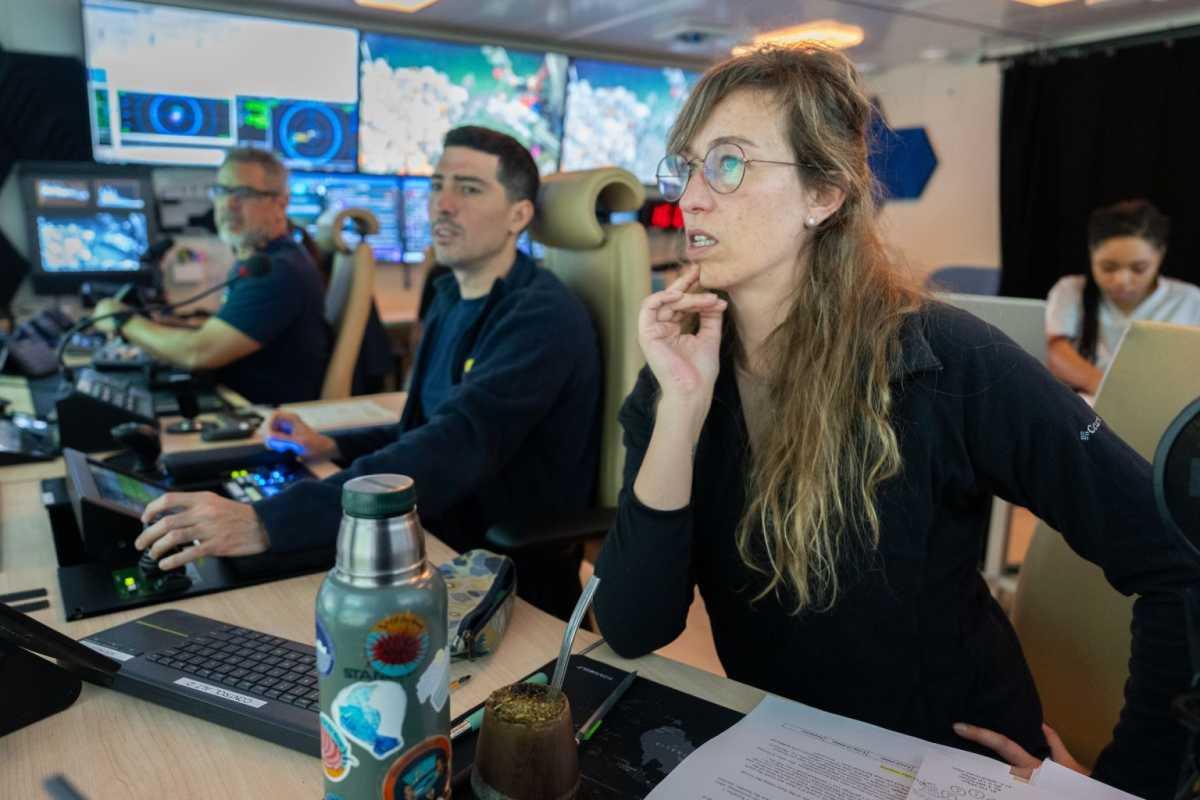
Expedition Chief Scientist Dr. María Emilia Bravo directs an ROV SuBastian dive from the mission control room on the Research Vessel Falkor (too).
The team examined Argentina’s entire coastline, stretching from Buenos Aires in the north to an area offshore from Tierra del Fuego. “Seeing all the biodiversity, ecosystem functions, and connectivity unfolding together was incredible. We opened a window into our country’s biodiversity only to find there are so many more windows left to be opened,” Bravo added, according to Discover Wildlife. The team’s objective was to locate cold seeps in the area. Cold seeps are deep-sea environments that release methane and other chemicals from the seafloor, supporting animals, like tube worms, clams, and mussels. During the voyage, they found one, twice the size of the Bathelia reef, carrying a huge collection of chemosynthetic clams.
Researchers noted that the Bathelia candida coral reef covered an area of 0.15 square miles, nearly the size of Vatican City. Moreover, it is categorized as a Vulnerable Marine Ecosystem (VME) indicator species. Bathelia candida has long been seen in the Southwestern Atlantic Ocean. Previously, it was known that the reef’s largest patches are present off the coast of Argentina. However, its exact extent was a mystery. The expedition revealed this secret. The team detected Bathelia 373 miles further south than its known expanse at 43.5° latitude. The magnificent stony reef was seen serving as a habitat to other creatures, like octopuses, fish, and crustaceans.
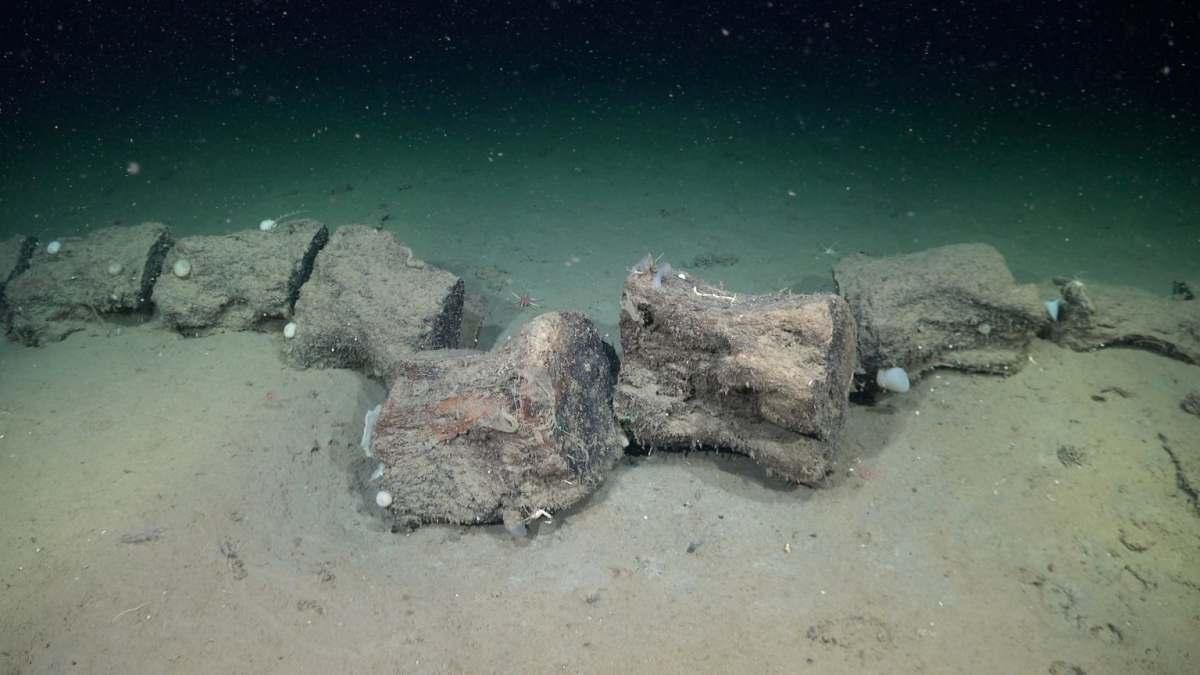
ROV pilots filmed the remains of a deceased whale that had dropped to the seafloor, called a whalefall
The deep-water whale fall located around 12,700 feet into the ocean was also special. Researchers believe this is the first example of whale-fall in the entirety of the country. Whale-fall essentially refers to the area where the mammal's body falls after taking its last breaths. This body often transforms into a temporary ecosystem providing nourishment to beings like crabs, sharks, and octopuses. Scientists also stumbled upon a rare bus-sized phantom jelly (Stygiomedusa gigantea) and ancient Bubblegum coral gardens (Paragorgia arborea) during the voyage. The latter was sandwiched in large sponges present at the Malvinas Trough near Tierra del Fuego.
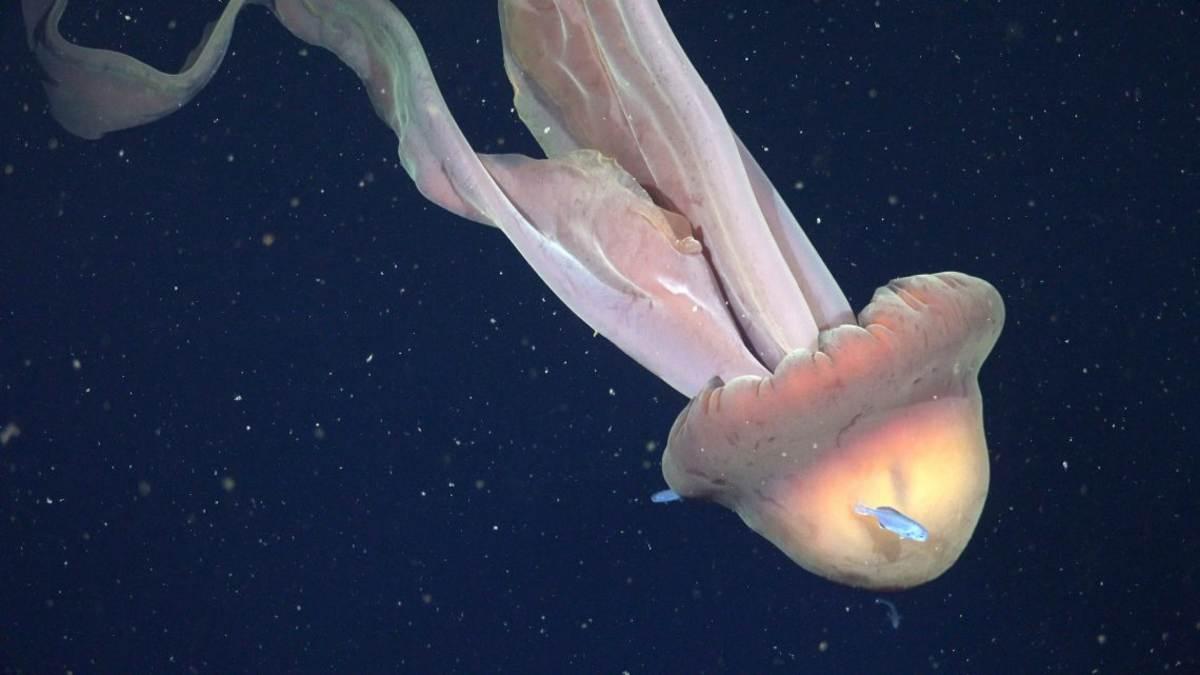
Juvenile fish (Centrolophus sp.) swim around the bell of a Stygiomedusa gigantea, commonly known as the giant phantom jelly
Trash was also part of the party. Scientists spotted a near-pristine VHS tape, fishing nets, and garbage bags in the area. Researchers claimed that many of these items sustained because of the concerning durability displayed by plastics. Scientists are hopeful that findings from the study will reveal the inner workings of several elements in the ocean, like the connection between cold seeps and coral reefs. “We collected an unprecedented number of chemical, physical, and biological samples that will be used to understand connections in our waters for years to come,” shared Dr. Melisa Fernández Severini of Instituto Argentino de Oceanografía and CONICET. “These samples represent a unique opportunity to understand not only how extraordinary these extreme ecosystems are, but also how vulnerable they can be.” Further expeditions are being planned to reveal more about the Argentine deep sea.