
Mysterious Interstellar Visitor 3I/ATLAS Will Soon Come In a Course-Altering Encounter with Jupiter
Updated Dec. 1 2025, 6:34 a.m. ET

Comet with glowing tail hurtles in space
Ever since 3I/ATLAS entered our solar system, it has riddled the brains of scientists with honeycombs of questions. Its insanely high velocity, its unusually active cometary nature, and its devil-may-care attitude make it look like the main character of a science fiction novel. Its strange trajectory is only adding more drama to this character. Nobody knows where it came from, but scientists believe that it has been hurtling in the dark space for the past 10 billion years, even before our solar system formed.
After waving a distant hi to planet Earth from 170 million miles away and a friendly hello to Mars from 18 million miles away, the mysterious guest headed towards the Sun and is now zipping towards our great gas giant Jupiter. In a study published on the arxiv server, scientists propounded that the comet’s last encounter with Jupiter will dramatically alter its course, before it finally departs from our solar system forever.
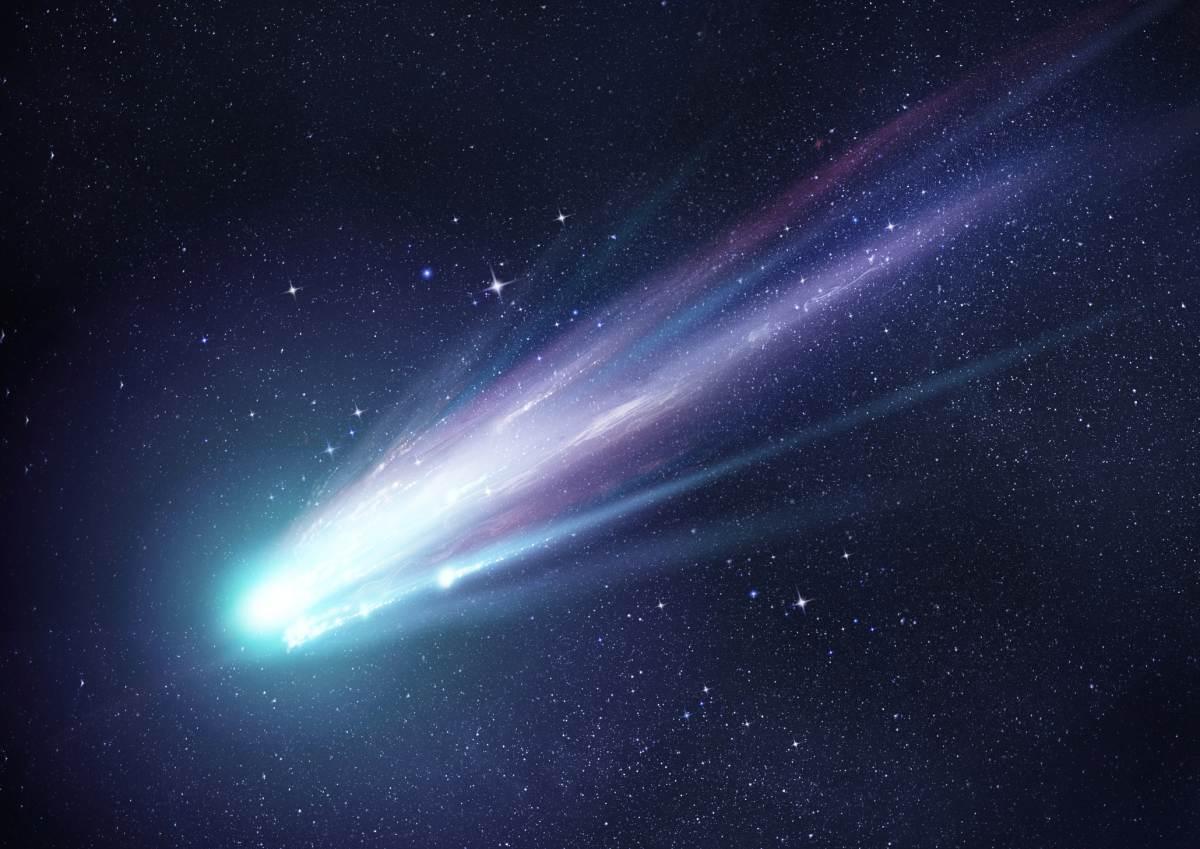
Bright glowing comet hurtling in space
The curious cosmic visitor from another world seems to have been first spotted back in July this year. Initially, it caught the attention of NASA’s Asteroid Terrestrial-Impact Last Alert System. Scientists were astonished to note that the comet was travelling at a bizarrely high velocity of 36 miles per second. Intrigued by the new guest, NASA’s scientists locked and directed their other telescopes, including Hubble, James Webb, SphereX, PUNCH, STEREO, and others, to spy upon it and collect more details.
It was only after the James Webb Space Telescope hooked itself up to monitoring the comet that it deduced that it was an interstellar object, the third object Earth received after 1I/'Oumuamua and 2I/Borisov. Data captured by the telescopes made some scientists think that the comet is a lonely interstellar body that has been trundling through the dark space even before the evolution of our solar system. Its remarkable chemical profile was another noteworthy clue.
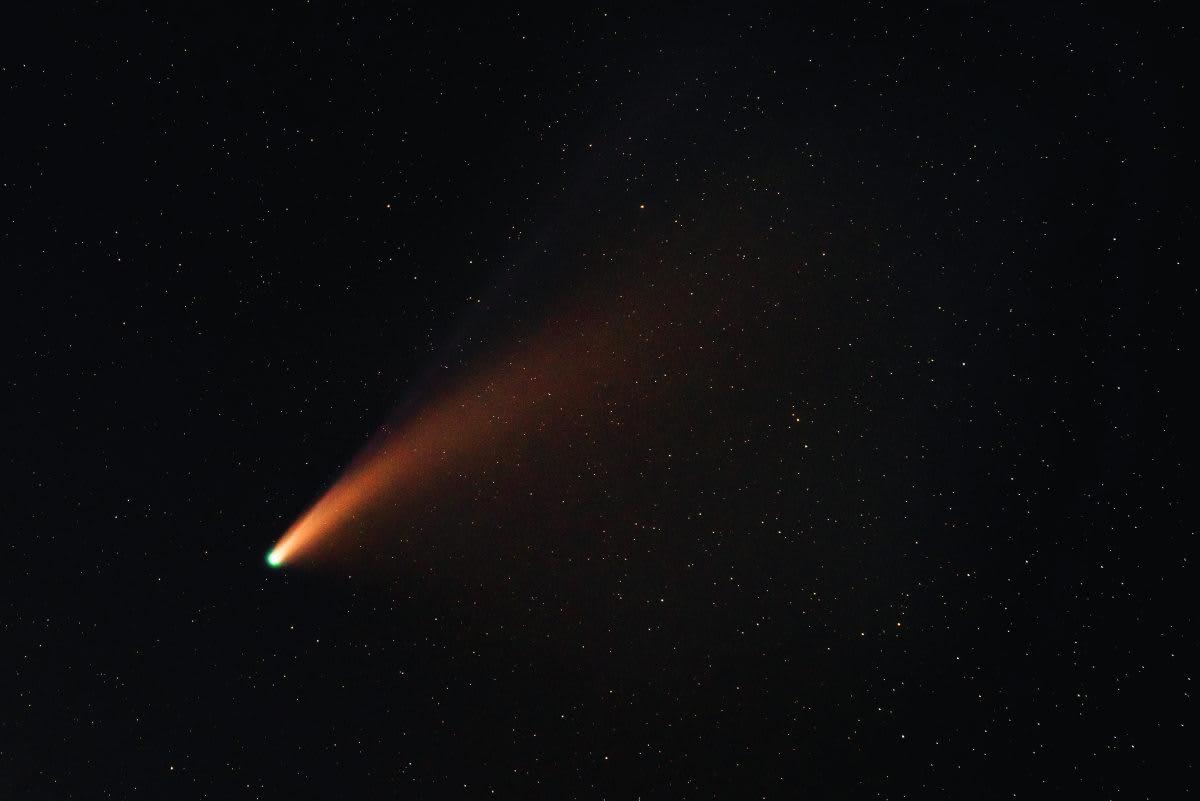
A comet hurtling in space with a glowing tail.
3I/ATLAS, it seemed, refused to obey any rules of chemical hierarchy that most of the other comets follow. 3I/ATLAS, featuring a long, glowing tail, displayed an unexpected chemistry. The interstellar visitor seems quite interested in our solar system’s planets, as it is visiting the top ones, like stopping by its ancient stellar relatives to greet them. A particularly interesting episode came to attention when it came close to the Sun. It started displaying an unusually active behavior. And even though interaction with the Sun altered its path a little bit, later on, its subsequent trajectory revealed that it was not gravitationally bound to the Sun, per Exo-Sci.
For the scientists observing the comet, this last encounter is of immense interest. It wouldn’t be surprising either if sci-fi fans have a new movie to watch, on the story of this comet, after it departs. For the whole community of science, the arrival of this comet is a fascinating episode, and its departure would be just as heartbreaking. The data suggests that this glittering new guest came from the Sagittarius constellation and is headed towards the Gemini constellation.
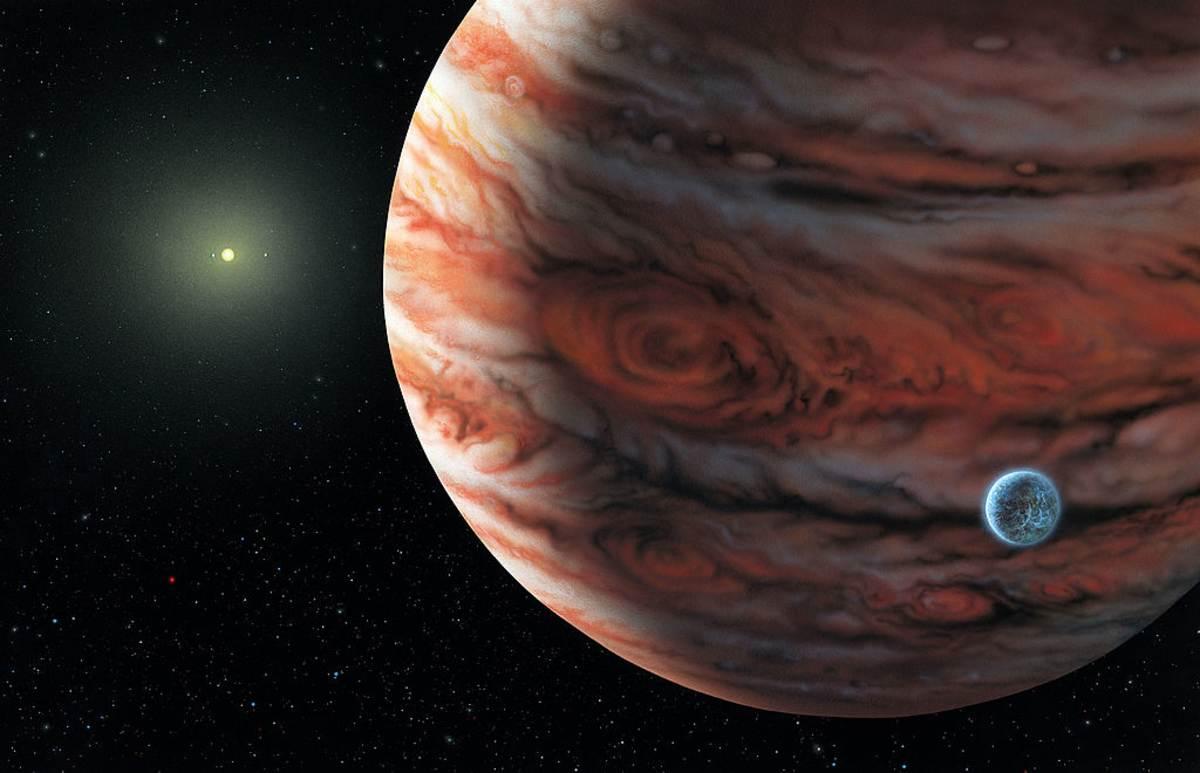
An artist's depiction of Jupiter.
They believe that once it nears Jupiter’s Hill radius, it will be pulled by the influence of Jupiter’s gravity and could even become its temporary captive. But more than the gravitational force, it is likely to be influenced by outgassing and radiation pressure. From an entirely new perspective, Harvard scientist Avi Loeb suspects that 3I/ATLAS is not even a natural cosmic object. It’s a technological probe working for an alien intelligence. Once it lands on Jupiter, it will release these probes and slow down its thrusters to position the probes there forever. Dr. Michio Kaku has the same suspicion. The comet, he says, looks like a duck, walks like a duck, but it couldn’t necessarily be a duck.