
NASA Spots a Mysterious Object Racing 1 Million Miles per Hour — And It May Be Exiting the Milky Way
Published Dec. 2 2025, 9:19 a.m. ET

A person observing starry objects in space through a telescope
A few years ago, NASA’s scientists Martin Kabatnik, Thomas Bickle, and Dan Caselden were poring through a set of images their telescopes had captured by mapping the space in infrared light. Some of these images stopped them in their tracks, hooking their attention with their fast and furious speed. Zipping at millions of miles per hour through space, the glowing red object was rumbling with mystery. The object didn’t meet the specifications of anything they had in their cosmic catalogue of cold celestial objects, and scientists couldn’t understand what it was. At the time, they documented the object’s details in Astrophysical Journal Letters, but even now the mystery lingers in the air.
At about 2,400 trillion miles away from Earth, this object, named CWISE J1249+3621, is hurtling inside the constellation Canes Venatici, spitting stardust of mystery all around. Its unusual trajectory indicates that it is about to leave the galaxy in a short while. Why and how, no one can say for sure. The study of this object is part of NASA’s WISE (Wide-field Infrared Explorer) mission that studied the small-sized cold objects in space using infrared light between 2009 and 2011. In 2013, it was reactivated as NEOWISE before retiring in August 2024. "I can’t describe the level of excitement," Kabatnik shared in a press release.
Kabatnik and other citizen scientists were working on a Backyard Worlds Planet 9 project that investigates objects moving close to the Sun. After CWISE caught their attention, they monitored it via a telescope etched in Hawaii inside a dormant volcano. The only thing certain about it was its speed. Its hypervelocity behavior was one of the first things that caused scientists to comb their catalogues for clues. They found none.
They whipped up arrays of speculations. The first one is that CWISE is a brown dwarf or a “failed star,” with giant clouds of dust and gas that collapse under its own gravity. Not that it failed to achieve some standard star qualification in their report card, but because it failed to accumulate enough stellar mass essential for triggering the fusion of hydrogen to helium. Then, the next piece of the puzzle. Where did it come from?

A researcher looks through a telescope.
One possibility, they contemplated, was that the celestial orb is running away from a “cosmic vampire,” a.k.a. a white dwarf. A white dwarf is a collapsing star with a hollow core and vampire-like tendencies. It usually latches onto a brown dwarf, traps it in a binary system, and starts feeding upon its hot, starry material. After the gruesome feeding, the white dwarf eventually collapses, leaving the tormented brown dwarf to escape the system and run free. It is like a “kick” for the brown dwarf that dramatically increases its speed as it pushes itself out of the system.
Another possibility is that CWISE got a “kick” from a black hole system that launched it right out of a globular star cluster and propelled it towards the center of the Milky Way. In conversation with Space.com, Adam Burgasser, of the University of California, San Diego, reflected that the cosmic candidate may actually be “unbound” to the Milky Way and could soon cross the galaxy, given how swiftly it is careening through it.
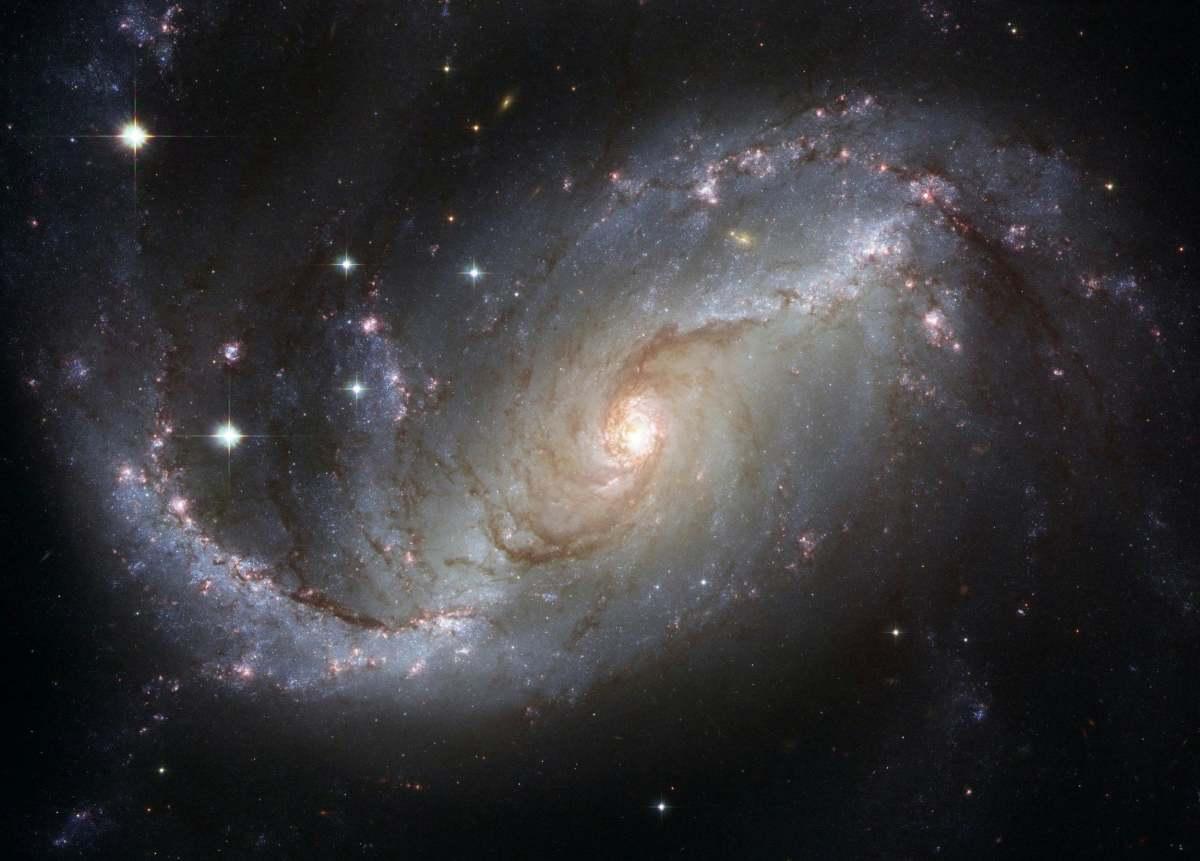
Gray and Black Galaxy.
Its orbit, chemical makeup, and trajectory unleash other fragments into the mystery. According to Burgasser, its orbit is the “most surprising aspect.” While most of the stars are much more chaotic, this one seems to be moving radially in and out of the Milky Way’s center, almost perfectly in plane, seemingly on its way to exit. And as it scurries among the stars, scientists are staying up at night to decode all the details they can of this mysterious cosmic wanderer before it leaves the galaxy.