
Jellyfish and Sea Anemones May Be Brainless — but They're More Similar to Us Than We Thought
Published Jan. 9 2026, 2:52 a.m. ET

A girl looking at jellyfish in an aquarium.
Jellyfish and sea anemones may have evolved without a brain, but they sleep, similar to humans. A network of interconnected neurons compensates for the lack of a brain in these creatures. But the bigger surprise is that sleep might have nothing to do with the brain. According to a new study published in Nature Communications, sleep may have evolved before even the most primitive brains. Researchers believe that this discovery is evidence to support the importance of sleep for bodily maintenance, DNA repair, and maintaining neurological balance. “This confirms that sleep allows a window for key housekeeping tasks,” says Philippe Mourrain, an associate professor of psychiatry and behavioral sciences at Stanford University and a sleep study expert, as per Scientific American.
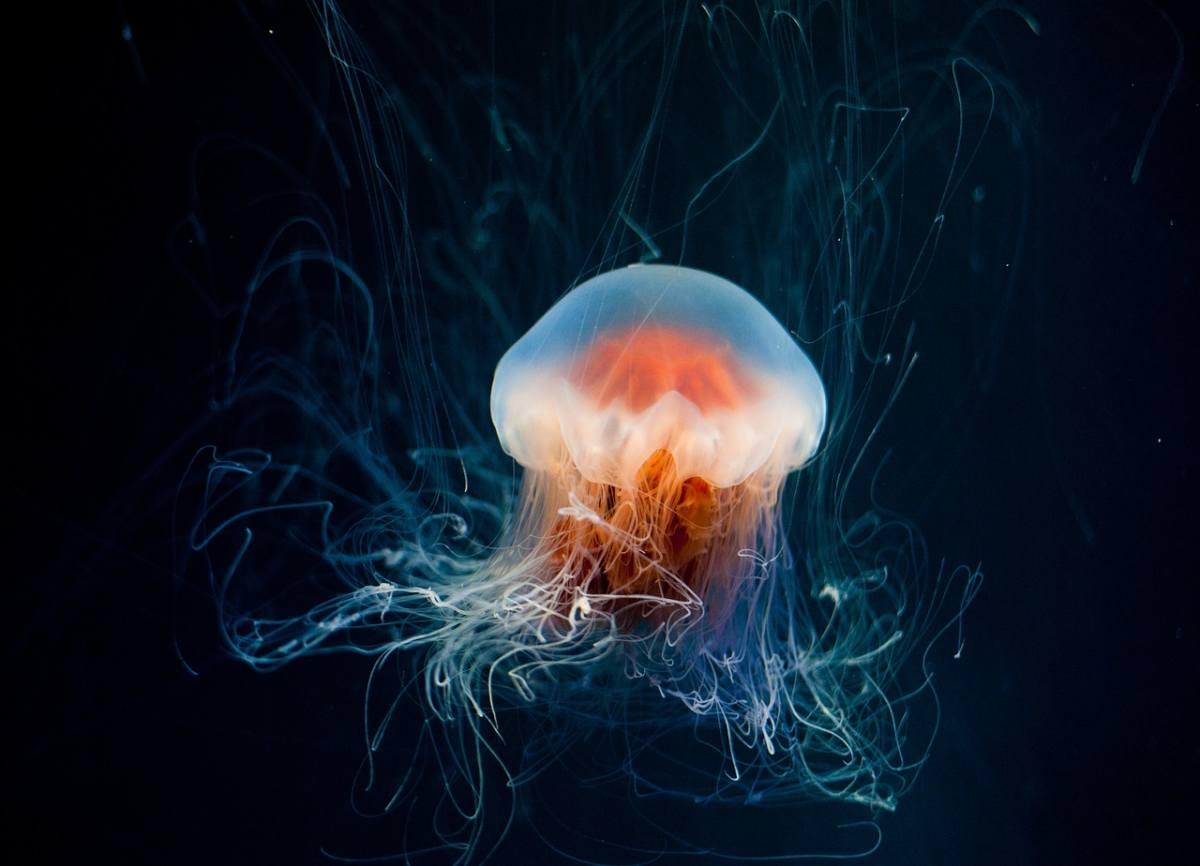
A jellyfish glowing underwater
Why do animals sleep? Earlier, sleep was considered a hindrance in everyday activities and a moment of weakness, as it makes organisms less aware of their environment and vulnerable to predators. However, this recent study has highlighted the crucial role that sleep played, even in the early stages of evolution. In a previous study, researchers observed that neurons in zebrafish accumulated DNA damage during their active state and required sleep to replenish the body, mend the damage, and restore functions, as per EurekAlert. DNA damage in such creatures can be caused by factors like radiation, metabolism, oxidative stress, and more, which could worsen with lack of sleep. The current study, jointly led by Professor Lior Appelbaum and Professor Oren Levy at Bar-Ilan University, attempted to trace back sleep patterns in two ancient animal lineages.
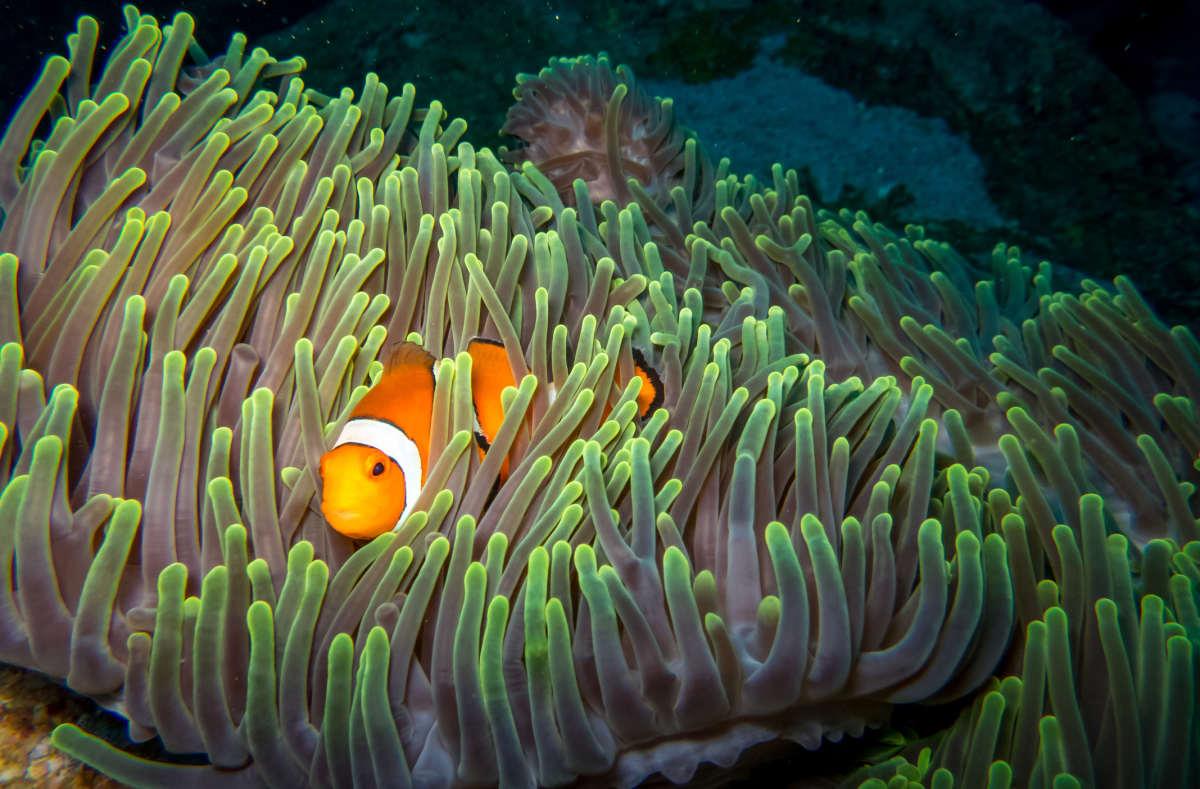
Curious clownfish sitting in the shelter of sea anemones
Dr. Raphaël Aguillon, Dr. Amir Harduf, and colleagues from the Appelbaum and Levy labs studied diurnal and crepuscular lineages. The former is an ancient lineage of symbiotic jellyfish that sleeps at night and naps in the day, similar to humans. Crepuscular, a non-symbiotic sea anemone that sleeps before sunrise and through half of the day. Although the creatures have slightly different sleep patterns, infrared video tracking helped analyze that each species sleeps for at least 8 hours a day, a duration often considered ideal for human sleep. In both creatures, researchers observed a stark drop in DNA damage after sleep, highlighting the recovery that occurred when the organisms were not awake. Surprisingly, despite having similar sleep patterns and duration, their regulation is quite different in both species.
In jellyfish, sleep is regulated through the light-dark cycle, whereas sea anemones rely on their internal circadian clock, highlighting their distinct inherent nature. Yet the two species have one sleep trigger in common, and it's the homeostatic sleep pressure. “Our findings suggest that the capacity of sleep to reduce neuronal DNA damage is an ancestral trait already present in one of the simplest animals with nervous systems,” Appelbaum said. “Sleep may have originally evolved to provide a consolidated period for neural maintenance, a function so fundamental that it may have been preserved across the entire animal kingdom," he added. This study indeed sheds light on the importance of sleep not just in jellyfish and sea anemones but also in humans.

A woman sleeping
Humans require sleep, just like jellyfish and sea anemones, to maintain our bodily and neurological functions. Disturbed sleep for a prolonged period can make us more susceptible to neurodegenerative diseases like Alzheimer’s and Parkinson’s. “Sleep is important not just for learning and memory, but also for keeping our neurons healthy. The evolutionary drive to maintain neurons that we see in jellyfish and sea anemones is perhaps one of the reasons why sleep is essential for humans today,” Applebaum added.