
New 773,000-Year-Old Fossils Might Just Help Scientists Piece Together Human Evolution
Published Jan. 8 2026, 5:30 a.m. ET

Concept of human evolution.
Archaeologists uncovered ancient hominin fossils along Morocco’s Atlantic coast, and it could fill a major gap in human evolution. A recent study published in the journal Nature revealed that the fossils recovered from Grotte à Hominidés, a cave site in Casablanca, included an intact adult jawbone, a half of an adult jawbone, and the jawbone of a child, as well as many vertebrae and isolated teeth. The cave site could have been inhabited by ancient carnivores, and it offers insights into the prehistoric coastal ecosystem. The site once supported a rich ecosystem of wetlands and swamps that were occupied by a plethora of wildlife, including panthers, hippos, crocodiles, hyenas, and jackals, among others. Although the fossil remains are hominin bones, they are different from those found at the nearby Jebel Irhoud site.
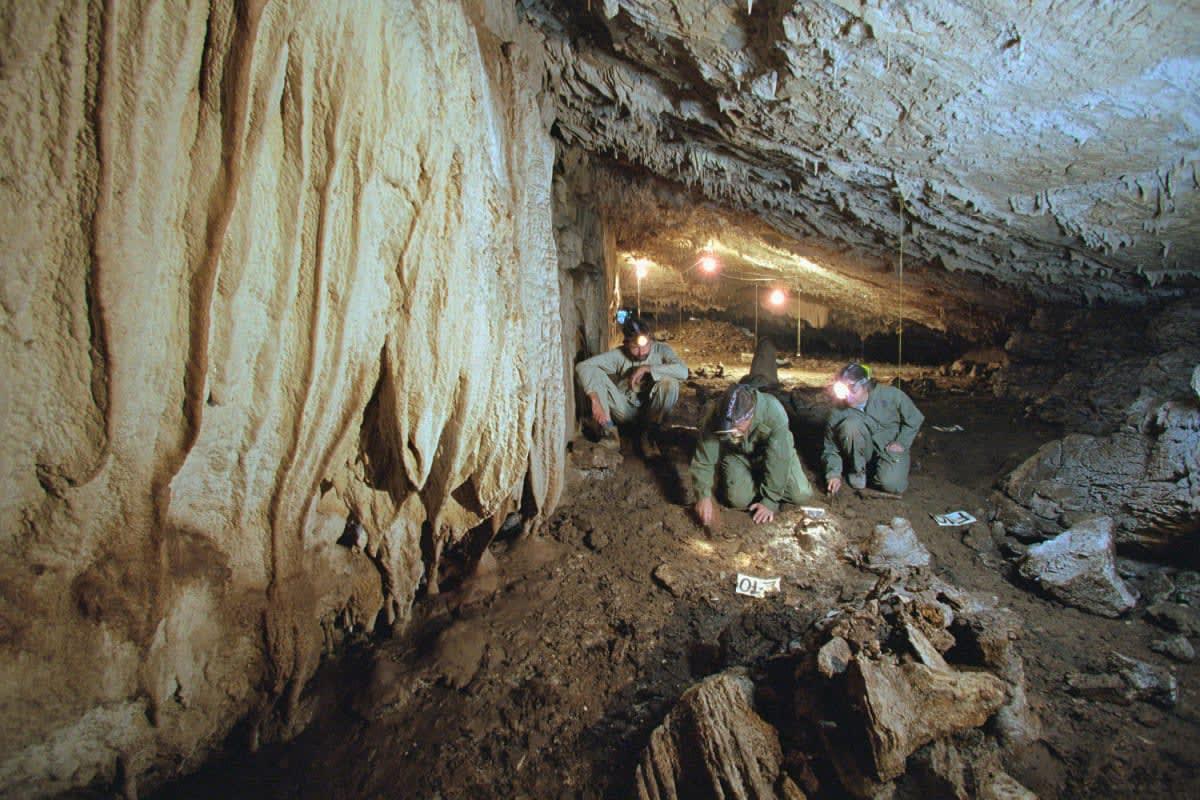
Archeologists in a cave.
The Jebel Irhoud site consisted of fossils dating back 300,000 years and is the oldest known evidence of Homo sapiens. Since the recently discovered remains are distinct from the ones found at Jebel Irhoud, researchers believe they could provide insight into the divergence of human lineages. The recent and precisely dated remains fall under the African fossil record, dated from 600,000 to one million years ago. This time period is when the African lineage, which developed into Homo sapiens, is believed to have diverged from Eurasian hominins, the lineage that produced Neanderthals and Denisovans. Another hominin that emerged from ancestral divergence was Homo antecessor, which is recognized through its unique blend of ancient and modern features.
Its discovery in the 1990s in Gran Dolina, Spain, was groundbreaking as it pushed back the known date of human existence in Western Europe by several years. Moreover, these fossils questioned a popular belief that Homo sapiens replaced other hominins when they travelled around the world after originating in Africa. The Gran Dolina fossils pushed another idea that Homo sapiens didn't replace, but all hominins migrated out of Africa and developed into different hominins. In this evolutionary proposal, Homo antecessor is believed to be the potential link between African ancestors and European Homo sapiens and Neanderthals. Now, the fossil discovered in Morocco bears some resemblance to Homo antecessor, indicating a common ancestor. The Moroccan fossil has the signature mosaic trait, blending modern and prehistoric features.
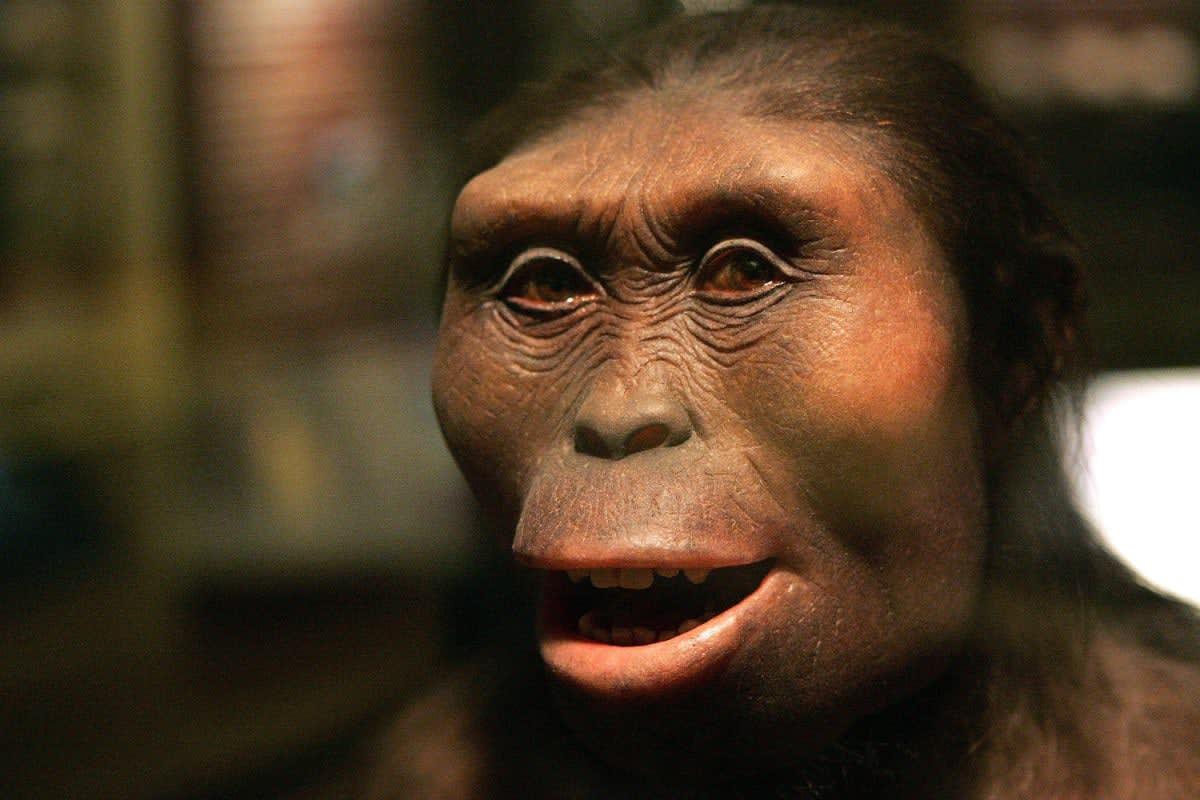
The face of Lucy, aka Australopithecus afarensis, one of the first popular hominin fossils.
The similarities between the hominin fossils found in Spain and Morocco suggest that their common ancestor likely existed on both sides of the Mediterranean. It also provides some evidence to the theory that the divergence between the African and Eurasian lineages began way earlier than presumed. Jean-Jacques Hublin, an anthropologist at the Max Planck Institute for Evolutionary Anthropology in Germany, led the recent study. The researcher believes that the fossil discovery confirms that Homo sapiens have African origins and are not connected to the Eurasian lineage, despite what some previous theories may suggest.
“The fossils from the Grotte à Hominidés may be the best candidates we currently have for African populations lying near the root of this shared ancestry, thus reinforcing the view of a deep African origin for our species,” Hublin said in a statement. “Analysis of this structure consistently shows the Grotte à Hominidés hominins to be distinct from both Homo erectus and Homo antecessor, identifying them as representative of populations that could be basal to Homo sapiens and archaic Eurasian lineages," said Matthew Skinner, a coauthor of the study.