
NASA Discovers Thick Atmosphere Cloaking a 'Super-Earth' 280 Light-Years Away
Published Dec. 12 2025, 5:28 a.m. ET

An astronomer noting observation
Scientists may have discovered an atmosphere on a distant planet. Astronomers at NASA used the James Webb Space Telescope to detect evidence suggesting that the rocky planet called TOI-561 b, aka Super-Earth, that exists beyond our solar system, may have an atmosphere. The ultra-super-hot planet is covered in lava and contains oceans of magma. The description is enough to understand the planet's irrelevance to the Earth. It is too hot and too small, even though it's about 1.4 times the size of Earth, to sustain an atmosphere like our planet, or at least that's what we thought. But new observations suggest that this fiery and lava-covered planet may have a persistent layer of atmosphere, a revelation that could change long-standing assumptions about extreme planets.

An illustration of a thick atmosphere above a vast magma ocean
In a study published in The Astrophysical Journal Letters, Nicole Wallack, co-author of the study and a Carnegie Science Postdoctoral Fellow, revealed that the planet is surrounded by a "thick blanket of gas," which contradicts the "conventional wisdom about ultra-short-period planets.” Johanna Teske, staff scientist at Carnegie Science Earth and Planets Laboratory and lead author, revealed that the planet TOI-561 b has a strangely low density, making it an anomaly among others. “It’s not a super-puff, but it is less dense than you would expect if it had an Earth-like composition," she added. The research team assumed one of the reasons behind the extremely low density to be a small iron core and rocky mantle that is not as dense as Earth's.
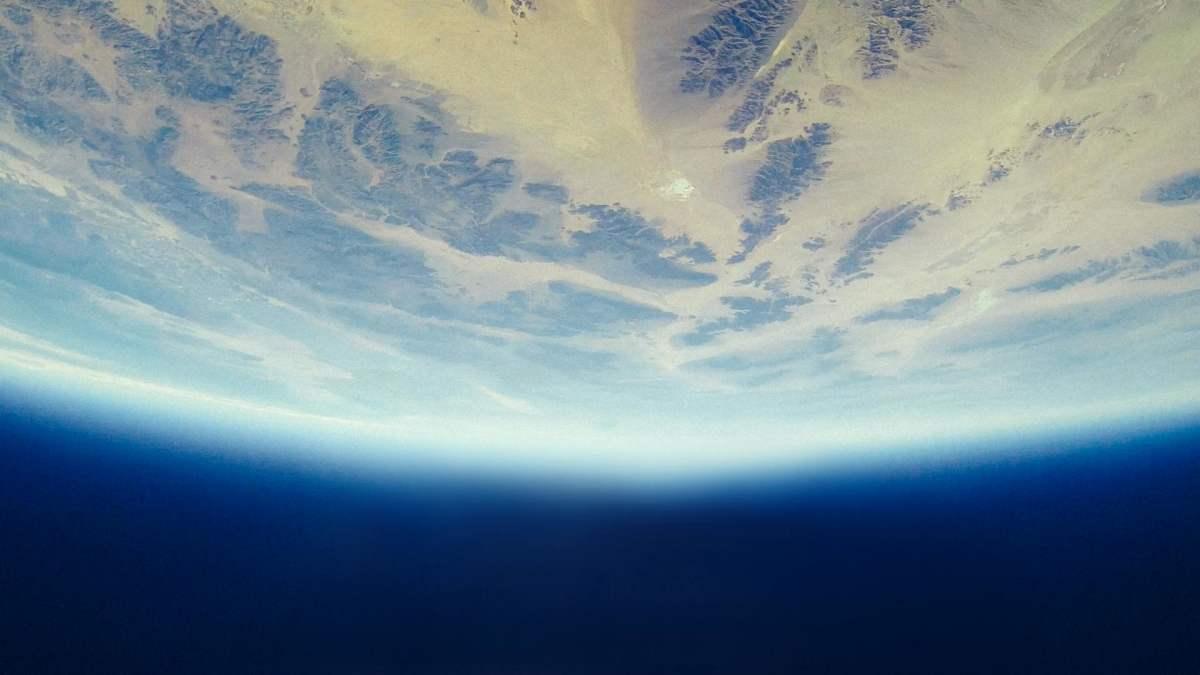
The atmosphere of Earth.
“TOI-561 b is distinct among ultra-short period planets in that it orbits a very old (twice as old as the Sun), iron-poor star in a region of the Milky Way known as the thick disk," the researcher revealed. "It must have formed in a very different chemical environment from the planets in our own solar system," Teske added. The planet might be small, but it appears larger from a distance. Scientists suspected that the thick atmosphere surrounding the planet may have contributed to its larger appearance. Using Webb's NIRSpec (Near-Infrared Spectrograph) instrument, researchers measured the planet's daytime temperature by measuring the decrease in brightness when the planet passes behind its star.
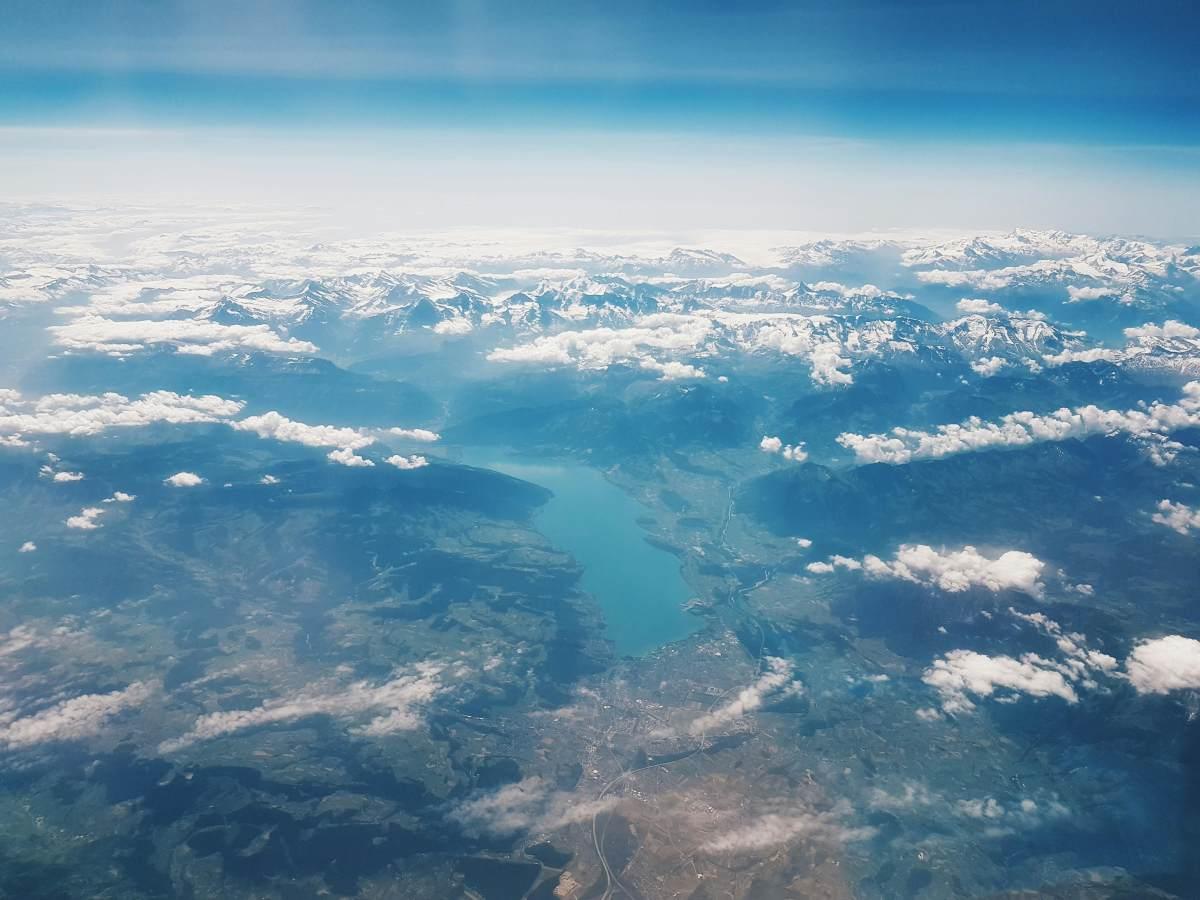
Aerial photo of the Earth's atmosphere.
If TOI-561 b were a rock with no atmosphere to consume the heat, the temperature of the planet would have reached about 4,900 degrees Fahrenheit (2,700 degrees Celsius). But the actual result left the researchers surprised. They found that the daytime temperature was 3,200 degrees Fahrenheit (1,800 degrees Celsius), which is much cooler than what it should have ideally been. There's no explanation other than the presence of an atmosphere behind the heat absorption. If the magma ocean presumably circulated the heat, but without an atmosphere, the nightside would probably solidify, restricting heat circulation of absorption. Scientists considered another possibility behind the drop in temperature, like a thin layer of rock vapor over the magma ocean. But even if it were true, the cooling effect would have been much smaller than observed. With other possibilities falling short, all signs clearly hint at the presence of an atmosphere.
According to Anjali Piette, co-author from the University of Birmingham, such an atmosphere could contain strong winds, vapor clouds, and even silicate clouds as the elements are effective in cooling temperatures. "Strong winds would cool the dayside by transporting heat over to the nightside. Gases like water vapor would absorb some wavelengths of near-infrared light emitted by the surface before they make it all the way up through the atmosphere," she explained.