
New Research Suggests Ancient Genetic Traits Could Be Key to Living Longer
Published Dec. 26 2025, 7:03 a.m. ET

Scientists in a lab are analysing DNA on the computer.
Ancestral genes might be the key behind long lives in humans. Hunter-gatherer ancestors have passed down plenty of information that shaped society, such as inventing fire for cooking and creating tools out of stones. It turns out, they have unknowingly gifted valuable genes. In a recent study published in the journal GeroScience, findings showed that the descendants of Western Hunter-Gatherers (WHG) have a DNA arrangement that can make them live longer. Long life has long been associated with good genes in addition to other factors like daily routine, surroundings, appetite and more. The recent study has shown that the human ancestral DNA also plays a crucial role in defining an individual's longevity. It focused on exceptional longevity in Italy, a place with one of the highest concentrations of people living for 100 years or beyond.
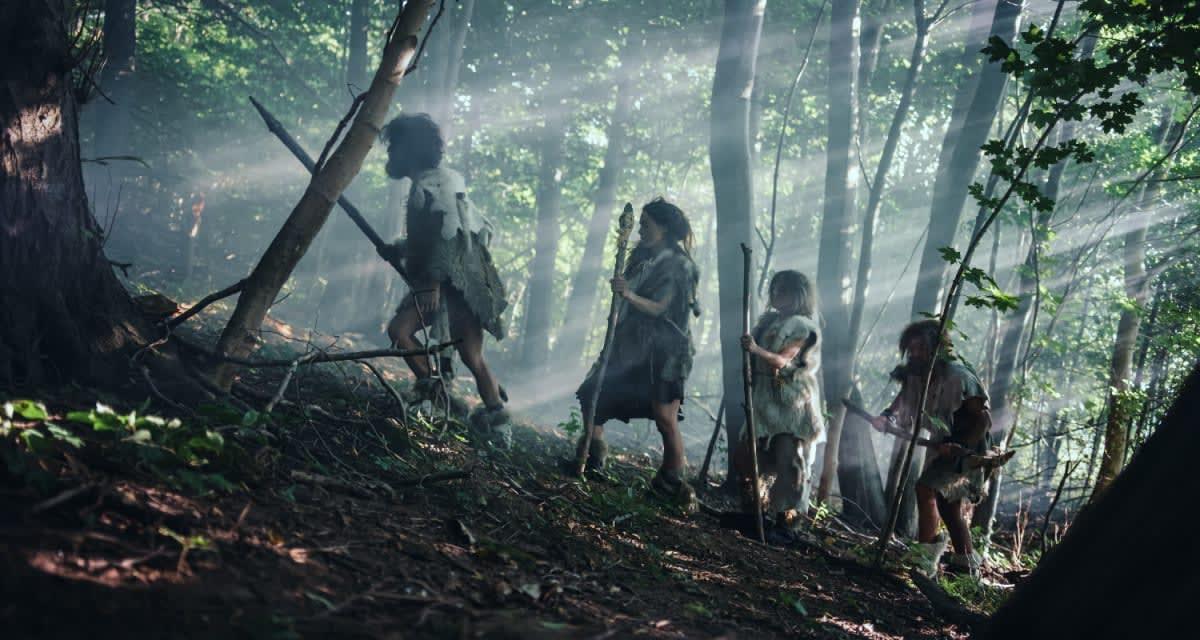
A tribe of hunter-gatherers in a forest.
The researchers conducted an elaborate genetic experiment to determine the value of the ancient genome. They collected genome samples from 333 Italian centenarians (people who lived for 100 years or more) and 690 healthy adults in their 50s. These samples were compared to the Italian ancient genome by narrowing down to four ancestral groups whose genes could be present in modern-day Italian individuals. All four groups believed to be the original inhabitants of Europe included: Western hunter-gatherers, Neolithic farmers from Anatolia, Bronze Age nomads, and ancient populations from the Iranian and Caucasus regions. The gene comparison showed that all the modern-day individuals were formed of a mixture of all four ancestral groups.
However, the researchers were able to point out an unusual pattern that possibly proved the ancestral gene theory right. They realized that the participants who touched the century milestone consistently showed a close association with one ancestral group: Western Hunter-Gatherer. In simple terms, the Italian centenarians were found to have a strong genetic affinity with that particular group. This implies that the Western Hunter-Gatherer most-likely carried "good genes" that promoted longevity even in their descendants. "The present study shows for the first time that the Villabruna cluster/WHG lineage, which has been linked to population shifts within Europe after the Last Glacial Maximum, contributes to longevity in the Italian population," the research team wrote.

Scientists conducting tests in a laboratory
The study also observed that a slight increase in WHG genetic material can improve the chances of an individual living for 100 years or more by 38%. Surprisingly, the chances of women becoming centenarians are higher than those of males. The research team suggests that the longevity trait must have incorporated into the Italian gene pool centuries ago. "We propose that the variants involved in this trait [longevity] may have been introduced into the Italian gene pool at a very ancient time," they said. "This approach grounded in an evolutionary framework provides a historical-genomic perspective that reframes the concept of healthy ageing and longevity—not as a static or universal state, but as a dynamic phenotype shaped by the interplay of genomic population history and continually changing environmental contexts" the researchers concluded.