
Is Leonardo da Vinci's DNA Lurking in His Artwork? Scientists Think So
Published Jan. 8 2026, 8:19 a.m. ET

(L) Leonardo da Vinci (Cover Image Source: Getty Images | Stock Montage); (R) Leonardo da Vinci's Holy Child
If a philomath were allowed to travel back in time, they would probably start their odyssey by visiting the studio of Leonardo da Vinci. If knowledge were a fruit, then Leonardo was the tree where this fruit ripened. Such was his reputation. Astronomy, mathematics, science, art, literature, poetry, engineering, architecture; his insatiable curiosity left no bevy of knowledge bereft of attention.
His eyes, scientists say, were like movie cameras that scanned the environment. However, even after over 500 years since his death, the artist remains elusive. In a recent study published on bioRxiv, scientists speculated that the traces of genome they discovered on one of his artworks were likely his own DNA. Since da Vinci left no children who could tell his life stories to the world, scientists were left hankering to discover one, just one detail, from his life that could reveal something more about him. The remains of his body, too, were disturbed by the French Revolution.
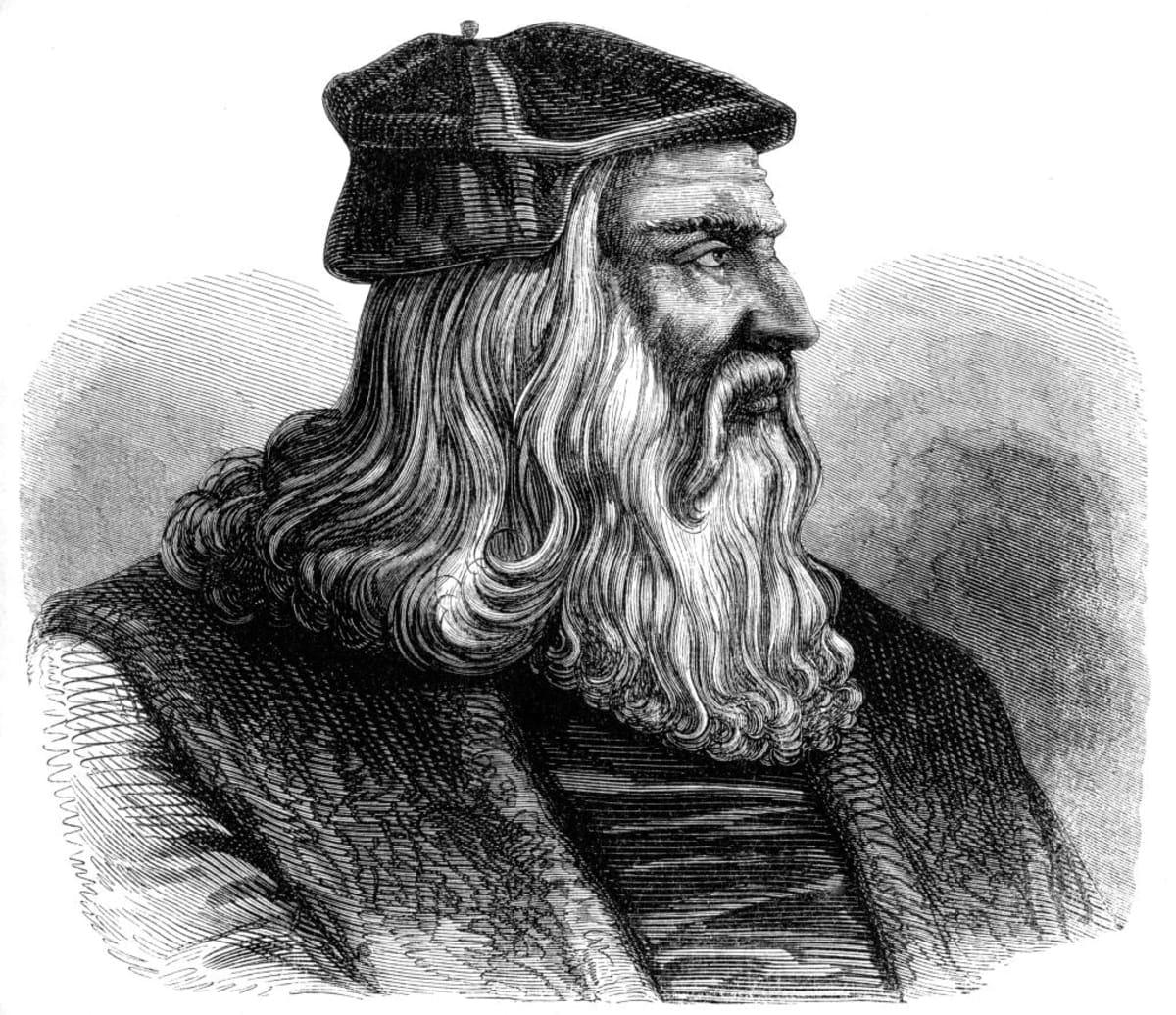
Leonardo da Vinci's 16th-century black and white sketch
For the past several decades, scientists have been working on something called the Leonardo da Vinci DNA Project (LDVP), housed at the J. Craig Venter Institute in Rockville. Their purpose was to determine if the remains at Amboise Castle are really his and to investigate them for his DNA. In an exclusive piece published by Science, researchers likened this project to a modern serial killer mystery where they are searching for the same DNA in different crime scenes. By tracking Leonardo’s biological signatures in his different artworks, they are basically doing the same. In this study, led by University of Maryland microbial geneticist Norberto Gonzalez-Juarbe, researchers shared that they believe that the DNA they have extracted from one of Leonardo’s artworks might belong to him.
They are talking about a Renaissance-era artwork called Holy Child, that is made in red chalk. In contrast to Mona Lisa, famous for its enigmatic style, and The Last Supper, loved for its emotional depth, this piece of art features only the head of a baby boy with strokes and shadings of red chalk highlighting the shadows on his face. From one of the temples, the red shadow flows down to his cheeks, meandering along the lips and dissolving on the chin. Glowing pools of brightness are spilled upon the bald head and the front portion of the toddler’s face, as seen in the photo shared by museum curator Fred Kilne.
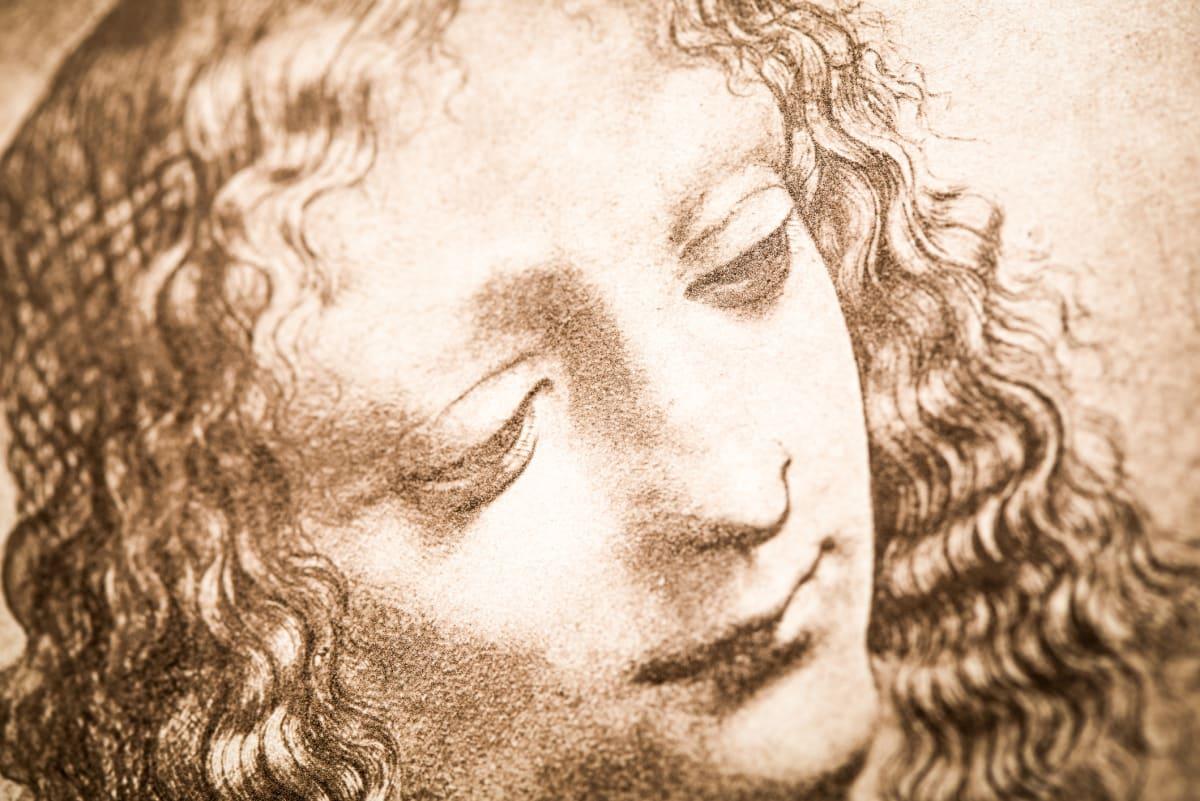
Leonardo da Vinci's painting Virgin on the Rocks
The red chalk had embedded trace DNA. Researchers found that the DNA traces they detected in Holy Child carried stark similarities to the genetic material recovered from a 14th-century letter penned by a cousin of Leonardo, Frosino di ser Giovanni da Vinci. The Y-chromosome sequences in both the newly tested DNA and the letter depicted resemblance to a common ancestor from Leonardo's hometown, Tuscany. The Y-chromosomes revealed through male DNA traces, they say, are usually passed down almost unchanged from father to son. The chromosomes can unravel a clear biological trail and details of his life, including his father, who had at least 23 children with several women.
Heritage science has long dismissed biology as a “bug,” but this research proves that it is just as vital as any other feature. LDVP chair Jesse Ausubel suspects that his paintings could reveal the cells of the epidermis, as he often used his fingers with the brushes to paint. “Our hope is to open a door to explaining what was so unique about the smartest guy in history,” Gonzalez-Juarbe said.