
Great Smoky Mountains Officials Discover Four New Species in the Park’s Ecosystem
Published Dec. 22 2025, 5:10 a.m. ET

A close-up of a millipede on a branch
The Great Smoky Mountains National Park is home to four new millipede species. In a Facebook post, the park announced the exciting discovery, which was made possible through the combined efforts of All Taxa Biodiversity Inventory (ATBI) and Discover Life in America (DLIA). "The Smokies just got a whole lot more—leggy! Four brand-new millipede species have been discovered in Great Smoky Mountains National Park," the announcement read. The park revealed that 2 of the 4 tiny creatures were found at the same location, while the other 2 were spread out across the national park. The Great Smoky Mountains are known to have an extensive and rich biodiversity, and four new additions to it further enhance the park's ecosystem.
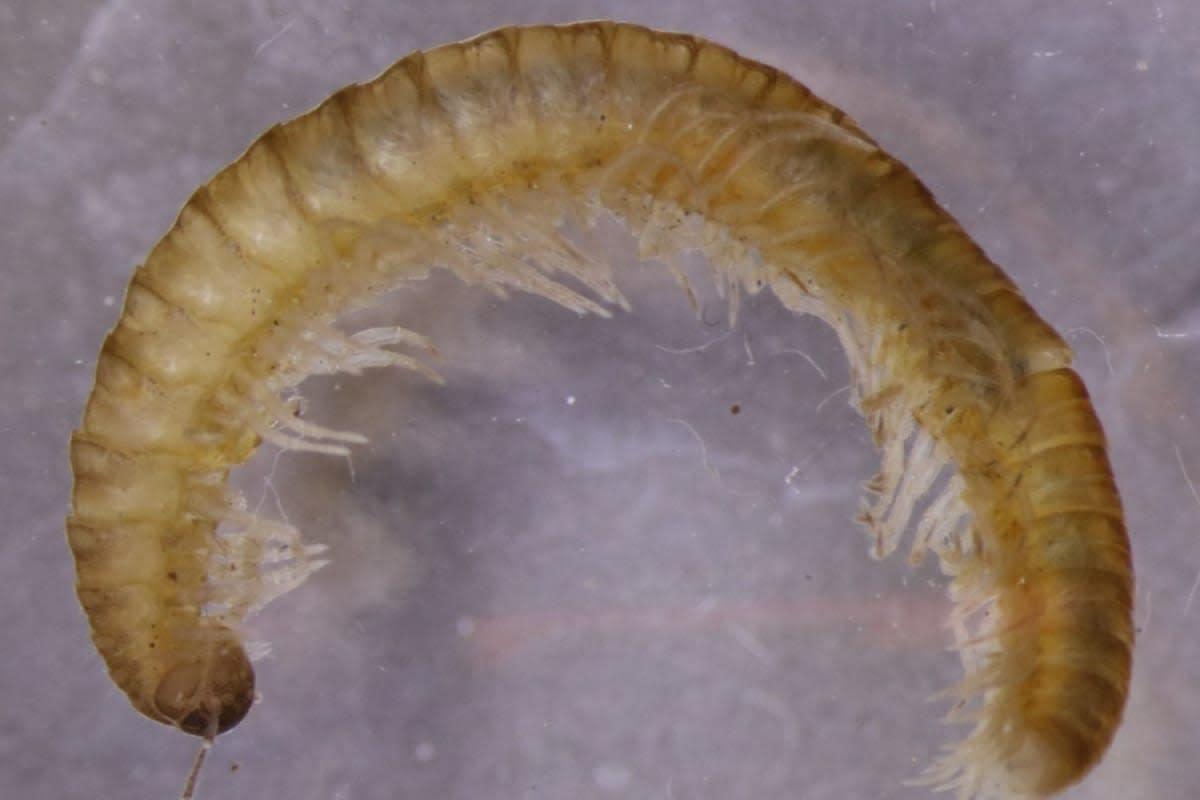
A close-up picture of a millipede discovered at the Great Smoky Mountains National Park
ATBI was an initiative launched with the intention of cataloguing the estimated 80,000 to 100,000 species that may reside within the park. According to the National Park Service, only 19,000 species have been documented so far, and researchers hope to find more through consistent efforts. The project that began in 1998 has shown a tremendous success rate over the years. In the year the project was launched, only 10,000 species were known in the park. As of today, the number of recorded species doubled, with over 22,800 discovered species, as per the NSP. The project aims to understand the biodiversity to effectively manage and protect those species. "This involves not only identifying species but also mapping their habitats, genetic diversity, population densities, and interactions like symbiosis and predation."

Scientist analyzing the newly discovered millipede species.
The scientists associated with the project are focused on discovering new species, keeping an eye out for potential threat, and protecting the complex ecosystem of the national park. In the announcement post, the park credited scientists from Georgia College & State University and Hampden-Sydney College for their contribution to the discovery of the new millipede species.
The impressive biodiversity has earned the park its designation as one of the United Nations World Heritage Sites and International Biosphere Reserves. The park's efforts are great not only for improving its biodiversity but also for increasing intrigue among scientists or aspiring students. The Great Smoky Mountains National Park promotes research and education across its premises. Researchers can explore the Blue Ridge Parkway, Big South Fork National River and Recreation Area, and Obed Wild and Scenic River and even get logistical aid from the park officials.

Clouds over the green valleys of Great Smoky Mountains National Park
Volunteers, teachers, student groups and others heavily contribute to the park's discoveries. The national park has an extensive range of species, from microbes and fungi, to insects and vertebrates. But the question is how? Mountains, climate, and weather are the main factors behind it. Being one of the oldest ranges in the world, the park is dominated by plant-covered, gently contoured mountains that formed perhaps 200-300 million years ago. Moreover, the park provides different environments packed into one: its high elevations and dense lowlands of the park allow different species to thrive. The place also receives abundance of rain and humidity, helping forests, plants, fungi and small creatures to live and grow comfortably.