
Forks Man Spent 50 Years Collecting Ocean Debris. It's Now Turned into a One-Of-A-Kind Art Museum
Published March 9 2026, 8:45 a.m. ET

Retired plumber John Anderson at his Beachcombing Museum in Washington.
One man's trash is another man's art. This assertion has been proven by the Beachcombing Museum in Washington, according to ABC10. The museum displays items from the ocean. All this supposed 'trash' has been gathered by John Anderson, a retired plumber from Forks. In the last five decades, the retired plumber cleaned miles and miles of northern Washington’s beaches. These objects arrive from the Pacific Ocean and are deemed debris by most people. Anderson, though, considers them to be 'treasure.' He uses a lot of it to make art. “So, this is my latest tower right here,” Anderson told ABC10 regarding a colorful structure of dangling fishing apparatus. “There’s a crane boom underneath there. And these are all crab pot buoys.”
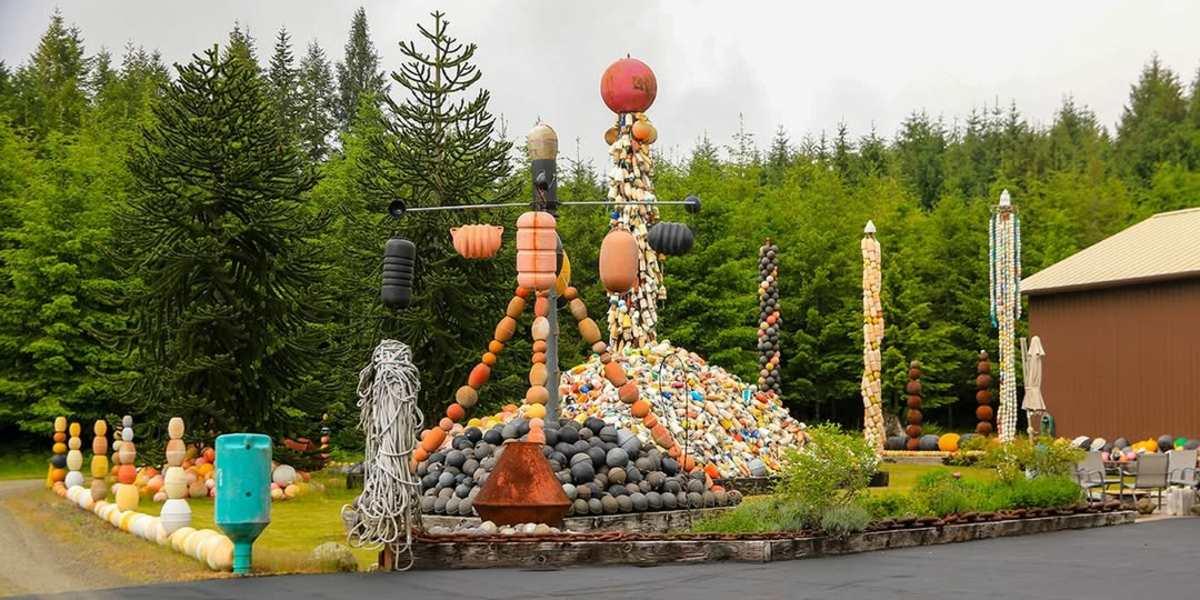
John's Beachcombing Museum in Forks.
The museum stands on Anderson's property and measures around an acre. Anderson has the knack of changing unsuspecting items into beautiful pieces of art. One day, he found an oyster buoy, which he later changed to a hanging chair. Many other such examples can be found in the establishment. Along with being a brilliant display of art, the museum is also a stark reminder of the amount of trash that remains hidden in the waters.
Anderson started collecting debris from the Washington shoreline as part of a family tradition, according to the Seattle Times. This shoreline extends from Cape Disappointment at the mouth of the Columbia River to Cape Flattery and from the Strait of Juan de Fuca to areas of the Salish Sea. The experience hasn't always been easy, with Anderson suffering from broken ribs, sprained ankles, and more because of his pursuit. “People always ask, ‘How many miles do you walk?’" he shared, adding, “I don’t count miles. I count two rebuilt ankles, two new hips, and a back surgery.”
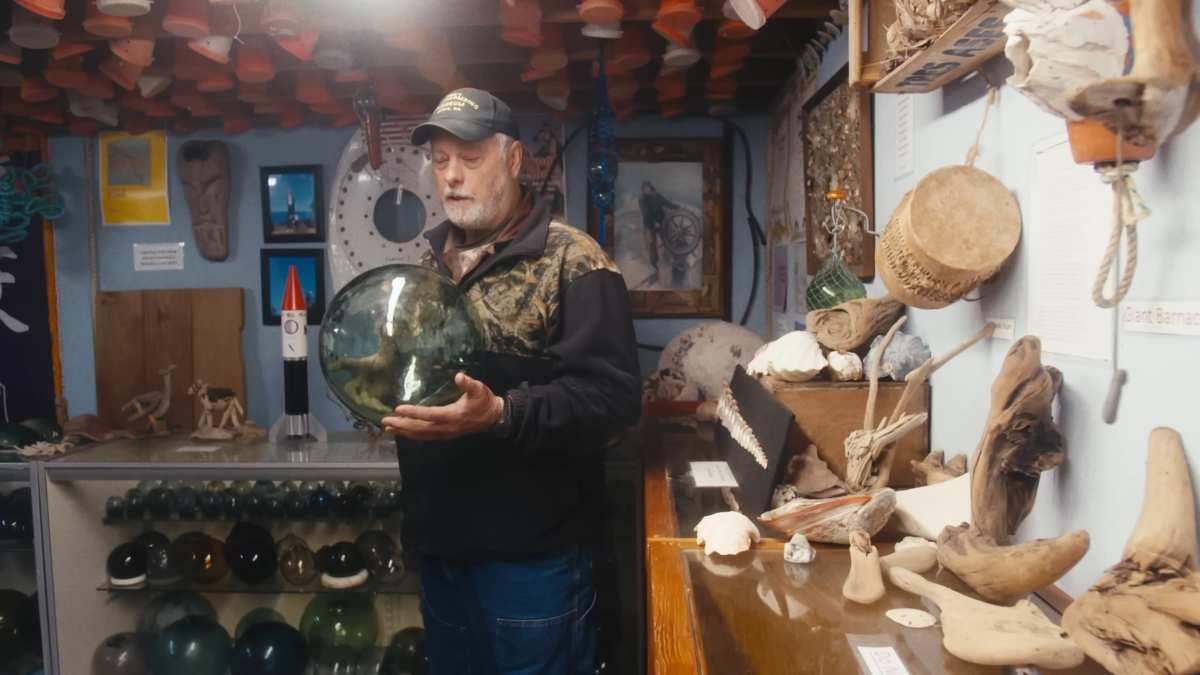
John Anderson showing off items in his museum.
The retired plumber has gathered many interesting objects over the years, like nuclear sub locator beacons, a center spinner cone associated with a Boeing 747 jet engine, Navy submarine mines, and an unexploded smoke bomb. Curtis Ebbesmeyer, a Seattle oceanographer, claims that the beachcombing done by people like Anderson is crucial, as it aids in creating ocean current models that predict where container spills will wash ashore. One type of discovery that Anderson particularly enjoys is messages in bottles, according to ABC10. Many times, he has been able to get the message delivered to the relatives of the intended recipient or the sender.

A visitor photographed toys made from container spills in the museum.
Anderson does not convert all the debris he collects into art, according to the Seattle Times. Hundreds of Saki and Suntory whiskey bottles that he has collected to date remain as they are in the facility. Each display carries a “Do Not Touch” sign. Some items in the establishment date back to the 16th century. There is a shrine dedicated to items associated with the Japanese earthquake and tsunami of 2011, which delivered around 5 million tons of trash into the ocean. Many of the items he collected associated with this event have been returned to Japan with the help of officials. The remaining objects are still present in the museum.
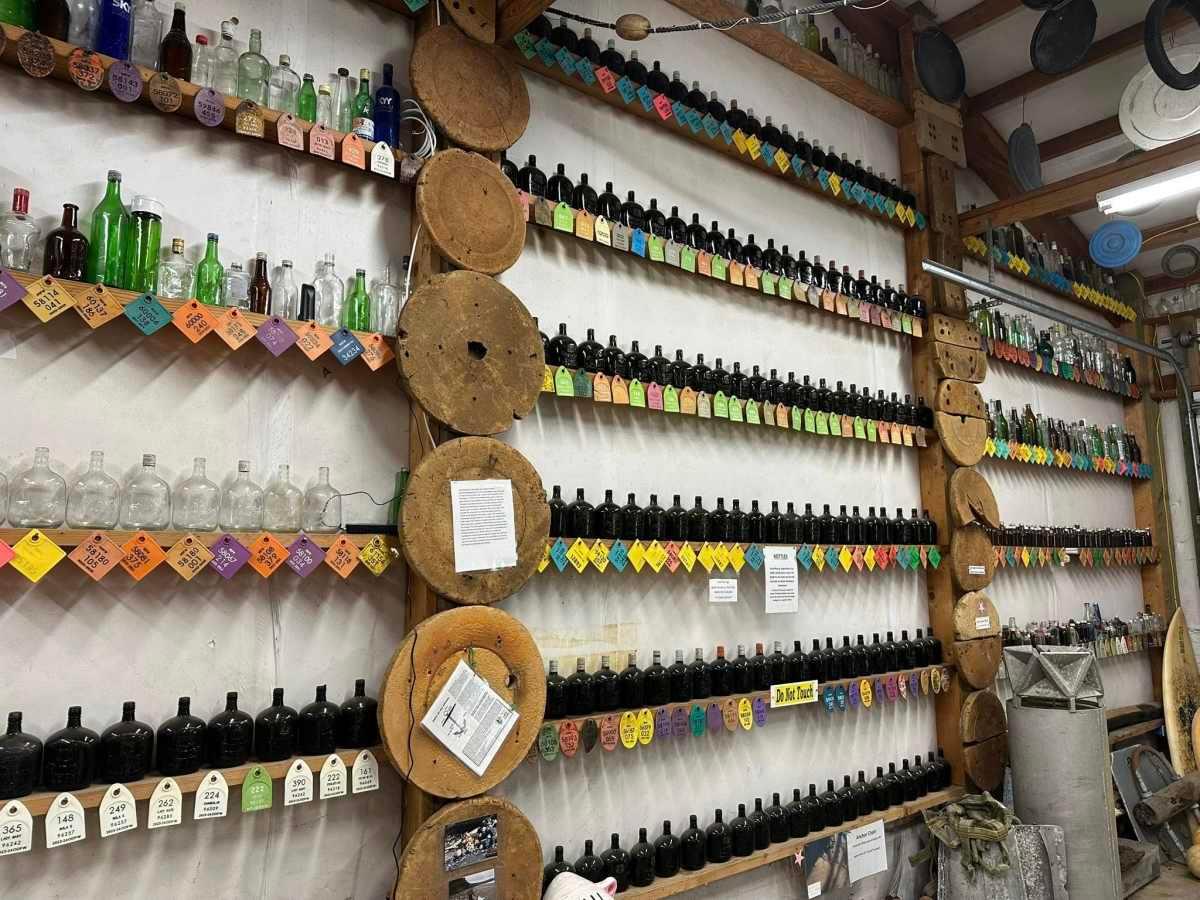
Bottles collected over the years are put on display at the museum.
Anderson hopes that the museum helps shed light on the horrible position oceans are in because of the insurmountable trash, according to ABC10. It has been estimated that around 12 million tons of debris sit inside the oceans. “This just blows people away,” he said, adding, “They’re going, 'Oh my God, all this was on the beach?' And I’m going, 'yeah.'” The retired plumber is optimistic that the museum inspires and will continue to encourage many to take up shovels and start cleaning the oceans themselves.