
This 31-Foot Prehistoric Reptile Once Ate Dinosaurs — Now It's a Georgia Museum Showstopper
Published Dec. 23 2025, 3:31 a.m. ET

Illustration of a Deinosuchus alligator attacking an Agujaceratops dinosaur
Right off the I-75 at Exit 293 in Cartersville, Georgia, inside the Fossils Gallery of Tellus Science Museum, is a ferocious-looking skeleton of a reptile. This relative of modern alligators is staring in the mouth of the visitors, with a long bony tail trailing along the panelled walls painted to depict a forest. Between 76 million and 83 million years ago, when this compact car-sized reptile was not just a skeleton, it roamed the lands of the eastern United States, stalking dinosaurs to kill and eat. Thanks to the diligent passion and meticulous research of Columbus State Professor David Schwimmer, the skeleton was added to the museum’s fossil catalogue, according to the university press release.
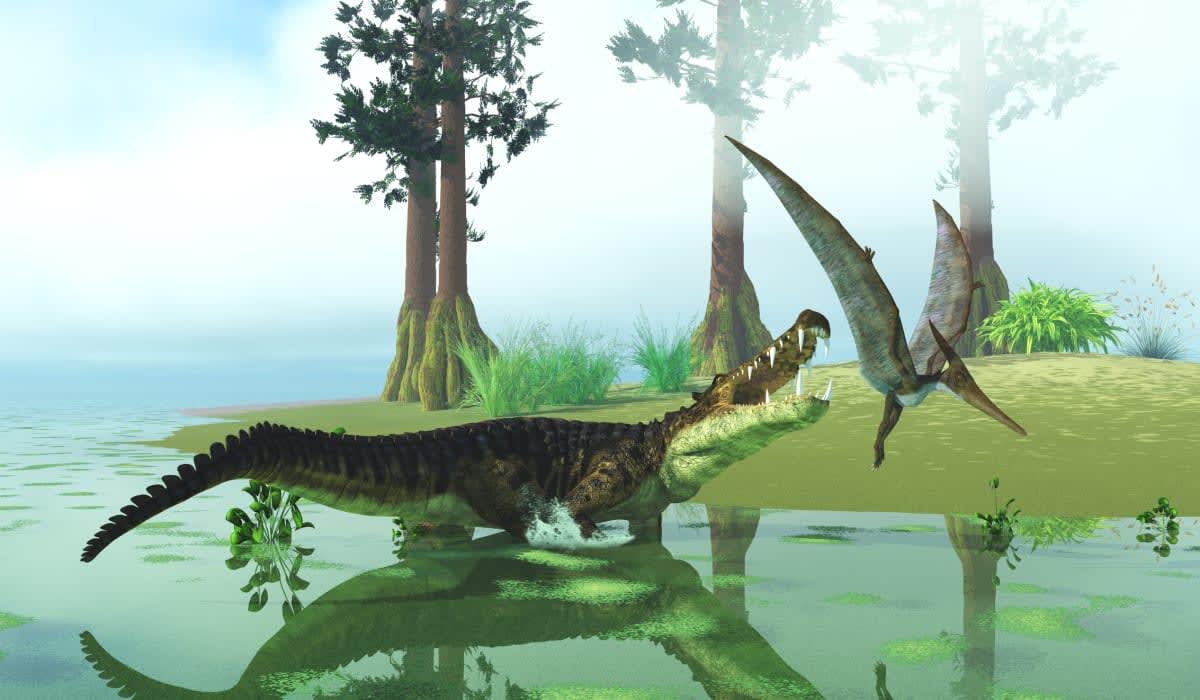
Illustration of a prehistoric crocodile emerging from water to try to eat a flying dinosaur
Schwimmer grew up in New York City, living just 10 blocks from the American Museum of Natural History. Stumbling upon a skull near his home provoked his curiosity, leading him to become an expert on prehistoric reptiles. Beginning as a science writer, the professor ventured on treks to sites in Alabama, Georgia, and Texas, collecting bones of dinosaurs, flying reptiles, crocodile bones, skulls, and old teeth across the southeastern United States. His 2002 book, King of the Crocodylians: The Paleobiology of Deinosuchus, which details his discoveries and adventures, was an Amazon best seller for several weeks.
Schwimmer says the replica of this reptile, featuring the names Deinosuchus schwimmeri and “dinosaur-killer,” was the most apex predator. Perched on a metal frame in the museum gallery, the school bus-sized relative of modern alligators measures 31 feet long. Creating it was an extensive, two-year project, involving the Triebold Paleontology team. The team captured high-resolution 3D scans of the fossil records to rearticulate the creature’s detailed dermal armor and skeletal structure. The replica is a fascinating metaphor for those interested in delving into the world of paleontology and prehistoric reptiles.
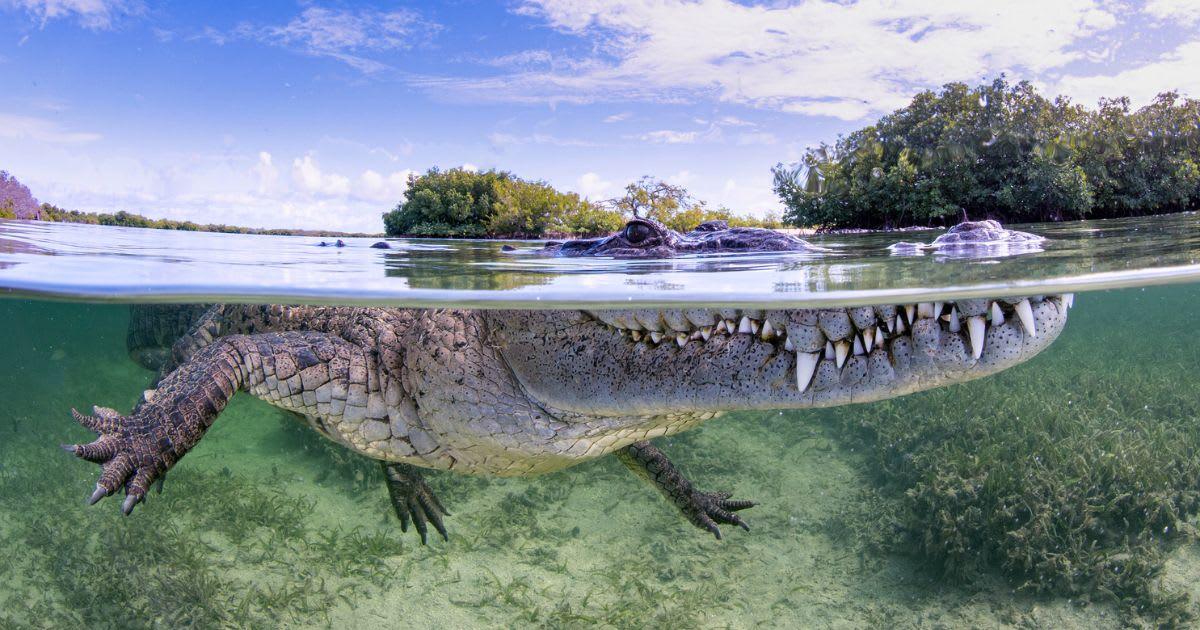
A crocodile swimming in water
Hannah Eisla, the museum’s director of education, said that each year thousands of students visit the gallery on school field trips to learn more about the Deinosuchus species, and this one will provide them with another fragment to piece together their historical narrative of the reptilian world long gone by. Rebecca Melsheimer, the museum’s curatorial coordinator, added that Tellus is currently the only museum to exhibit Deinosuchus schwimmeri. And although the pictures are just as seductive, Melsheimer suggests that watching it up-close is just another level of experience.
The replica is named after Schwimmer, according to a new report published in theJournal of Vertebrate Paleontology in July 2020. Authors of this report also gave the nickname “terror croc” to this dino-eating reptile. The report honored "his tireless work on the Late Cretaceous paleontology of the Southeast and Eastern Seaboard, U.S."
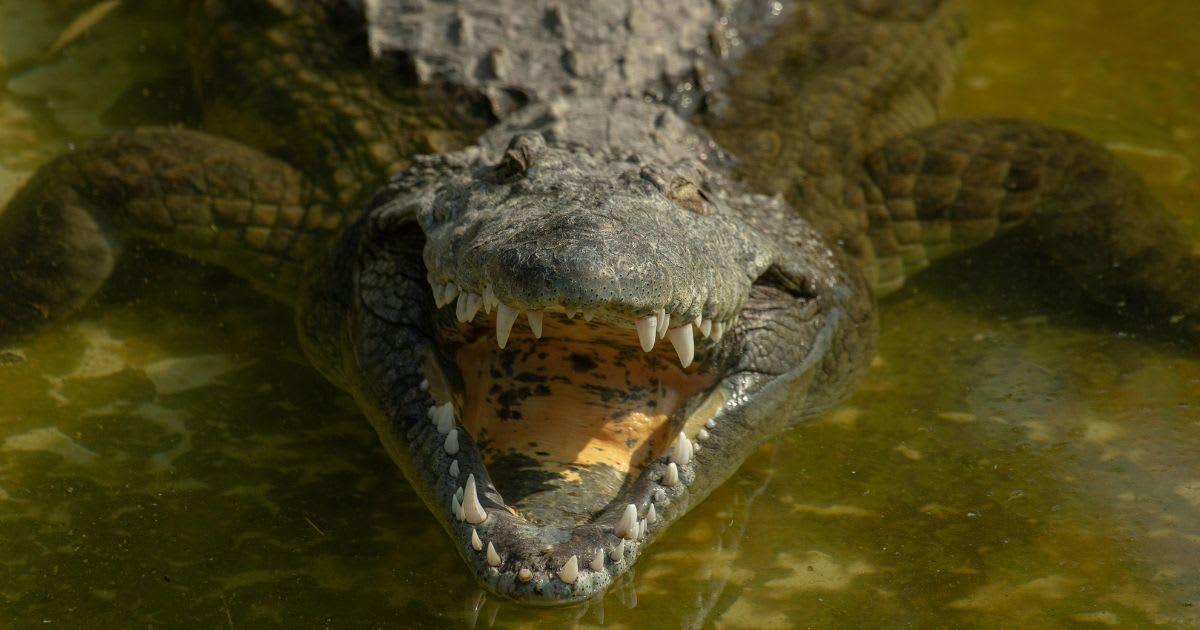
A crocodile bares its teeth
Unassuming of the fame, Schwimmer reflected on why studying these reptiles is much more than just a vocation of amusement. The replicas, he said, are more than creating a “scare factor.” Rather, understanding the predatory habits of dinosaurs enables historians to decode some of nature’s greatest survival strategies. “By studying these ancient apex predators, we are essentially looking back in time to see exactly how life adapted and dominated a changing world.”