
Endangered Condors Make Historic Return to California After 100 Years. It Looks Like They’ve Laid an Egg
Published March 6 2026, 7:11 a.m. ET

A condor couple sitting on a tree bark in California.
The condor, an endangered bird species that didn't nest in California for about 100 years, finally did. This feat was achieved thanks to the efforts of the Yurok Tribe, a federally recognized group that leads the Northern California Condor Restoration Program (NCCRP). Sharing the thrilling news on social media, the group revealed that condors known as A0 and A1 nested in the region for the first time in a long time. "A free-flying pair of condors in the Pacific Northwest recently established the region’s first nest in more than a century," the caption read. The research team under the restoration program observed the behavior of the condors and analyzed their flight data to conclude that the couple may be tending to their newly laid egg.
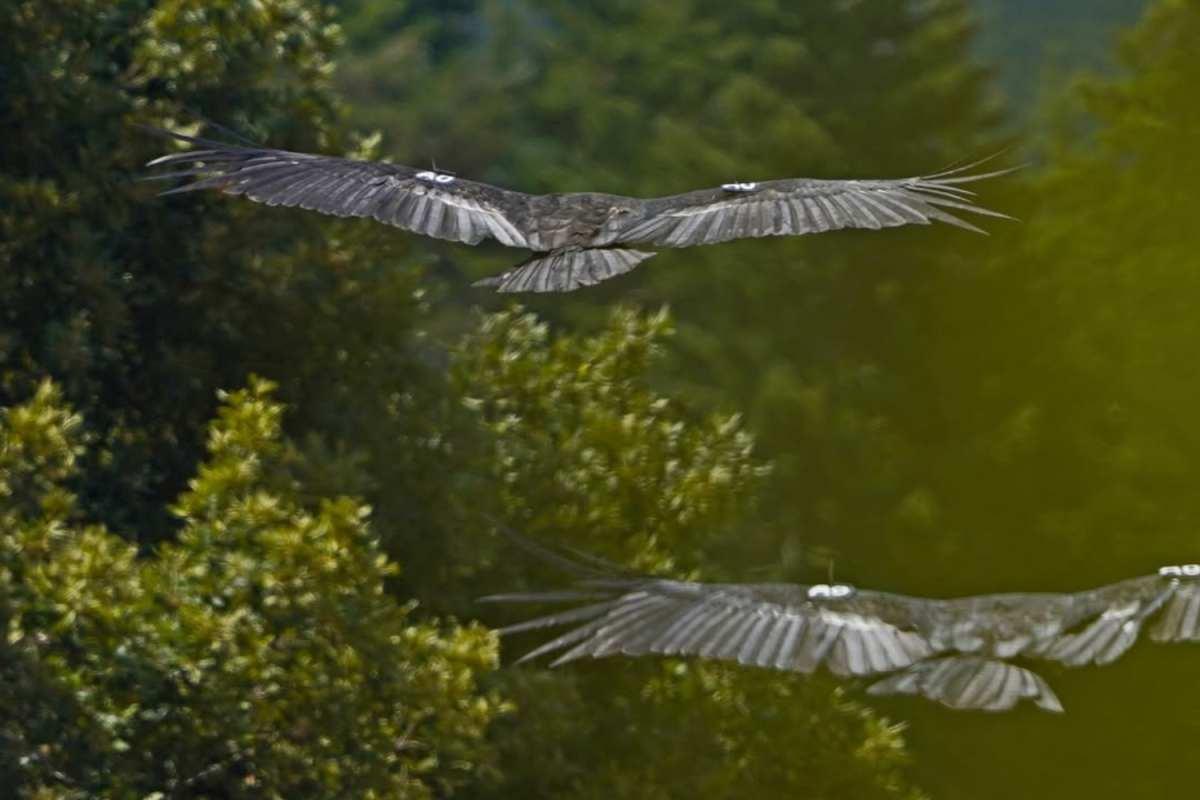
A free-flying pair of condors in the Pacific Northwest.
Although it's "impossible" to confirm if an egg has been laid because of the remote location of the nest, experts believe that it could have happened in early February based on statistics alone. According to the post, the A0 condor laid an egg within a cavity of an old-growth redwood in the Redwood Creek drainage. Experts believe that the birds selected the nest's location after much contemplation and searching for an ideal spot. “This is a huge moment for our Northern California flock,” said Chris West, the Northern California Condor Restoration Program manager and Yurok Wildlife Department senior biologist. However, the situation is pretty uncertain, and all the experts can do is wait to confirm if the egg successfully hatched into a baby condor.
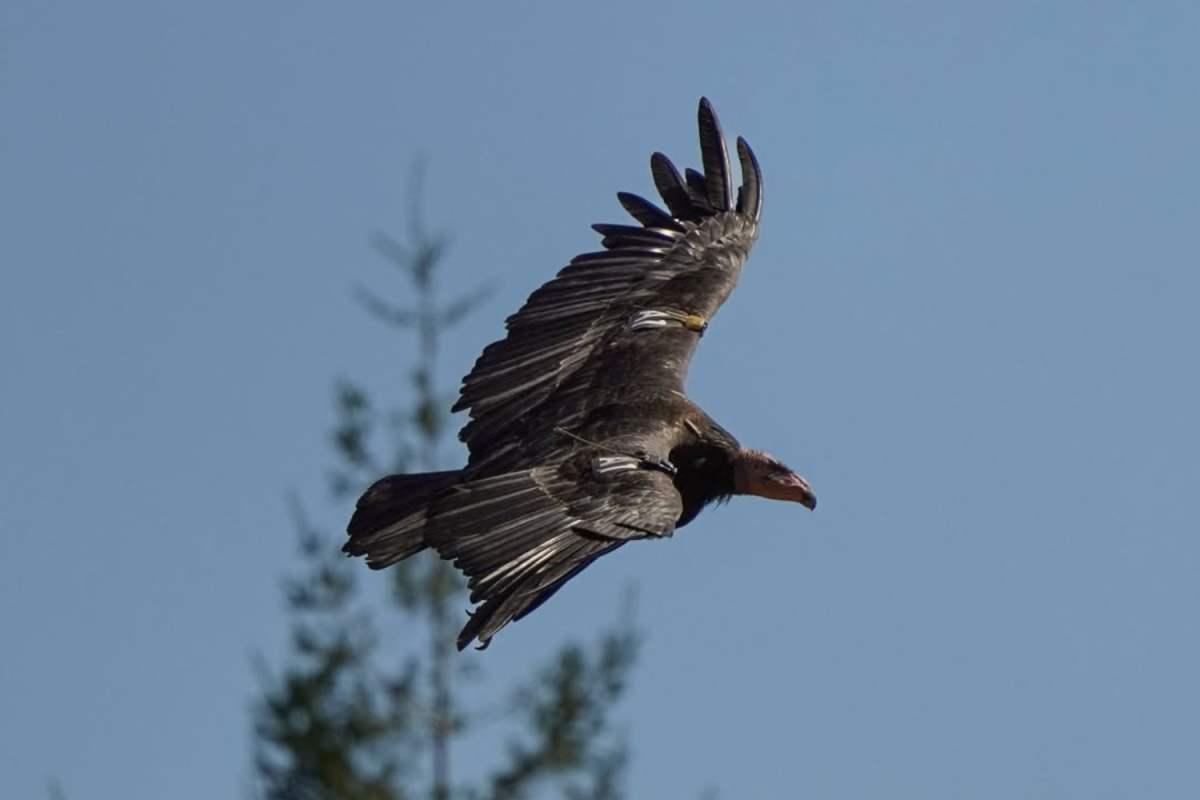
A condor was seen flying in the Pacific Northwest.
West emphasized that condors are wild birds and are only briefly trapped by experts for monitoring health. Therefore, the experts are avoiding artificial forces to influence the hatching of the egg, allowing nature to take its course. "If they nest, and how successful they are, is totally up to them, with as little interference from us as possible," he added. At this point, the hopes of the restoration team, the Yurok Tribe, and the NCCRP are hanging on a loose thread, which can either sustain or snap in the blink of an eye. Anything can happen between now and the potential hatch day, as an egg produced through breeding by a wild bird population often has low chances of survival.
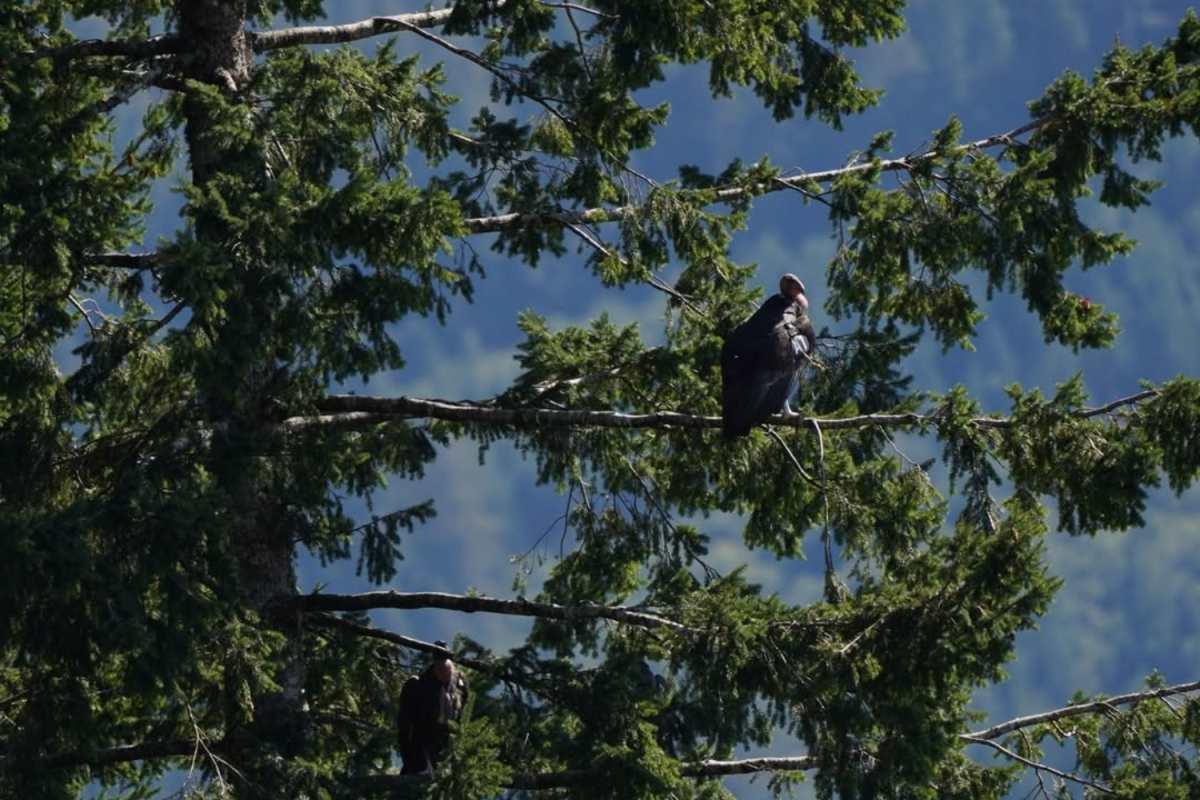
Two adult condors are sitting on different tree branches in the Pacific Northwest.
Nevertheless, the situation has given conservationists a much-needed hope. Yurok Wildlife Department Director Tiana Williams-Claussen admitted to having been "waiting for this moment" ever since condors were spotted in 2022. “As a scientist, I know I shouldn’t get my hopes up too high, but that doesn’t mean I can’t cheer for these young parents’ success," she added. The A0 and A1 condors will take approximately 55 to 58 days to incubate their light blue egg, which experts presume will weigh about 10 ounces. "Condor pairs alternate incubation duties and brooding and care of a chick," the post read. Through field observations and data collected from wing transmitters, the NCCRP continues to monitor the breeding condor couple closely. Changes in feeding also work as a determinant in knowing how the nest is doing.
It can also be quite telling of the chick's hatching and its different development stages. In the 20th century, the condors in California faced a huge decline due to lead poisoning, as per the National Park Service. Decades of conservation efforts increased the population from 27 to over 500 condors at present, but they are still a vulnerable and endangered species. That's why the news of condor breeding has lifted the spirits of the conservationists.