
AI Wildlife Images Distort Our Perception of Endangered Species. And Its Hurting Conservation
Published Feb. 9 2026, 6:58 a.m. ET

An AI-generated image shows a tiger lying on a photographer's back in the wild. Tigers live in Asia and aren't found in an African landscape alongside zebras and giraffes.
There was a time when nobody would dream of messing with wildlife, treating it as something sacred. Watching a lion in its habitat was a spectacle for people to watch. Now with artificial intelligence accessible to everyone, wildlife has been rendered into jest and online memes. Wild animals are appearing where they don't live and behaving out of character. While experts have a keen eye to tell apart what's real and what's not, the public, or the primary consumers of such fabricated content, often believe what they see. Mongabay contributor Sean Mowbray reported that AI-generated photos and videos of wildlife can make conservation more difficult. Key cause? The misinformation the fake content delivers, however attention-grabbing it may be. From an eagle carrying away a child to a lion brutally attacking a human, these visuals instill fear in people.
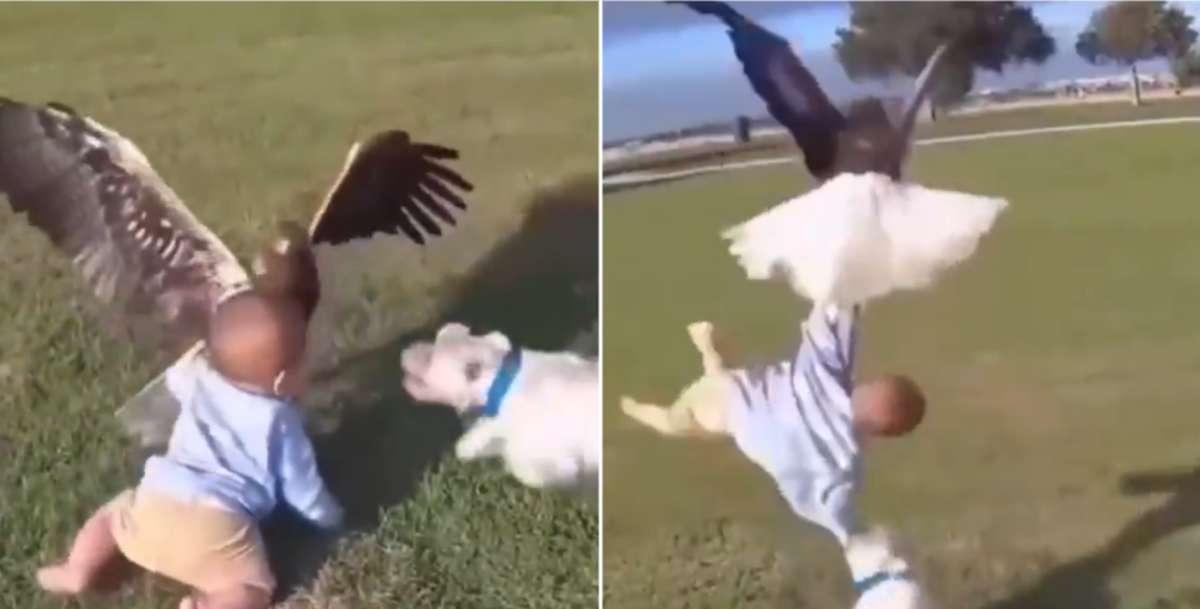
AI-generated images of a baby being carried away by an eagle and a dog trying to save him.
Houssein Rayaleh, the CEO and founder of the NGO Djibouti Nature, received a message about a lion sighting in Djibouti from a local ecotourist guide. He was sent a video where a lion is seen running directly in front of a moving vehicle along Route Nationale 11. “I said whoa, we have a lion in Djibouti,” Rayaleh said. Lions are extinct here, so it prompted him to send the video to the Cat Specialist Group at the IUCN, the global wildlife conservation authority. That's when the footage was detected to be AI-generated. “As it happened, it was a fake,” Rayaleh added. Urs Breitenmoser, co-chair of the group, revealed that their keen observation tracked with unusual details that helped them conclude it was AI. "The lion behaves very strangely, and there are also a few sequences where you can actually see that it is morphologically not quite correct," he said.
However, such details can be missed by untrained eyes. And through social media, misinformation spreads like wildfire across the globe. When footage shows a wild animal appearing out of the blue in common places, it can heighten the anxiety that people already have around wildlife. In some places, farmers who contend with real predators and such false sightings could provoke them into revolting against a species that doesn't even belong there in reality. On the contrary, fabricated images or videos showing wild animals in proximity to humans can send the wrong message.
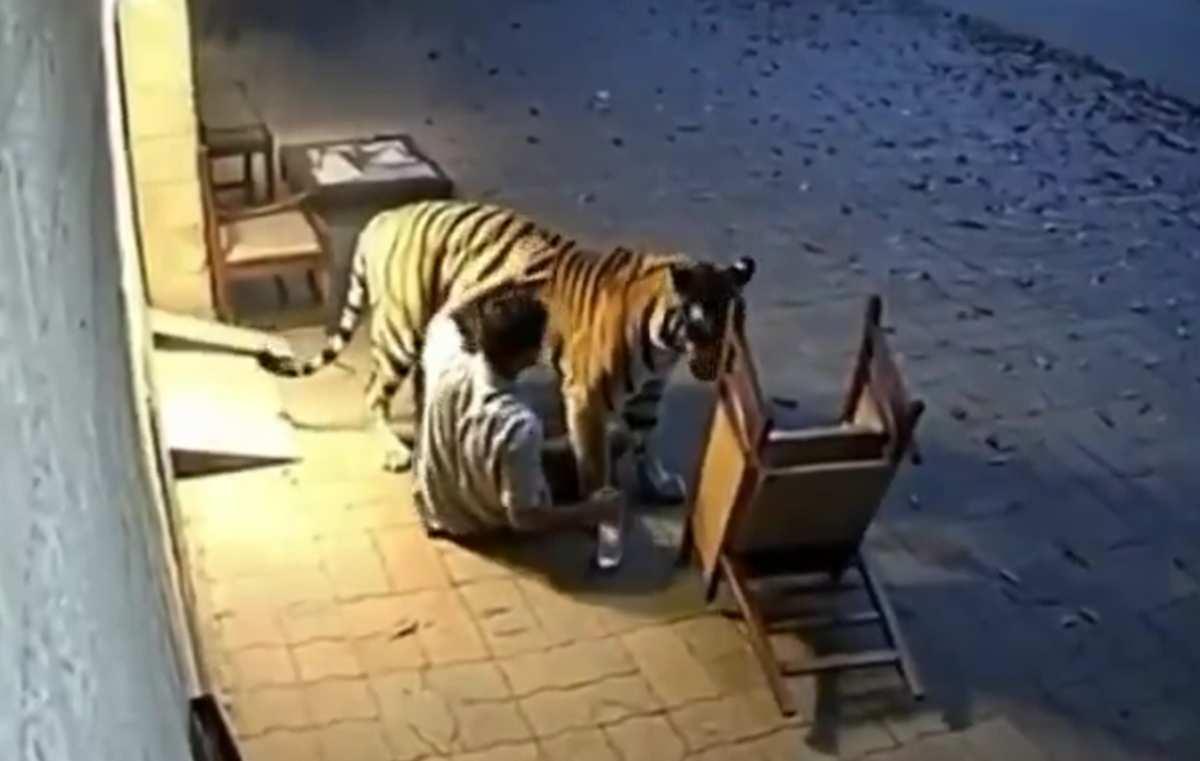
AI-generated photo of a man petting a wild tiger.
Wild animals can't be pets, but a squirrel eating noodles or a lion cub leaning on a photographer in the middle of a wild landscape (cover image) can give the wrong idea. It might also fuel the demand for having an exotic pet, which would not be the most favorable condition for a wild animal to live in. “A lot of these videos created by artificial intelligence show animal behavior like that of humans or behavior like a pet,” José Guerrero-Casado, a zoologist at the University of Córdoba, Spain, said in a statement. “This could be dangerous, because we need a society to be well-informed to implement conservation actions. They need to know how the species ... behave," he added.
The exploitation of AI regarding wildlife is ironic, given how indispensable technology has proven to be in conservation, from improving camera traps to detecting illegal activities, compensating for the shortcomings of previous instruments. However, it's important to shed light on the misuse of AI that could thrust conservation efforts into vain.