
Efforts to Cut Down Ship Emissions Is Now Dramatically Harming Ocean Health, Scientists Discover
Published Jan. 23 2026, 8:14 a.m. ET

Soft Corals Coral Bleaching on the Great Barrier Reef.
Environmentalists worldwide were elated when the decision to reduce sulfur from shipping fuels was announced. However, the call has had some worrisome aftereffects, as published in the journal Communications Earth and Environment. The study claims that it has enhanced a coral bleaching event on the Great Barrier Reef. This event took place back in the early months of 2022, when the reduction of sulfur emissions from the ship allowed more than typical amounts of sunlight to reach the reef. This elevation led to 10% more heat stress on the corals of the Great Barrier Reef during the mass bleaching event. It was the first bleaching event to unfold in a La Niña year.
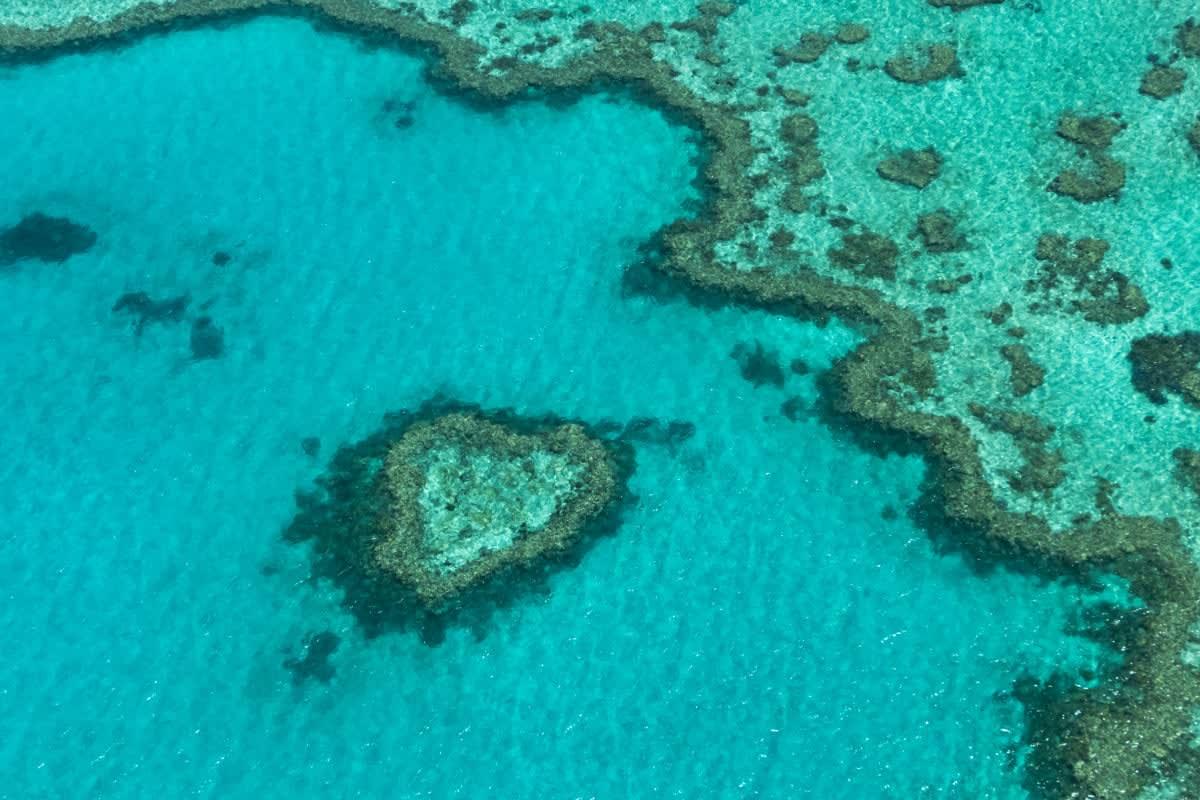
Heart reef
The limitation was put into effect by the International Maritime Organization’s (IMO) 2020 regulation. As per this regulation, the sulfur content in the marine fuels was reduced from 3.5% to 0.5%. This decision proved to be fruitful, as it reduced harmful sulfur emissions and improved air quality. However, it also hampered a cooling effect in the atmosphere and particularly Australia’s Great Barrier Reef. In this cooling phenomenon, sulfur becomes a sort of layer that prevents some amount of sunlight from reaching the surface. Reduction of sulfur from the fuel led to less of this element in the atmosphere. This weakened the layer, causing more sunlight than before to reach the surface.
To make the assertions, researchers considered the ship data of the region from 18 to 28 February 2022. During this time, 5,000 ships supposedly moved in the Great Barrier Reef. The heat was progressively building up on the reef at that time. After gathering the data, they created computer models to figure out the amount of sulfur emission in the setup with the regulation, and what it would have been without it. The models essentially try to shed light on how sulfur particles emitted from the vessels drifted over the reef, and the cooling it facilitated.
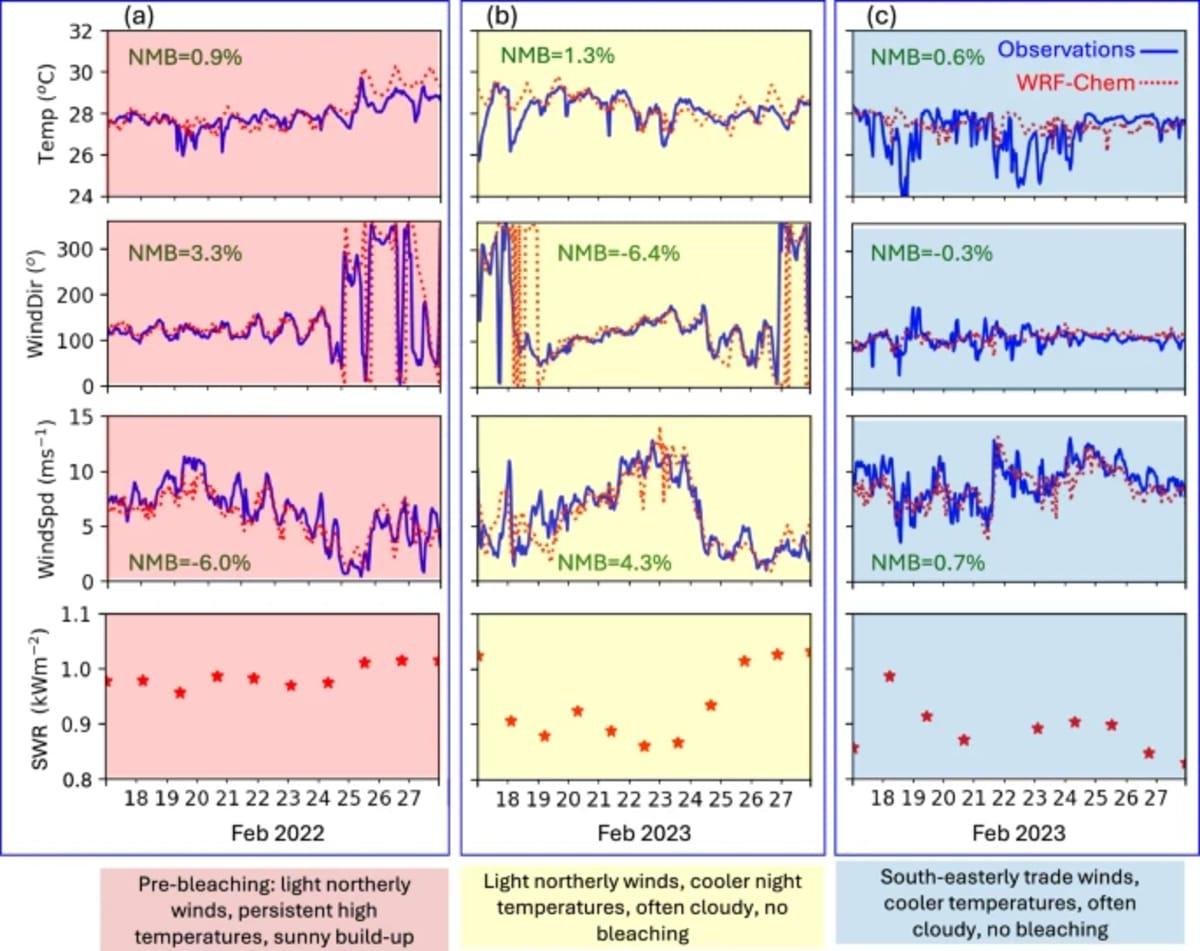
Meteorological summary at Davies Reef (18.83°S, 147.63°E) for the three WRF-Chem simulation periods.
The team also evaluated the weather conditions at the site to understand how sulfur moved in the air. Past observations had revealed that prevailing winds in the region blow the sulfur from above the reef. The results indicated that 5% to 10% more solar energy was hitting the reef’s waters with regulations than it would have without limitations. Researchers believe that the increased amount of sunlight, due to reduced sulfur emissions from the vessels, intensified the 2022 coral bleaching event on the Great Barrier Reef. The intensification is dangerous as it further hampers the marine ecosystem.
This is not an isolated event. The cooling effect occurs worldwide, and hence the removal of sulfur also increases temperatures across the globe, due to an enhanced amount of sunlight. Professor Steven Sherwood, a climate scientist at the University of New South Wales, not involved in the research, shared that the removal of sulfur aerosols from the atmosphere due to reduced emissions elevated the global temperatures by 32F. “This new study points out that while the overall effect on climate is small, the local effect on ocean temperatures in the tropics can be larger. This is because the air pollution absorbs some sunlight in addition to reflection to space,” Sherwood said, per The Guardian.
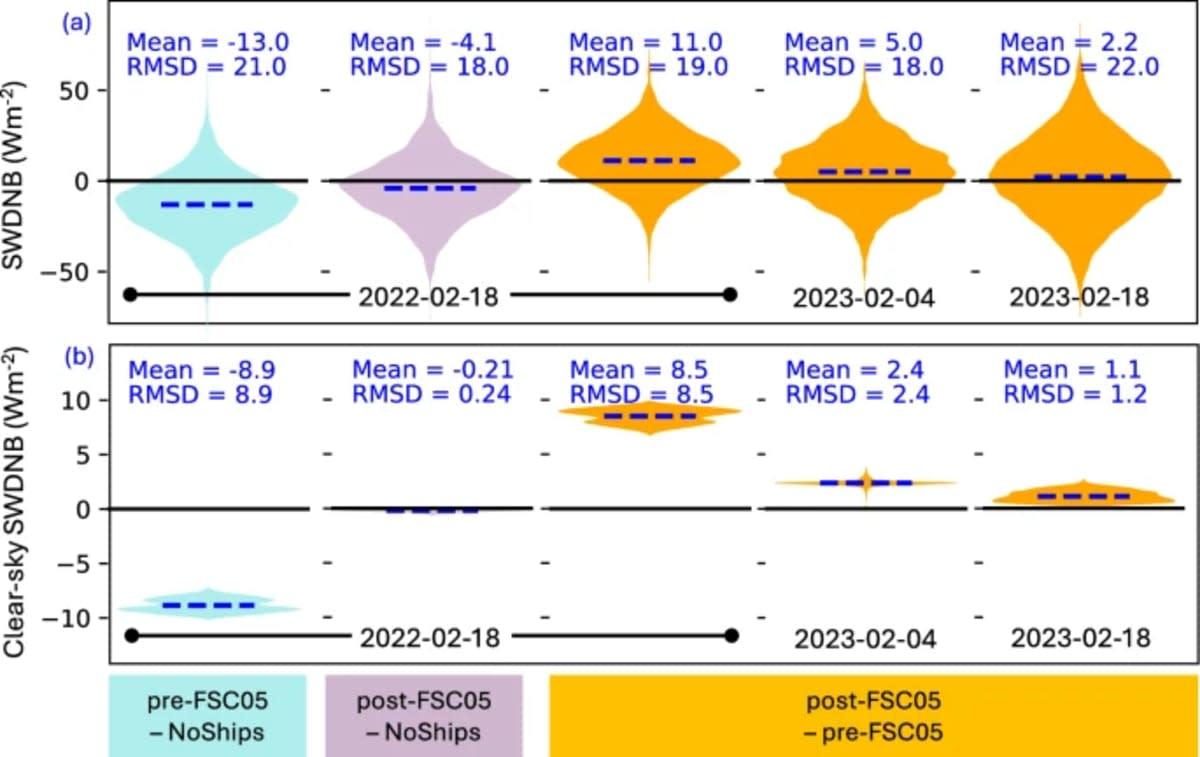
Meteorological summary at Davies Reef (18.83°S, 147.63°E) for the three WRF-Chem simulation periods.
“Thus, they find a bigger effect, maybe up to 0.15 °C (32.27 °F), which is enough to increase the heat stress on the corals as reported. This is an important result since it shows the impact on corals might be nontrivial even though the overall global warming impact is pretty small,” Sherwood added. Despite the intensification of coral reef bleaching, experts do not think that the regulations should be called back. Reduction of sulfur pollution is essential for safeguarding human health. To prevent coral reef bleaching, greenhouse gas emissions need to be reduced, which lowers global warming, which further triggers the bleaching.