
Chinese Scientists Create ‘Organic’ Electric Car Batteries Using Plastic in Breakthrough Research
Published Feb. 26 2026, 4:30 a.m. ET

Scientists from Tianjin University develop a new type of organic lithium-ion battery
Putting the key in the car’s ignition, attaching the laptop’s power cable to the charging point, or placing the smartwatch on the wireless charging pad—these activities might sound too ordinary to even give them a thought. But deep within their gadgetry lurks a brilliant arabesque of engineering powered by lithium-ion (Li-ion) batteries. Resembling little prism-like foiled pouches, these batteries ensure that your gadgets and cars work without hindrance. The traditional Li-ion batteries, however, have some drawbacks that have been coming to scientists’ attention.
Most of the traditional batteries rely on inorganic materials like heavy metals. They are efficient, but not too efficient when it comes to the long-term energy storage purpose. The materials of the batteries make them unsuitable, if not dangerous, for futuristic gadgets and cars. In a new study, published in Nature, a team of Chinese scientists documented a new type of battery they have developed using “organic” and “plastic-based” materials, marking a breakthrough in battery technology. With these modern batteries, they envision a future when an electric car will be able to roll smoothly on the harshest of terrain, from the Arctic snow to a scorching desert.
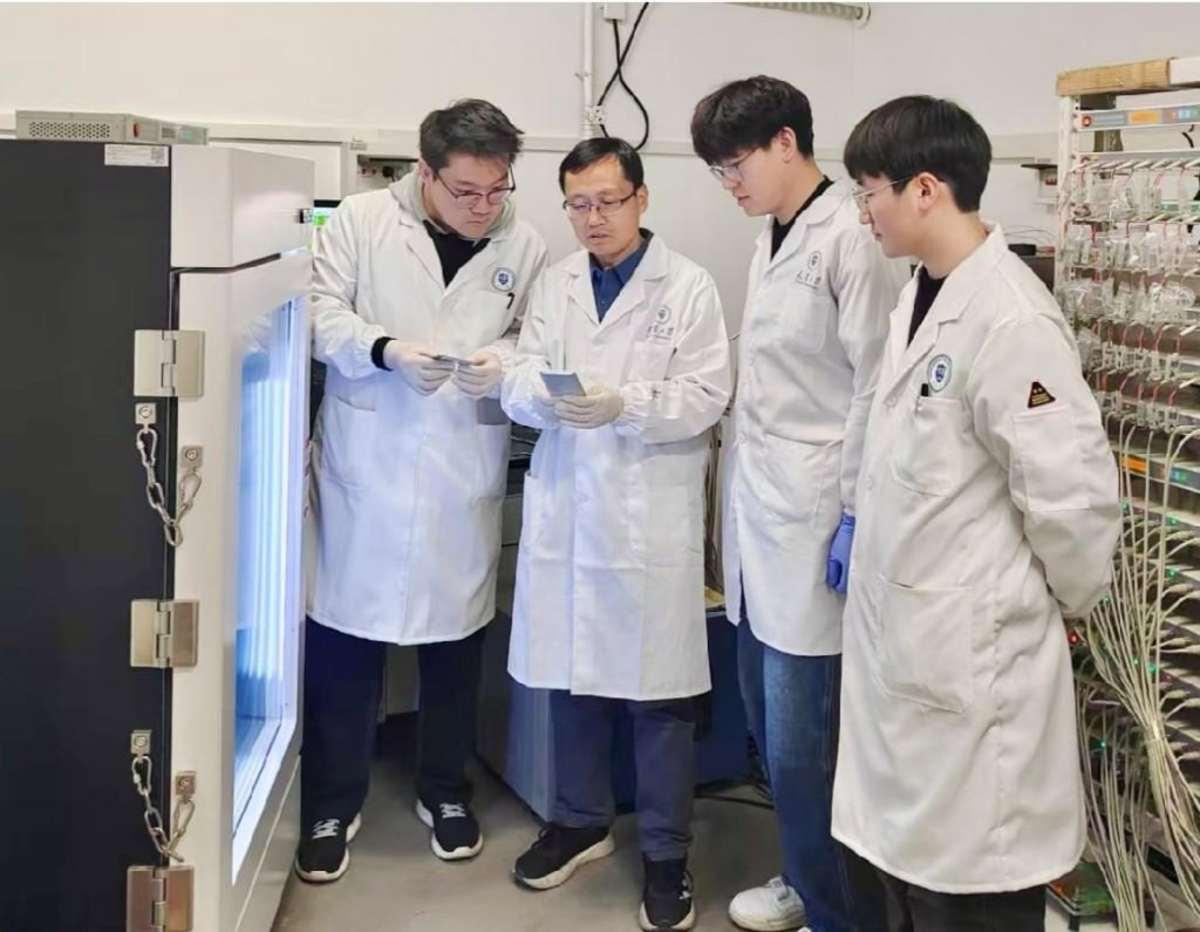
Chinese scientists working on a new type of battery that uses organic materials in contrast to inorganic materials used by traditional Li-ion batteries
Li-ion batteries dominate the pinnacle of the energy storage industry. Most of the commercial batteries are constructed from inorganic cathode materials like cobalt, nickel, and manganese. This metal-based chemistry, however, is something that scientists believe is not feasible in the long run, per STDaily.
For years, scientists across Japan, South Korea, and Europe had been experimenting with organic materials to see whether they could be used as alternatives. But this is the first time a team has succeeded in actually designing an alternative. The project was jointly conducted by researchers from Tianjin University and South China University of Technology, led by Professor Xu Yunhua. This new alternative breaks the boundaries that scientists previously thought rigid in energy technology.
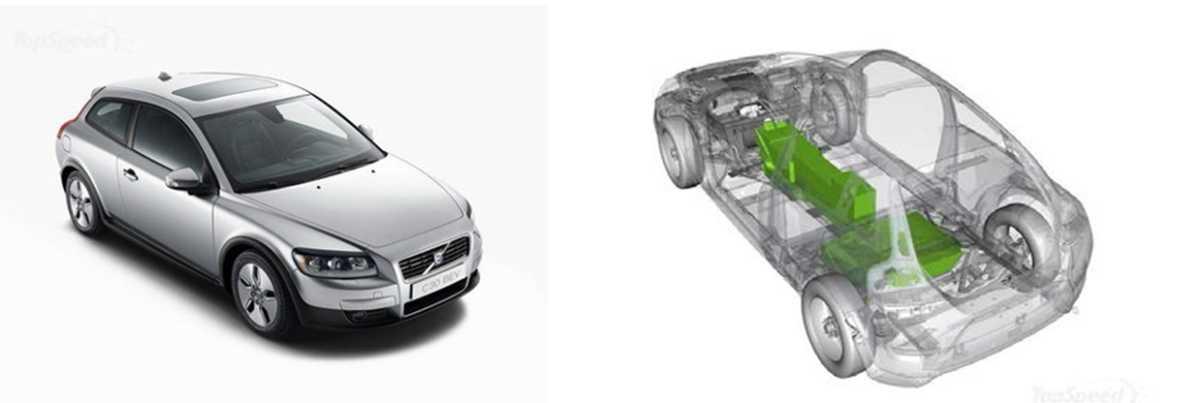
Volvo. The Li-ion battery pack is located in the prop shaft tunnel and in the place where the fuel tank normally is located
This new version of Li-ion battery relies less on heavy metals and more on organic materials, particularly a plastic-like material called PBFDO, which acts as the cathode. This new type of battery is not only safer but also more durable, lighter, more flexible, and more energy-efficient than traditional batteries, and it embodies extreme stress tolerance. Eco-friendly, too. Not to forget that it addresses some long-standing performance bottlenecks as well.
Temperature, to begin with. Traditional Li-ion batteries are extremely sensitive to temperature. When it’s too cold, they lose power. When it’s too hot, they become overheated, which triggers a chain reaction that releases toxic gases that are difficult to extinguish. The new organic battery is different. It can work in temperatures as low as -94°F (-70°C) and as high as 176°F (80°C). More impressively, the new battery successfully passed a puncture safety test scientists conducted to examine its thermal runaway threshold. While traditional batteries tend to explode when crushed or pierced, this one didn’t smoke, didn’t catch fire, and didn’t change shape when a needle was driven through it.
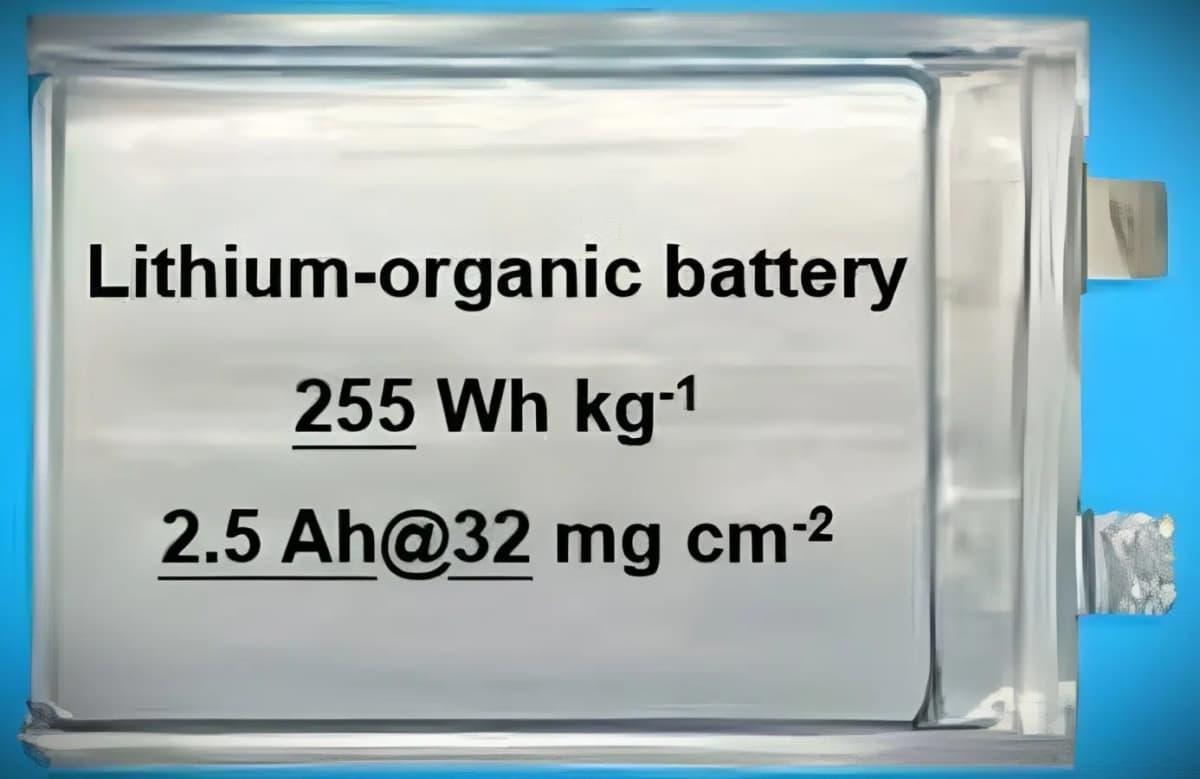
The image shows an organic pouch cell with an energy density exceeding 250 Wh/kg
The material PBFDO, which the new battery is made of, is an n-type conductive polymer electrode material, known for its exceptional electronic conductivity. Built with real “pouch cells,” the battery can reach an energy density of 250 Wh/kg. Additionally, it is built from organic materials, also called the “green battery star” in the field of energy storage, which not only makes it sustainable but also resolves the various bottlenecks in the supply chain concentrated across the Lithium Triangle spanning Chile, Argentina, and Bolivia.
The latest invention is also more flexible. Since PBFDO is a type of polymer, it enables the battery to bend, stretch, and squish without breaking. This brilliant structural integrity would ensure that, instead of a mere fixed box, the batteries could fit into different shapes inside a car frame.