
China's New Water Battery Survives 120,000+ Charging Cycles and Outlasts Lithium by Decades
Published Feb. 23 2026, 6:30 a.m. ET

High-Capacity Battery on Conveyor
A new breakthrough has been achieved in battery operations, as Chinese scientists have developed a non-toxic, water-based battery that can outlast lithium-ion systems by decades. The newly developed battery is based on tofu brine. Researchers claim that their system is superior to the current aqueous system in use, as it can provide better long-term cycling stability and is more environmentally friendly. The new battery is a combination of “organic” electrodes and neutral, non-toxic electrolytes. According to researchers, the new system can undergo 120,000+ charge cycles, as published in the journal Nature Communications.
Researchers from the City University of Hong Kong and Southern University of Science and Technology created the new system, according to Interesting Engineering. The water-based battery is saltwater-level safe. Researchers claim that the current performance displayed by the battery showcases its future potential and highlights the necessity of future research on it. Because the battery is neither acidic nor flammable, if it can be scaled to the present-day practical requirements, it will be a massive breakthrough in environmental conservation and other aspects.
The battery's long-lasting potential gives it a major edge over the current systems, according to Lundy Projects. Most batteries in use now lose their capability to hold a charge after some years. From batteries used in phones to remotes, everyone has the same tale. Over time, the batteries need more charging, and after numerous cycles, they give out. The water-based battery can undergo 120,000+ charge cycles without giving up. They have named the revolutionary energy storage system China’s water battery.
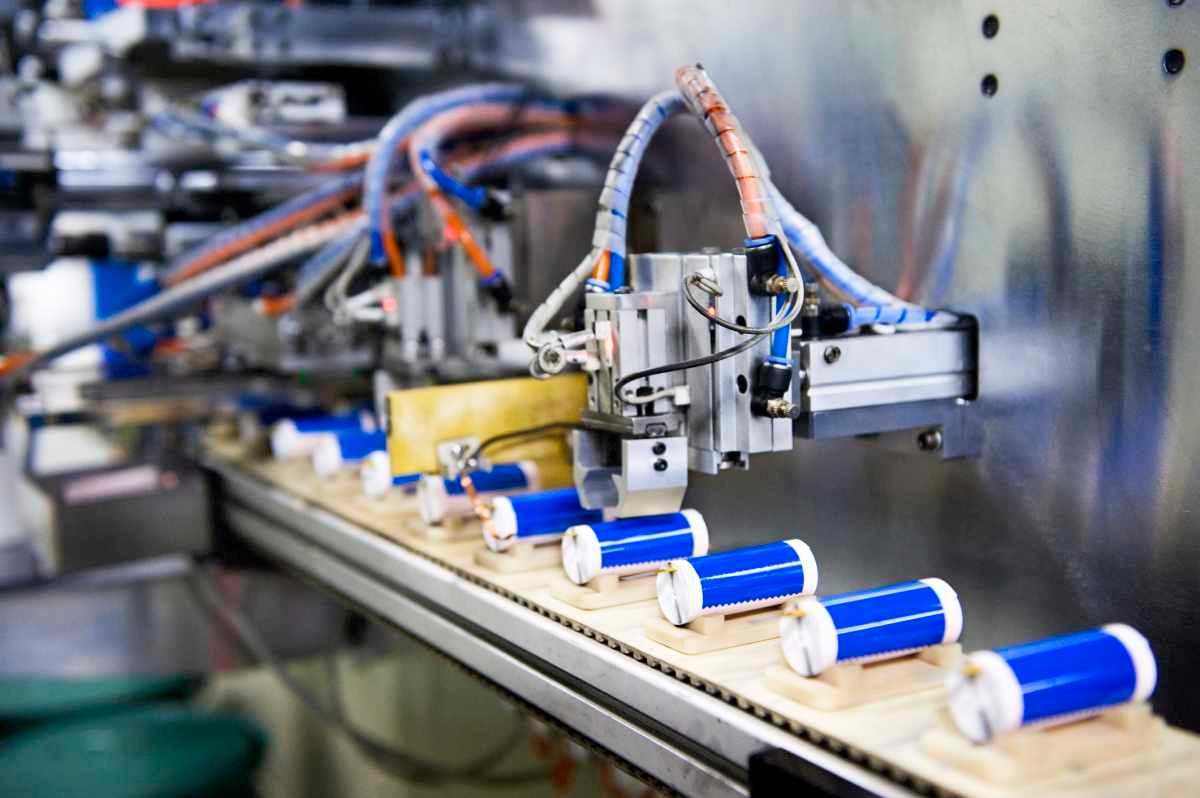
A li-ion battery production line.
The secret to this long-lasting mechanism lies in its operating environment. The lithium-ion system functions with corrosive acids and potentially harmful chemicals. However, the water-based battery manages to function at saltwater-level safety, providing it with unprecedented longevity. A water-based battery can achieve this pursuit, but not a lithium-ion system, because the former uses tofu brine as a raw material.
Typical batteries operate in a toxic chemical environment, while the presence of tofu brine allows water-based batteries to operate in a neutral pH environment similar to seawater. “Traditional batteries are like running a marathon in acid rain – the environment itself damages the runner. Our system is like running in perfect weather conditions – the runner can perform optimally for much longer,” Professor Li Wei, lead researcher on the project.
Tofu brine is the waste that accumulates during tofu manufacturing. It is rich in sodium, and the distribution of ions in the solution allows it to be an efficient means of energy storage. Furthermore, it exhibits a neutral pH that prevents corrosive damage, a phenomenon hampering other battery systems. The incorporation of bio-inspired organic electrodes also works in the battery’s favor, as they operate similarly to natural energy storage processes found in living organisms.
Such electrodes can expand and contract during charge cycles without any structural damage, something that typical batteries cannot do without limiting their performance. The organic electrodes are designed to align well with the gentle environment formulated by tofu brine. The ions can move freely between the electrodes and the environment without inflicting any damage.
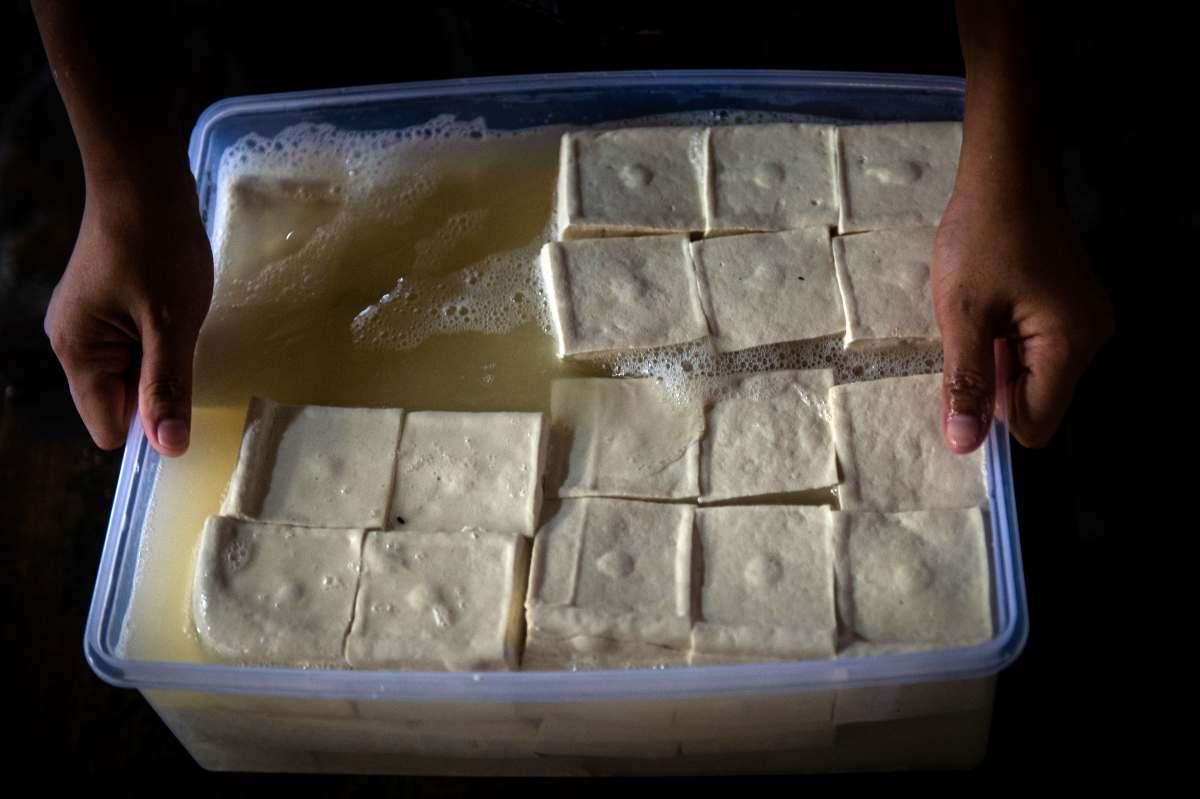
Brining tofu involves submerging it in a saltwater solution, which helps the tofu retain its moisture during cooking. Without brining, tofu can dry out quickly.
The presence of a neutral electrode in the water-based battery also ensures that harmful byproducts do not come into the picture, which degrade the performance of other typical batteries over time. “This represents a paradigm shift. We’re looking at technology that could outlast the devices it powers by decades. The implications for everything from smartphones to electric vehicles are staggering,” Dr. Maria Rodriguez, a battery technology expert at Stanford University, shared.
Researchers have proposed many benefits of a water-based battery system. The neutral environment reduces the need for protective coating required for keeping corrosive damage at bay. This brings down the manufacturing costs. As per current insights, the water-based battery has a 20- to 30-year life span, above and beyond traditional lithium-ion batteries and high-end lithium-ion batteries, standing at four to eight years, respectively. The presence of biodegradable materials, recyclable components, and many other factors also makes it an appealing option for the environment.
Also, the battery has the potential to completely transform the technology used in transportation and renewable energy industries. “This isn’t just about better batteries – it’s about fundamentally changing how we design and sell electronic products. Why build planned obsolescence when the power source lasts decades? It could force a complete rethink of business models across the technology sector,” tech industry analyst Dr. Kevin Zhang shared. Researchers are hoping that the lucrative features will help them attract competent investment and scale the product to industry standards within five to seven years.