
China Built the World's First Bamboo-Fiber Drone. It's 20% Lighter and Could Make Aviation Greener
Published March 6 2026, 8:46 a.m. ET

Chinese scientists create the world's first bamboo fiber fixed-wing drone.
Chinese researchers turned a natural resource into a groundbreaking material in aviation while toning down its economic weight: the world's first fixed-wing drone built with bamboo fiber. The use of bamboo not only makes the drone eco-friendly but also much cheaper compared to its traditional counterparts, as reported by Xinhua. What the researchers built is an unmanned aerial vehicle, or UAV, and the price of construction was a quarter of that of carbon fiber cloth. The UAV took its first flight last month in Tianjin, China, according to the outlet. The successful take-off and landing of the drone with "bamboo wings" marked a major milestone in the country's efforts to use bamboo-based materials in aviation technology.
The research team has claimed that the new material would make the drone 20% lighter and reduce its overall construction cost by over 20%. The traditional drones are built using carbon fiber, which requires high energy to produce and is difficult to degrade. On the contrary, bamboo is a plant that can be grown efficiently under suitable atmospheric and external conditions. Bamboo as a composite material for aviation can make the drones comparatively lighter and cheaper, two additional perks that make perfect sense in the world of high-cost manufacturing.
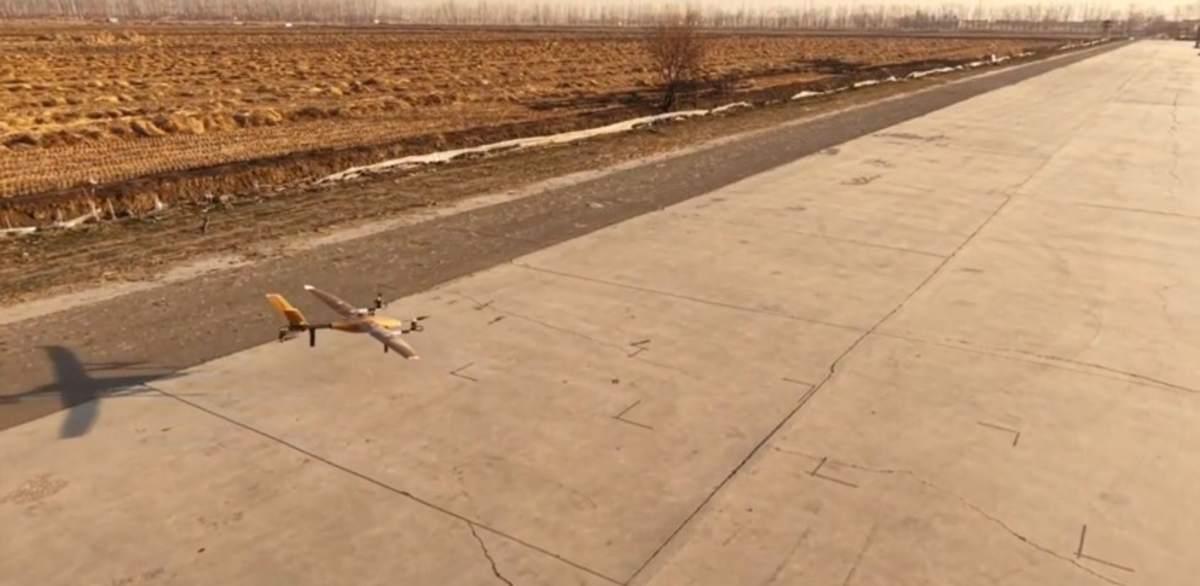
China's bamboo-fiber drone during its takeoff.
According to the news outlet, the drone was co-developed by the International Bamboo and Rattan Centre, the Ningbo Innovation Research Institute of Beijing University of Aeronautics and Astronautics, and Longzhu Technology Group Co., Ltd. Breaking down the construction, the researchers revealed that the drone's fuselage skin structure — the outer shell of the drone — is independently made up of high-performance bamboo-based composite materials. Hence, more than one quarter of the drone's structure, or more than 25% of the material, is made of bamboo composite, making it the first-ever fixed-wing drone of this kind.
“Bamboo-based composite materials for drones not only need to meet stringent mechanical performance requirements, but also need to overcome a series of technical challenges such as moulding processes and environmental adaptability,” the project's R&D leader, Qin Daochun, told the outlet. The bamboo-fiber drone has adopted a clever tiltrotor configuration, combining the advantages of vertical takeoff and landing (VTOL) and the long endurance of fixed-wing aircraft. With a wingspan of about 8.2 feet, the drone flies at a speed of more than 62 miles per hour. Considering more than a quarter of its materials are made with the lightweight bamboo composite, the drone weighs roughly 15 pounds.
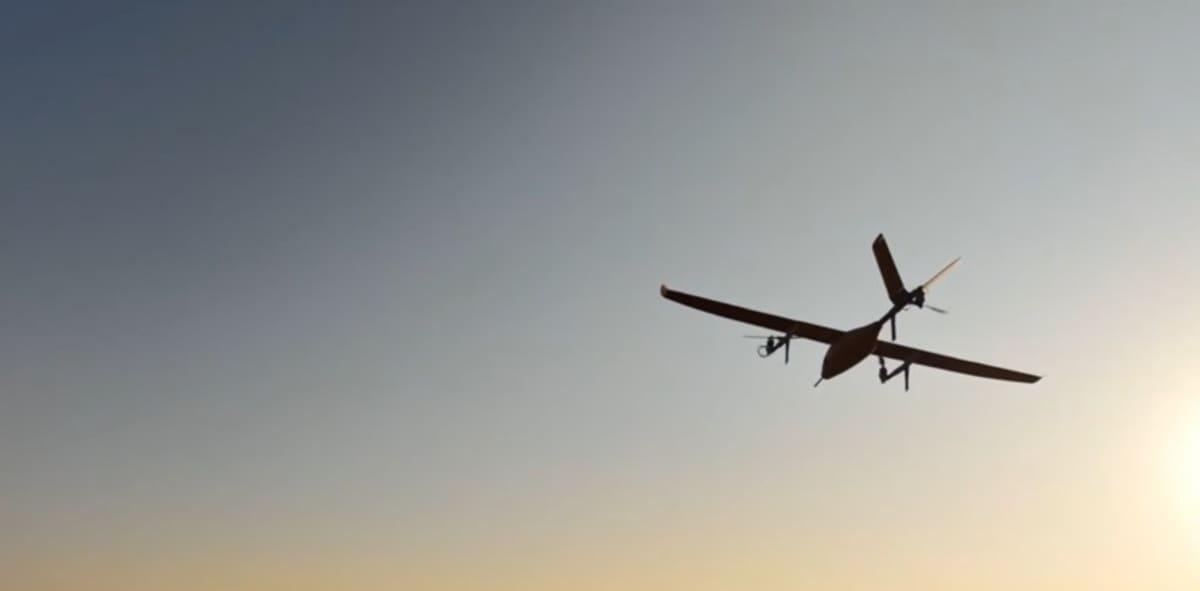
Fixed-wing drone made of bamboo fiber on its maiden flight in Tianjin, China.
To evaluate the drone's airworthiness, the researchers conducted hundreds of tests before successfully developing a bamboo-based composite material that combines qualities like high strength, toughness, and formability. Performance analysis results showed that the material fulfills the required criteria and can be applied in real-life and large-scale aviation technology. Currently, the aviation industry majorly relies on carbon-fiber aircraft and drones, which have become serious contributors to high energy consumption, pollution, and difficult degradation. Researchers believe the use of bamboo-composite materials in the aviation industry could be the start of the industry's green transformation.
They believe that "replacing carbon with fiber" will not only provide the country with an eco-friendly option but also reduce production cost. Moreover, these aircraft or drones could be easily deployed in other industries because of their cost-effectiveness, which would eventually bring a cross-disciplinary breakthrough.