
Asteroid 2024 YR4 Could Strike the Moon in 2032. And Earth Will Be Catching the Fallout of It
Published Feb. 4 2026, 4:53 a.m. ET

Asteroid 2024 YR4
Not Earth, but the Moon is where asteroid 2024 YR4 would likely strike in 2032. The massive space rock, almost as large as a 15-story building, was first discovered on December 27, 2024. At the time, scientists predicted that an asteroid of that size would likely crash into Earth, according to NASA. However, further observation removed any potential impact risks and essentially eradicated the possibility. Now, there's a 4.3% chance of the asteroid hitting the lunar surface and creating a collision so spectacular it will be like fireworks in the sky back on Earth. According to a recent study, the potential lunar impact will be historic, creating energy equivalent to 6.5 million tons of TNT. Yifan He, a postdoctoral researcher at the University of California and co-author of the study, has described the event as "a rare 'natural experiment.'"
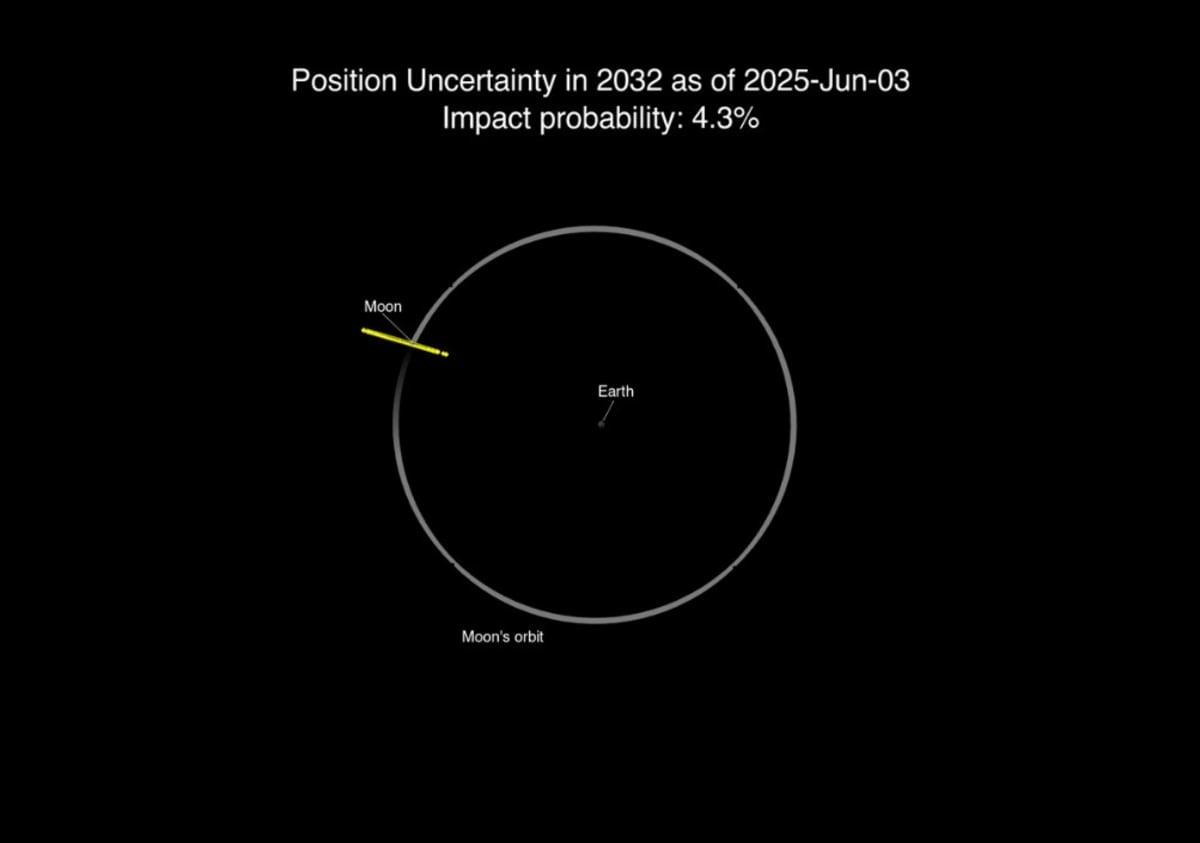
The range of possible locations—represented by yellow points—of asteroid 2024 YR4 on Dec. 22, 2032.
"A forecastable small-body impact whose signatures could be scientifically rich and operationally relevant," he told Live Science. To determine the possible route and impact of asteroid 2024 YR4, scientists created computer models of the solar system. The simulated setup included the asteroid, planets, Earth's Moon, and the Sun. Throughout the observation, the researchers kept adjusting the 2024 YR4's trajectory, creating 10,000 different simulations. In every simulation, the asteroid's likeliest impact zones were charted on the lunar surface. The researchers also created a detailed simulation, charting what exactly would happen during the actual collision over a 500-second time interval. Through mapping the paths of multiple simulations, the researchers concluded that the massive asteroid would likely collide with the Moon along its approximately 1,900-mile-long stretch.
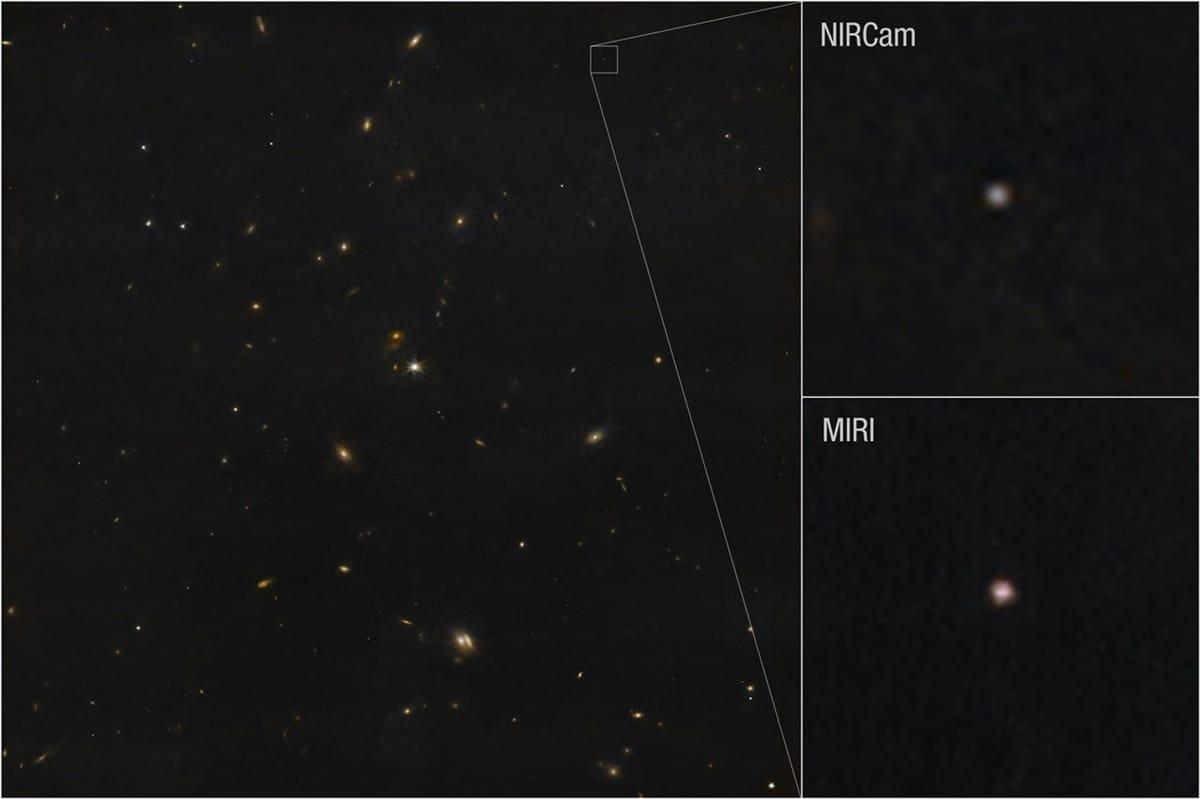
On March 26, 2025, NASA’s James Webb Space Telescope captured images of asteroid 2024 YR4 that indicate the asteroid is about the size of a 15-story building. (Image Source: NASA, ESA, CSA, STScI, Andy Rivkin (APL))
The predicted location of impact lies north of the Tycho crater of the Moon. When observed from the northern hemisphere of our planet, the impact location will lie in the lower half of the Moon, according to The Planetary Society. The recent study also predicted that the collision will produce a bright flash of -2.5 and -3 magnitude, lasting between 3 and 5 minutes. Astonishingly, the bright spark will be equivalent to the brightness of another planet: Venus. The spark is predicted to be visible for at least 10 seconds "when the flash is bright enough above background conditions to be reliably noticed," he told the outlet. The flash might be observed in some parts of the world, with East Asia, Oceania, Hawaii, and western North America predicted to be the most ideal locations.
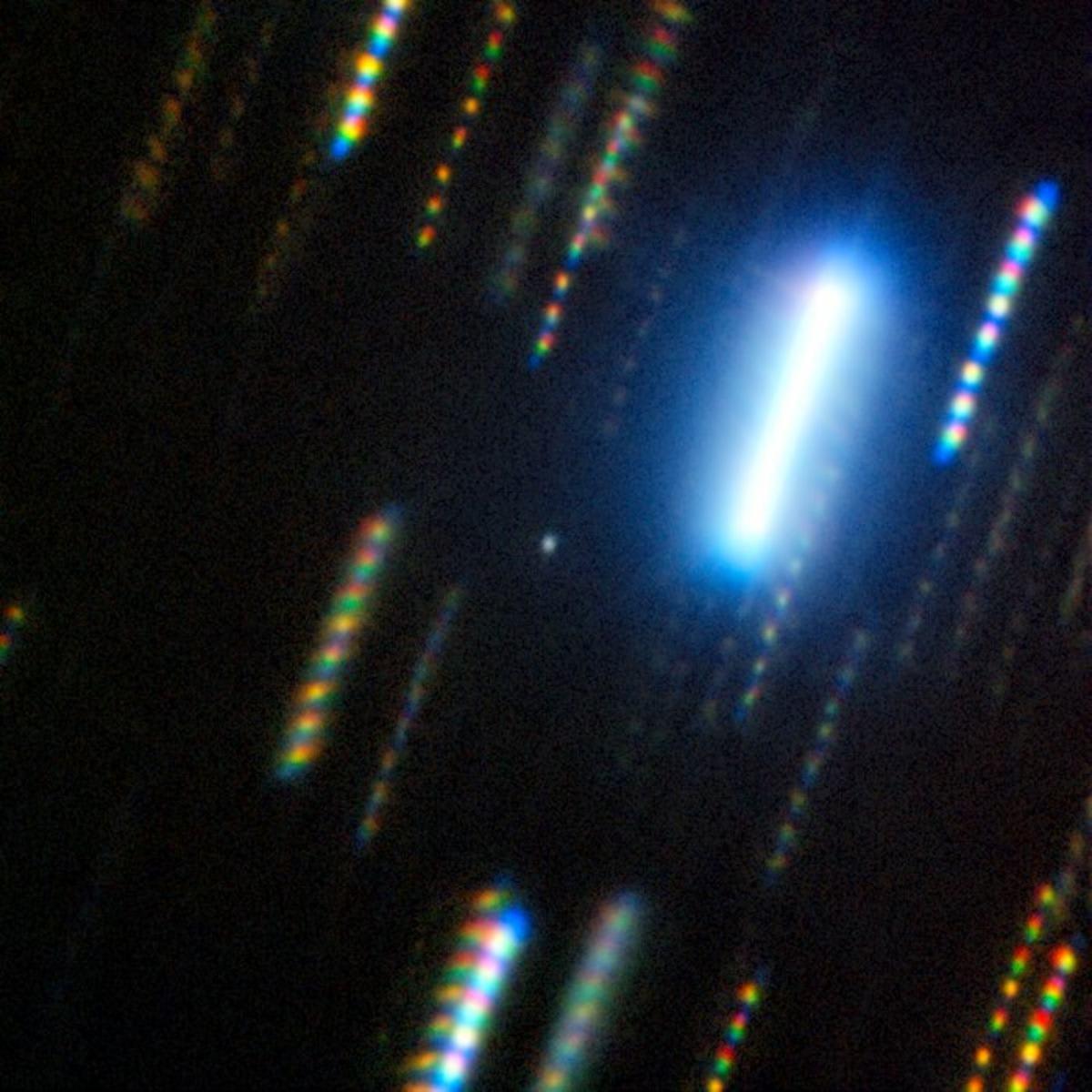
This composite image of asteroid 2024 YR4 was captured with the Gemini South telescope in Chile
As per the recent study, skygazers could catch the flash from Earth at 10:19 a.m. EST (15:19 UTC). On the predicted date of the lunar impact—December 22, 2032—70% of the Moon's surface would already be illuminated. The flash will only be seen if the asteroid crashes on the unlit surface of the Moon. The Tsinghua University researchers found that the chance of that happening is just 2.85%. Nevertheless, the flash will be detectable through amateur telescopes.