
Antarctic Ozone Hole Shows Strong Signs of Recovery — Scientists Say It's the Smallest in Years
Published Dec. 9 2025, 5:35 a.m. ET

A man looking at the valley from the top of a hill.
About 22 miles above Earth’s surface, flutters a gassy blanket called the ozone layer, which guards planet Earth from harmful radiation emitted by the Sun. Without this gaseous guardian, life would end up in a dramatic collapse. Radiation will kill the plants’ DNA, photosynthesis will no longer happen, the food chain will be destabilized, and human bodies will become ravaged with eye diseases, skin problems, immune suppression, maybe even death. Over time, the seething radiation will scorch up the blue-green pieces of our planet, jolting life into a slow, gradual dormancy. Thanks to this “planetary sunscreen,” Earth is in a protective embrace. Over the past few years, this layer had been thinning, resulting in the formation of what scientists called an ozone hole.
The more this ozone layer weakened, the larger the ozone hole became. The last decade saw an alarming enlargement in the ozone hole, until quite recently, when scientists came across a happy realization. Far away, in the Southern hemisphere, where the world remains frozen and quiet, this hole has become "shockingly small," which means the protective ozone layer is regaining its strength, according to a report published by NASA and NOAA scientists.
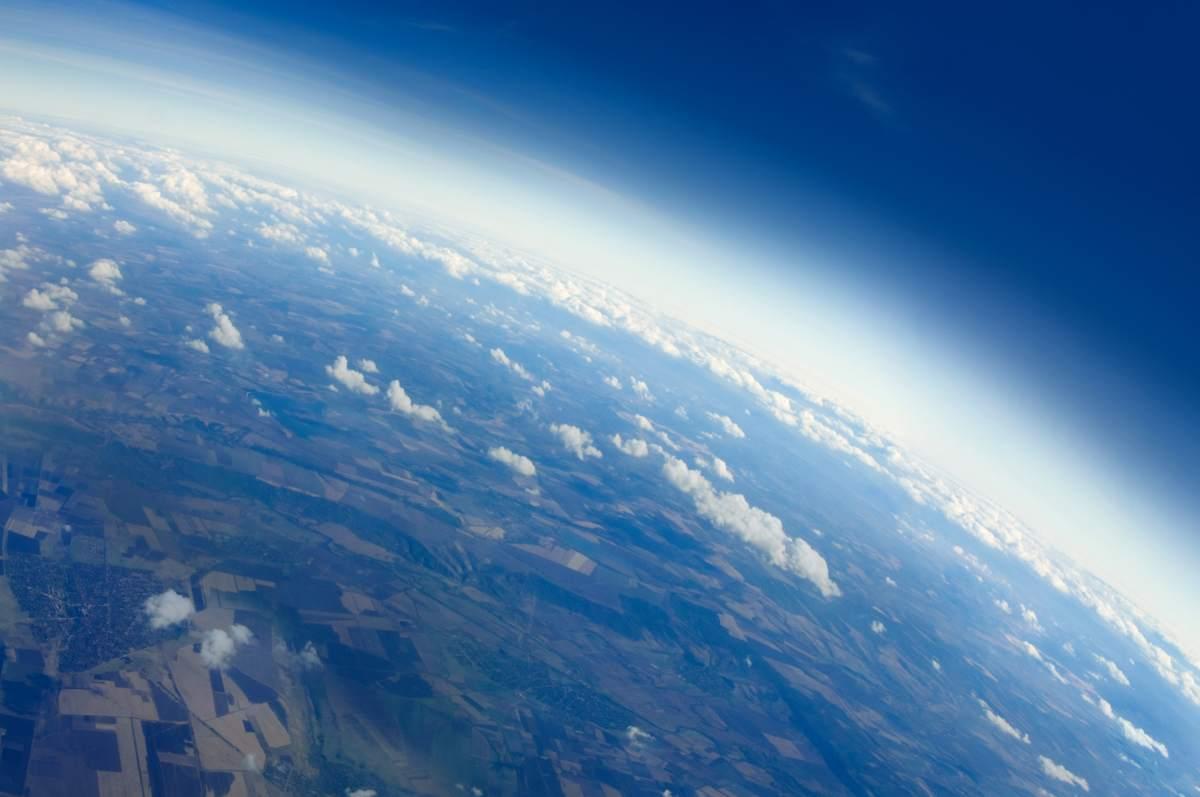
Protective blue-colored layer glowing on the boundary of Earth
Pulsing about 22 miles above Earth’s surface, the ozone layer near the South Pole is showing signs of recovery. Take a look back in time, and you'll realize that this is not just rare but an astonishingly positive indication of humans' increasing awareness. Earlier, the vortex of icy, cold, whiplashing winds filled the atmosphere with chemicals. At the arrival of spring, the Sun's heat and light activated these chemicals. Radiation flared up the chemicals with negative reactivity, so they would start eating up the ozone layer bit by bit. All that ozone blanket they gobbled up created a mass of gas, the ozone hole.
Ever since 1992, the ozone hole over the Antarctic has now reached the “fifth smallest” size. This, they believe, happened sometime during the peak of ozone depletion season in 2025, between September 7 through October 13. On September 9, the hole reached its greatest one-day extent for the year at 8.83 million square miles, about 30 percent smaller than the largest hole ever observed in 2006, which had an average area of 10.27 million square miles. It is also the 14th smallest hole in the past 46 years of observations, when scientists used the time-framing method using satellites to monitor the Antarctic ozone hole levels. "As predicted, we’re seeing ozone holes trending smaller in area than they were in the early 2000s. They’re forming later in the season and breaking up earlier," described Paul Newman, NASA scientist.

Depiction of Earth with a protective layer in glowing blue color
Ever since the hole was discovered above Antarctica, it opened the eyes of the world to how their activities are subtly, invisibly causing a degradation of Earth’s protective layers. Chlorofluorocarbons (CFCs), the villainous chemicals humans use in refrigerators, air conditioners, sprays, and foams, contain certain chlorine- and bromine-containing compounds that rise into the atmosphere, where the radiation triggers the amplification of the ozone hole. Add to it the frequent wildfires and volcanic eruptions that spew tongues of charring smoke into the skies, weakening the ozone layer. Thanks to the Montreal Protocol, the dire threat was brought under control.
Devised in 1992, the Montreal Protocol lays out amendments and corrective measures to replace ozone-depleting chemicals with lesser dangerous alternatives. A study in Nature even reported improvements in the ozone layer’s strength due to the curbing of emissions, following the protocol. “Since peaking around the year 2000, levels of ozone-depleting substances in the Antarctic stratosphere have declined by about a third relative to pre-ozone-hole levels,” said Stephen Montzka, NOAA scientist.