
A PhD Student Just Made Cosmic Dust from Scratch Inside a Bottle in Her Lab
Published Feb. 4 2026, 7:48 a.m. ET

Cosmic dust analogue on a chip. The cocktail of chemicals was collected on a microchip.
Scientists have spent decades gazing into the dusty, glowing spaces between stars and analyzing fragments of cosmic dust. This abundant shimmering material carries stories of the universe strung in time, the story of life itself. There are several ways one can collect cosmic dust. One is by catching a falling star and tossing it in our pocket, as the Perry Como song suggests, or by collecting meteorites fallen in Antarctic ice. The other approach, taken by Linda Losurdo, relies on independence.
Losurdo, a doctoral student from the University of Sydney’s School of Physics, mirrored the stellar conditions, passed electricity through some grains, and re-created a little bit of the universe in a bottle. Documented in The Astrophysical Journal, her experiment reminds us that we are basically electrified stardust left behind by the corpses of dying stars.
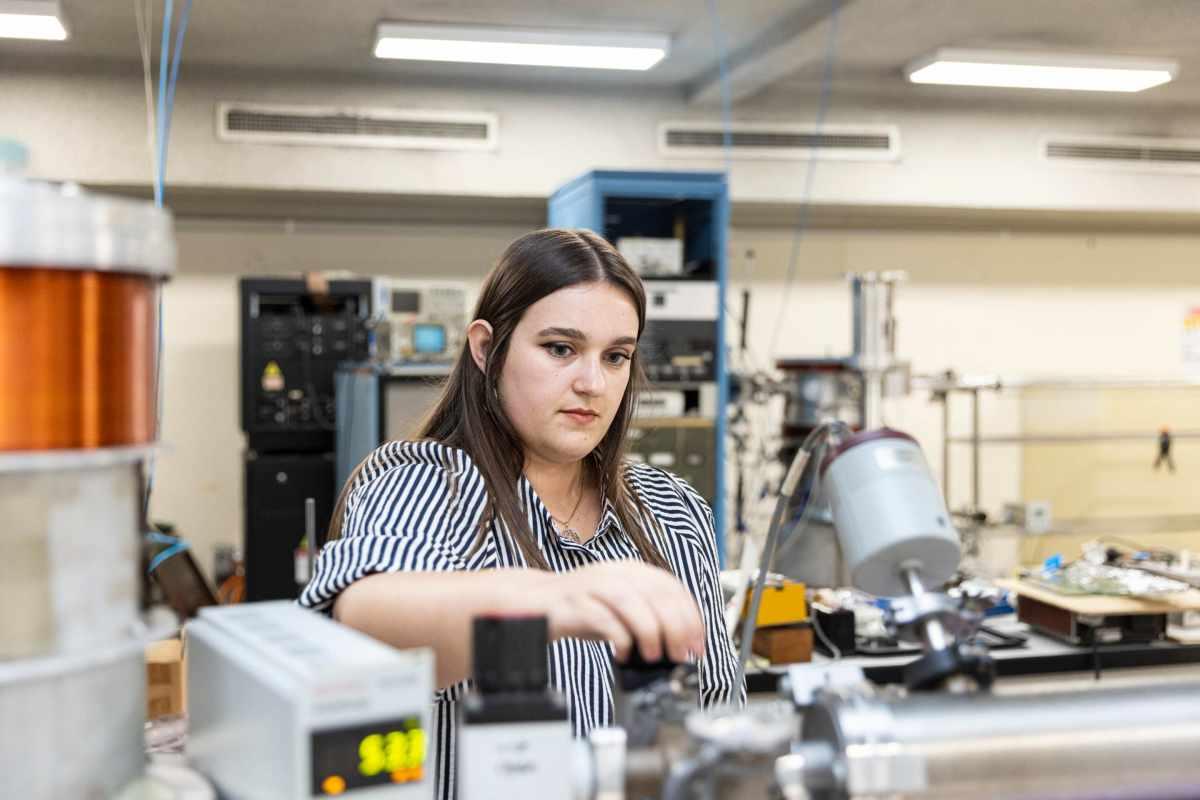
Linda Losurdo, a PhD candidate in materials and plasma physics in the School of Physics
The earliest understanding of the cosmos in science says that between about 3.5 and 4.5 billion years ago, Earth was bombarded by space rocks like meteorites, micrometeorites, and interplanetary dust particles splitting away from asteroids and comets. Over the years, this organic material accumulated in the dark vacuum of space and initiated a tailspin of cosmic chemistry, which, ultimately, wrote the first chapters of life. Picture a comet crashing through the sky or a meteorite tumbling in an earthling’s front yard and a scientist rushing to collect it for investigating in the laboratory. Without having to wait for collecting this rock from someone’s balcony, Losurdo employed an intelligent approach.
She used reverse engineering on a chemical cocktail using infrared fingerprints to create the cosmic dust from scratch in the vacuum of a tiny bottle sitting in her university laboratory. Her experiment relied on the process of ion bombardment of a dust grain by an energetic particle, mobilized by stellar wind and triggered into a thermal spike. In the astrophysical environment, the dust is constantly bombarded by electrons and ions that emit distinctive electromagnetic signals that act as molecular fingerprints of chemical structures. By mimicking this environment, Losurdo unleashed magic.
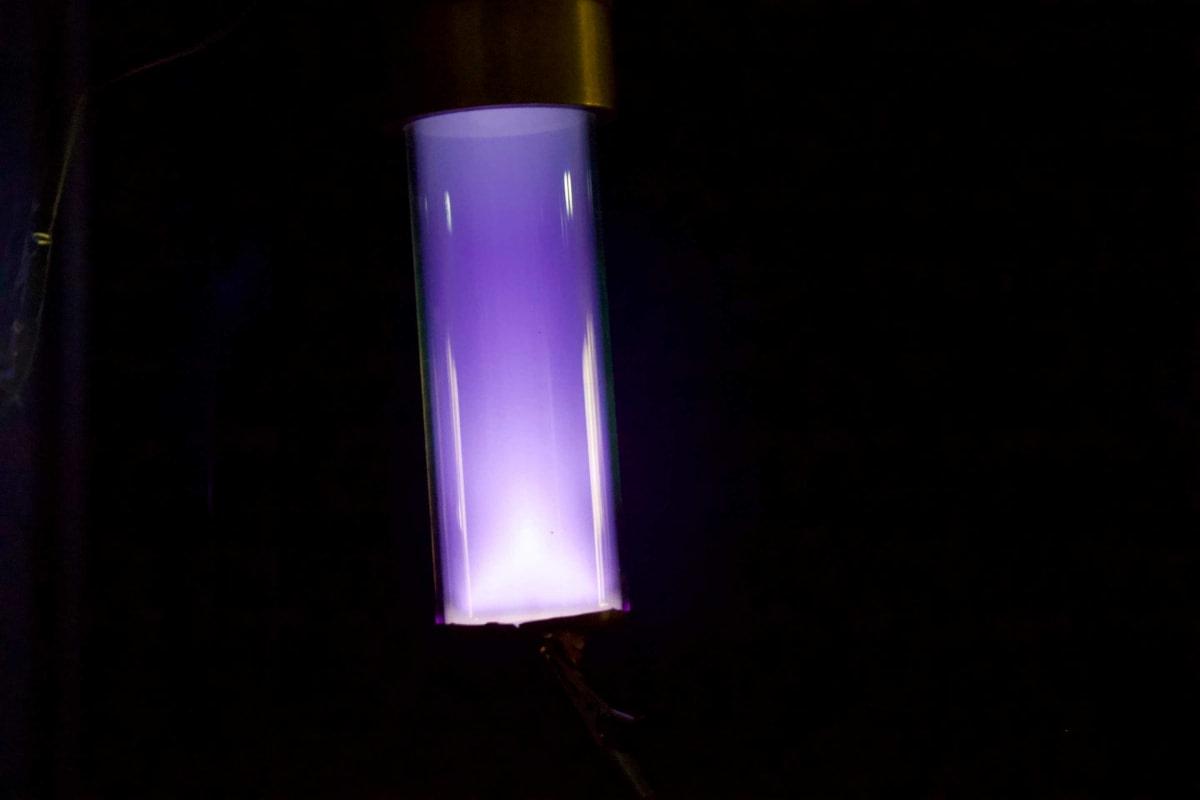
Cosmic dust gas mixture: Linda Losurdo mixed basic gases in a tube and subject them to electric bombardment to create cosmic dust analogues at the University of Sydney plasma physics laboratory.
“We no longer have to wait for an asteroid or comet to come to Earth to understand their histories,” Losurdo said, according to a press release. “You can build analogue environments in the laboratory and reverse engineer their structure using the infrared fingerprints," she added.
The dust she created contains carbon, hydrogen, oxygen, and nitrogen, collectively known as CHON molecules, which are also the central ingredients of organic matter essential to life. This, she said, provides striking insights into how “carbonaceous cosmic dust” forms in plasma puffed out by giant, old stars or in cosmic nurseries where stars are born.
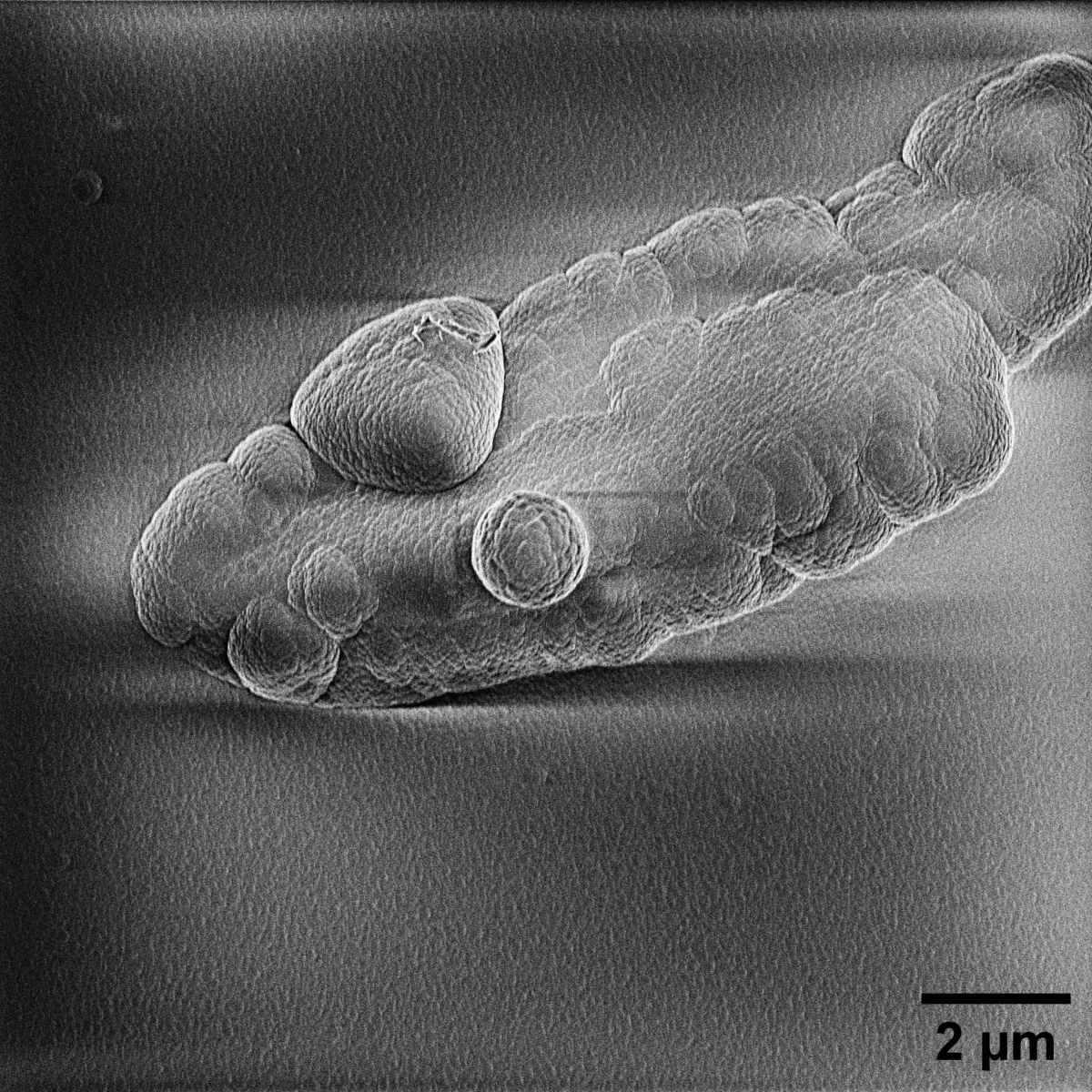
Cosmic dust analogue seen through a microscope created by experiment by Linda Losurdo.
Her supervisor and study co-author, Professor David McKenzie, reflected that the experiment will allow scientists to study cosmic conditions that are otherwise impossible to understand. This, he noted, also helps us interpret what a meteorite or asteroid fragment has experienced over its lifetime. Its chemical signature is like a storybook that chronicles all these events.
The long-term objective of the experiment is to create a comprehensive database of infrared fingerprints from lab-made cosmic dust. Astronomers could then utilize this library to identify interesting regions in space and deduce the trail of processes that shaped the cosmic dust.
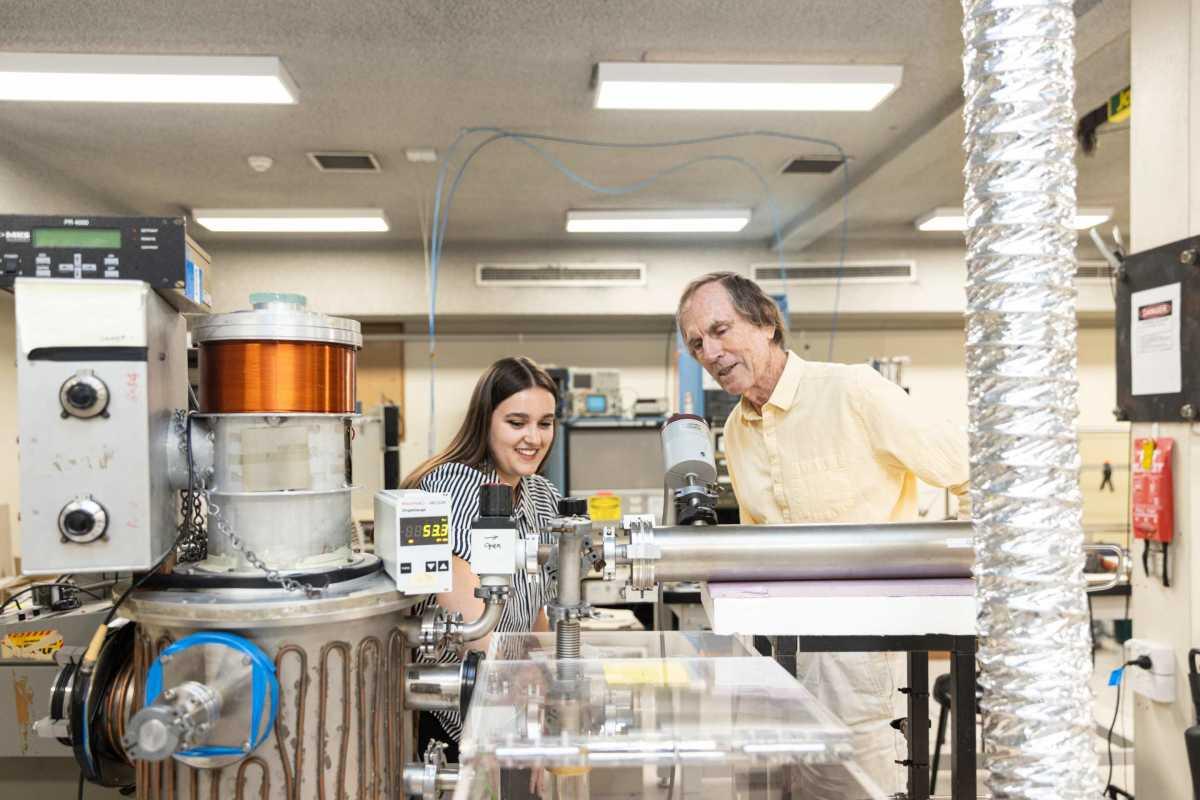
Linda Losurdo from the University of Sydney and her supervisor David McKenzie
In this experiment, particularly, Losurdo used a vacuum pump to evacuate air from glass tubes, re-creating conditions similar to space. She then introduced nitrogen, carbon dioxide, and acetylene and exposed the mixture to around 10,000 volts of electrical potential for about 60 minutes, creating a type of plasma called “glow discharge.” Under intense energy, the molecules broke apart and recombined to form new, more complex compounds. As the material cooled down, the compounds settled on tiny rainbowy silicon chips, creating a thin layer of glittering material, or cosmic dust.