
A Missing Volcanic Gas at Yellowstone Baffled Scientists — Until They Found the Answer
Published Dec. 17 2025, 8:57 a.m. ET

A tourist walks in front of a steaming hot spring in Yellowstone National Park
Scientists at USGS’s Yellowstone Volcanic Observatory are grappling with a mysterious case: the case of the missing sulfur dioxide. It is widely known that Yellowstone sits atop a large magmatic system. Underneath the ground, magma is stirring in unrest. Yellowstone is one of the highest CO2-emitting volcanic systems on the planet. So, ideally, sulfur dioxide should have been lingering in the air in bounty. But surprisingly enough, there is none.
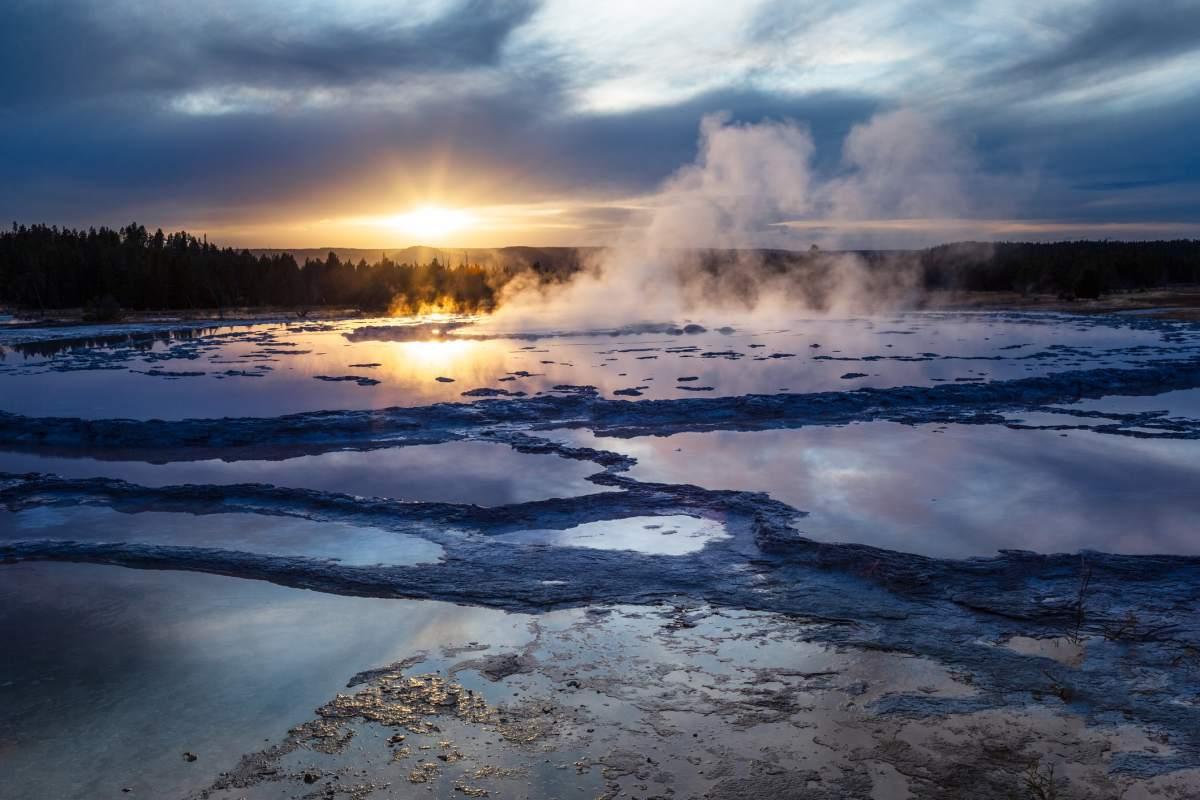
Fountain Geyser with billowing white smoke at Yellowstone
Nobody knows where it vanished. There are clues all around. The fishy smell of rotten eggs (from hydrogen sulfide, H2S, gas) wafting out from a steaming hot spring, the billowing trail of white smoke simmering from a bubbling geyser, the blinding haze of volcanic ash hanging above hissing fumaroles and gurgling mud pools. Yet, nobody can guess where and how this colorless, gassy candidate disappeared. Scientists had long suspected that something unusual was going on underneath the ground. As it turned out, something was. Deep inside underground, water was secretly helping sulfur dioxide remain in the hiding.
From previous studies, scientists knew that Yellowstone’s volcanic system consists of two main segments. The upper rhyolitic magma chamber sits between about 2.5 and 10 miles beneath the surface. The larger, deeper basalt chamber is located at a depth of 12 to 30 miles. When magma trapped in the dark chambers becomes agitated, it starts rising and ascending towards the surface. As it rises, it has to travel a certain depth, picking up gases on the way, before it reaches the surface. When it finally reaches the surface, it bursts through the ground in the same way as bubbles pop out from a soda bottle.
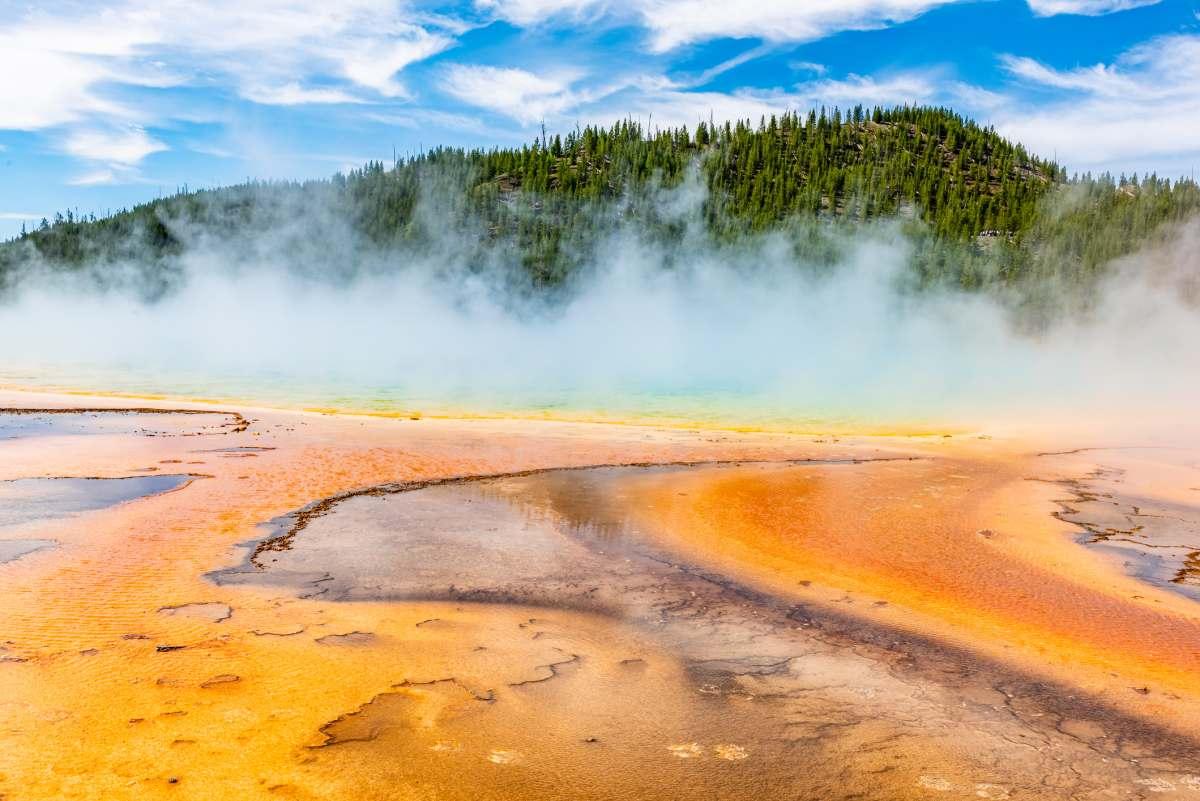
Steam vents in Yellowstone supervolcano
In contrast to an ordinary soda bottle, Yellowstone’s soda bottle works on a slightly complex chemistry. The different gases that are rippling inside the magma chamber each have their own solubility threshold. Those who have lower solubility are the ones to escape. Carbon dioxide, for instance, has low solubility and it escapes the surface even when the magma is still inside. Sulfur dioxide, on the other hand, has a relatively high solubility. It remains clinging to magma for a longer time and is destined to reach much shallower depths. On the way, however, something happens that dramatically changes the destiny of this gas forever. It encounters water.
Just as Yellowstone sits on an infernal volcanic system, it also sits on an extensive hydrothermal system that consists of more than 10,000 thermal features. While the hot waters of these systems and the volcanic gases of the volcanoes interact with each other, something happens. With a violent chemical reaction, the molecules of hot water trap the molecules of volcanic gases, and by transforming them, they prevent them from rising to the surface. Volcanologists call this process “scrubbing.”
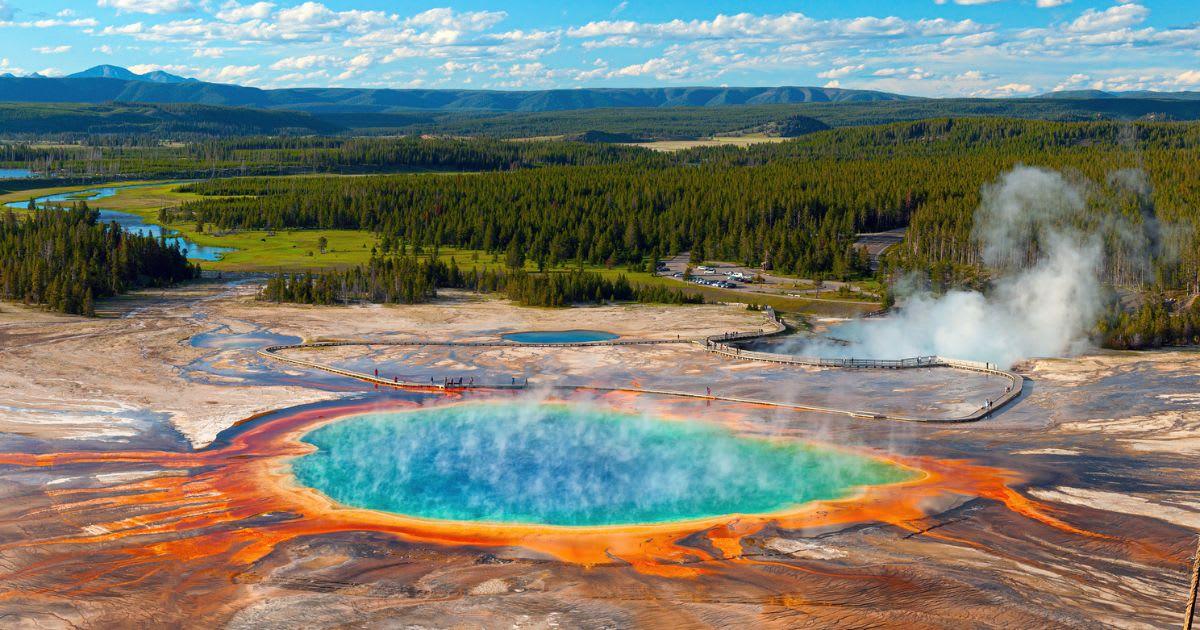
The Grand Prismatic Spring in Yellowstone National Park
In the case of sulfur dioxide, the moment it encounters hot liquid water inside Yellowstone’s thermal system, it gets transformed into H2S or hydrogen sulfide, the same chemical that whiffs out rotten egg-like smell around pools and springs. Sometimes, they leave shiny yellow deposits that you may find laced at the edges of thermal pools when you visit Yellowstone.
As it turns out, the sulfur dioxide hasn’t actually gone missing from Yellowstone. It is just undergoing a transformation inside the surreal chemical factory underground. And in a way, this comes as good news for scientists. If sulfur dioxide hadn’t gone missing on the surface, it would indicate that there isn’t enough water underground to catch and transform the gas. Disappearing water would mean that the volcano underneath was in unrest and probably planning a devastating explosion.