
You Might Be Able to See the Northern Lights in 20 States Tonight — Here's What to Know
Published Jan. 2 2026, 6:52 a.m. ET

Silhouette of a woman enjoying the view of Northern Lights.
On December 31, 2025, sunspot region 4324, located in the Sun’s northern portion, launched a fiery ejection of energy and several solar flares that triggered a disturbance in Earth’s magnetic field, turning it from quiet to unsettled, per SpaceWeatherLive. The unsettling shift, however, brings an exciting opportunity for stargazers and aurora chasers to enjoy Northern Lights across parts of 20 U.S. states on the night of Friday, January 2, 2026, according to a forecast by the National Oceanic and Atmospheric Administration (NOAA)’s Space Weather Prediction Center.
The dramatic release of energy on the last day of 2025 provoked a series of 11 flares, including 10 C-class flares and one M-class flare called M7.1. A cloud of charged particles exited the Sun and trundled towards Earth, sweeping into its atmosphere with winds gushing at unthinkable speeds. In response to the coronal mass ejection, some radio signals on Earth temporarily dimmed down. The geomagnetic storms also triggered a radio blackout in the sunlit Atlantic Ocean. While all these meteorological events may seem of little account to non-scientific earthlings, there’s also a treat that these storms will serve for the Americans.
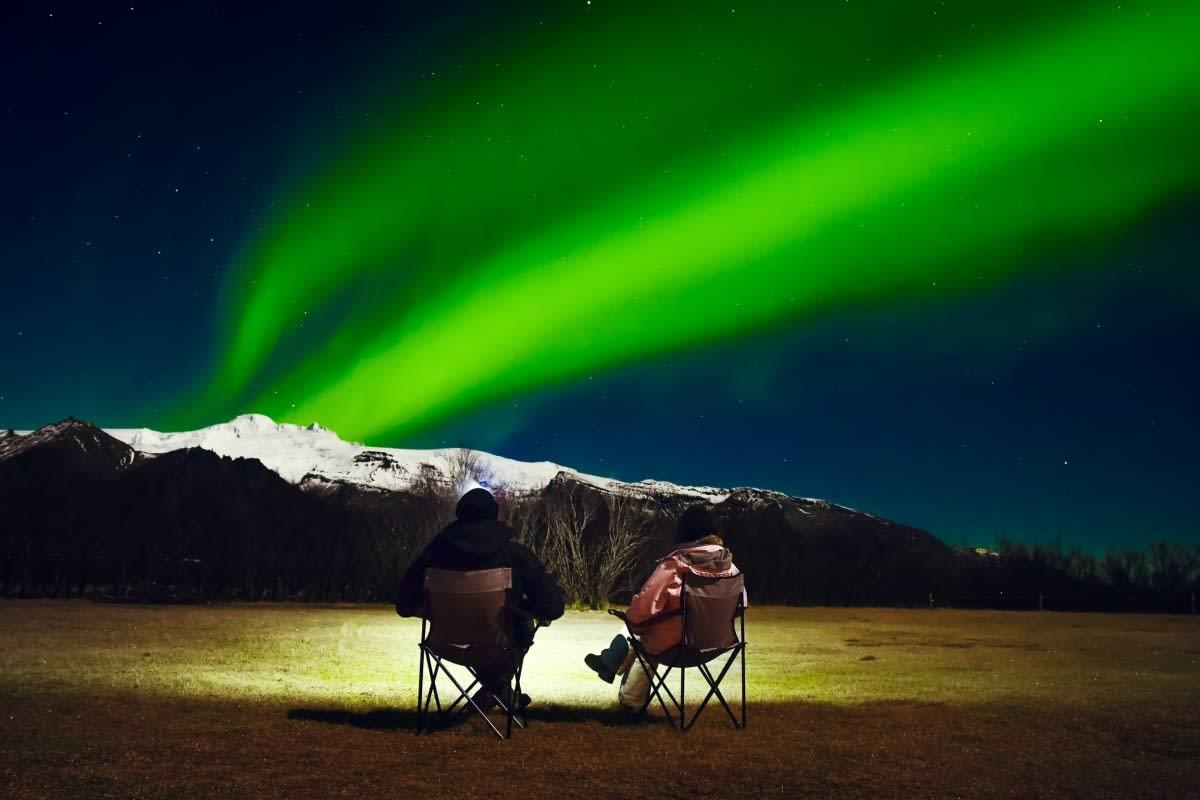
A couple sits in foldable camping chairs, watching the Northern Lights
Between the night of January 2 and the early hours of January 3, residents across parts of 20 states can experience aurora sightings. The Northern Lights are expected in places like Alaska, Washington, Idaho, Montana, North Dakota, South Dakota, Minnesota, Wisconsin, Michigan, and Maine, according to NOAA's aurora view line, as reported by Forbes. Those in Oregon, Wyoming, Nebraska, Iowa, Illinois, Indiana, Ohio, New York, Vermont, and New Hampshire may also be able to see faint auroras if stronger displays are triggered.
“The geomagnetic field is expected to reach unsettled to G1 (Minor) storming levels on 02 Jan due to the combination of HSS activity and potential glancing blows from the 28-30 Dec CMEs. By late on 02 Jan to early on 03 Jan, the arrival of the 31 Dec CME is expected to cause unsettled to G1-G2 (Minor-Moderate) storming,” NOAA said in the forecast report.
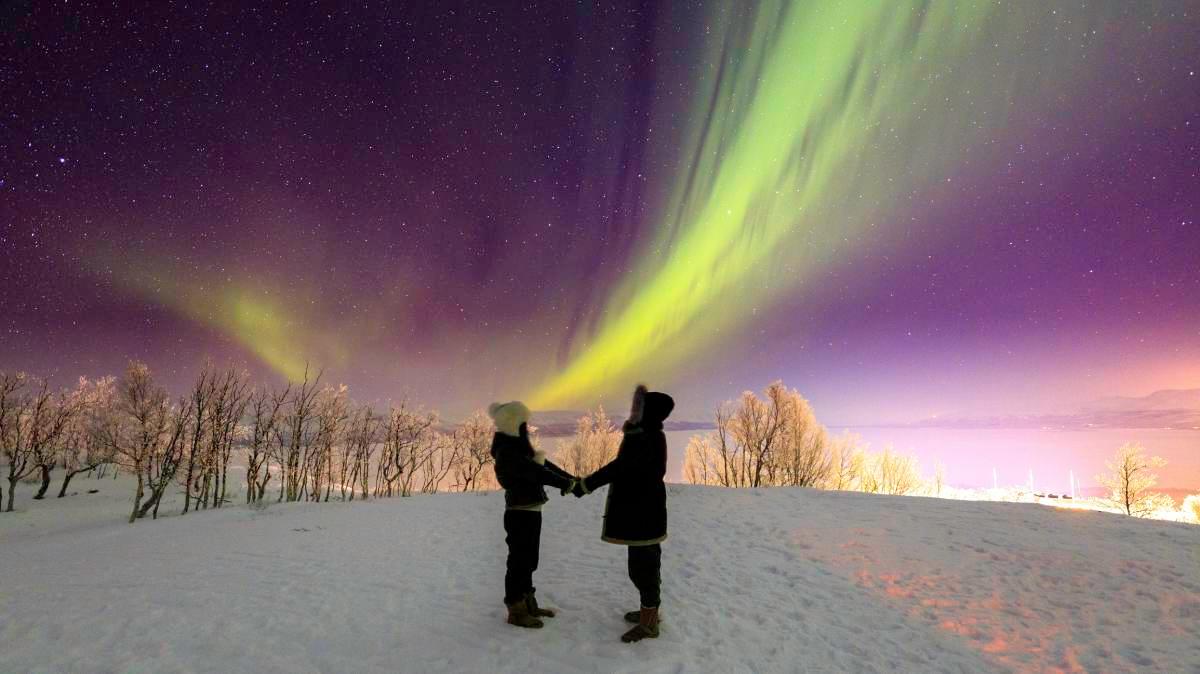
Two people standing hand in hand beneath a dazzling display of auroral lights
On January 3, the skies will also welcome the first full moon of 2026, which is the Wolf Supermoon this year. This means the moon will appear unusually longer and brighter this time, which could interfere with the aurora’s view. That’s why experts suggest choosing dark locations for aurora viewing, such as high-vantage points, lakeshores, or rural villages where the light pollution is at its minimum. Pack headlamps, snacks, water bottles, blankets, warm boots, and photography equipment if you’re looking to snap some photos. Don’t forget to dress warmly. Layers are the best given the intensity of the northern winters. The Wolf Moon will arrive on the night of January 3 at about 5:03 a.m. EST.
Meanwhile, scientists continue to track other Earth-faring disks and the Sun’s magnetic field to stay updated with its current behaviors and atmospheric states. And still in its 25th solar cycle, the Sun continues to remind us that Earth is dependent on both its light and its mood. Intense solar storms can occasionally disrupt satellites and power grids, but they can also fill the night skies with vistas of dancing colors.