
World’s Largest Acidic Geyser Has Been Dormant in Yellowstone for Years. It’s Now Rising Again
Published March 3 2026, 7:33 a.m. ET

Echinus Geyser in eruption on October 24, 2017
A geyser in Yellowstone National Park has come alive again. The geyser in question is Echinus, located in Norris Geyser Basin, according to USGS. For the first time since December 2020, the geyser has exploded. The first eruption took place on February 7, 2026, and was followed by three surges on February 9, 12, and 15. From February 16 to the last few days of the month, eruptions occurred every two to five hours. These eruptions were just two to three minutes long and reached an elevation of around 20 to 30 feet. After the eruption ceases, the water level decreases in the basin. It takes around an hour for the water level pattern to return to normal. The same pattern was observed in eruptions that unfolded in the geyser back in 2017, suggesting similarities between the two.
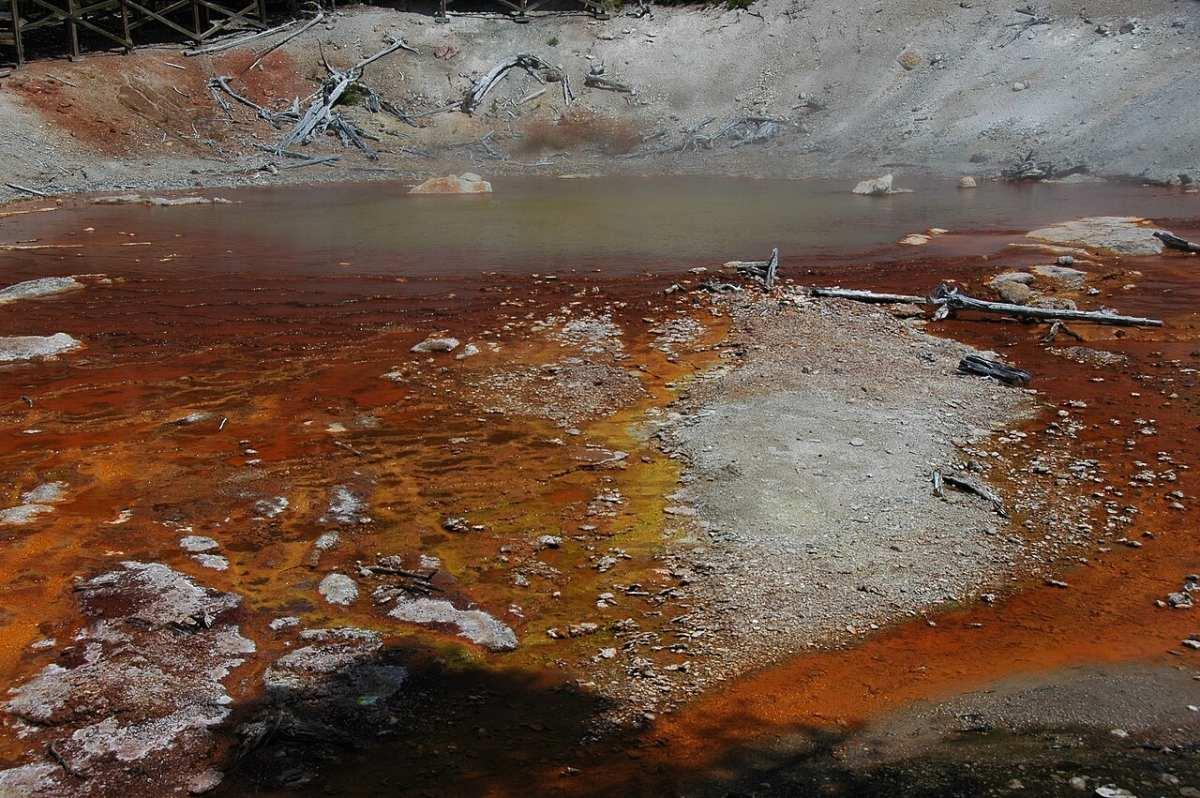
Echinus Geyser—Back Basin, Norris Geyser Basin, Yellowstone Hotspot Volcano, nw Wyoming, USA
Echinus is also deemed the world’s largest acidic geyser. It is located around 660 feet away from the Steamboat Geyser in the basin. The Echinus geyser was named by mineralogist Albert Charles Peale, who visited the site in 1878. He thought the rocks in the geyser looked like sea urchins, also known as echinoderms, and thus chose the name. The geyser pool is around 66 feet wide and displays acidic chemistry. The acid is not concentrated and hence not fatal. Such geysers are a rarity because the acidic water typically breaks down the rock that forms the plumbing system.
Echinus geyser, though, stands apart because of the unique mixture of acidic gases and neutral waters that exists in the basin. This mixture prevents the acid from eating away at the rocks and allows the construction of a geyser. The unique water chemistry also provides the red color that surrounds the geyser pool and envelops the silica-covered spiny rocks. The geyser continuously erupted in the latter half of the 20th century, and therefore, the park officials set up multiple viewing areas around it. It waned at the turn of the 21st century but now has again come to life.
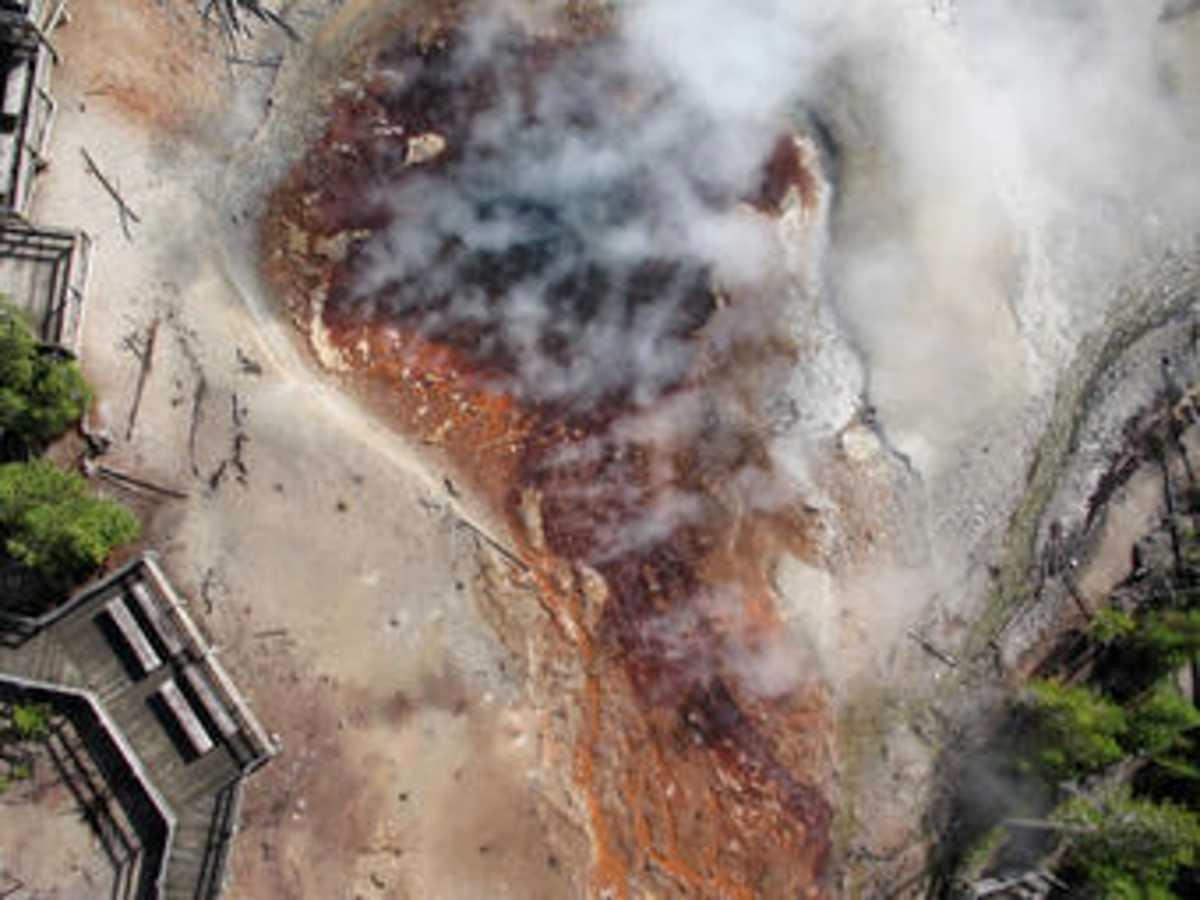
Echinus is a rare acidic geyser
In 2010, officials incorporated a temperature monitoring system in the outflow channel of Echinus Geyser. Through the system, experts wanted to keep track of the changes going on at the site. As per the readings undertaken by the system, 15 sporadic eruptions took place between October 2010 and January 2011. After this period, only a handful of surges were facilitated until the geyser became active in 2017. The sensor readings suggested that from September 2017, the geyser temperature spiked many times during the day but then quickly came back down. The same phenomenon was observed before the February 2026 eruptions happened.
Researchers believe that these spikes are associated with the surges from the pool where the surface has become agitated. These surges pushed hot water down the channel, which elevated the temperatures. After the waters calmed down, the temperatures also reduced. In 2017, the true eruptions began in October, indicated by the fact that spikes became more elevated compared to September. As per experts, eruptions measure around 158°F, while spikes range from 104 to 122°F.
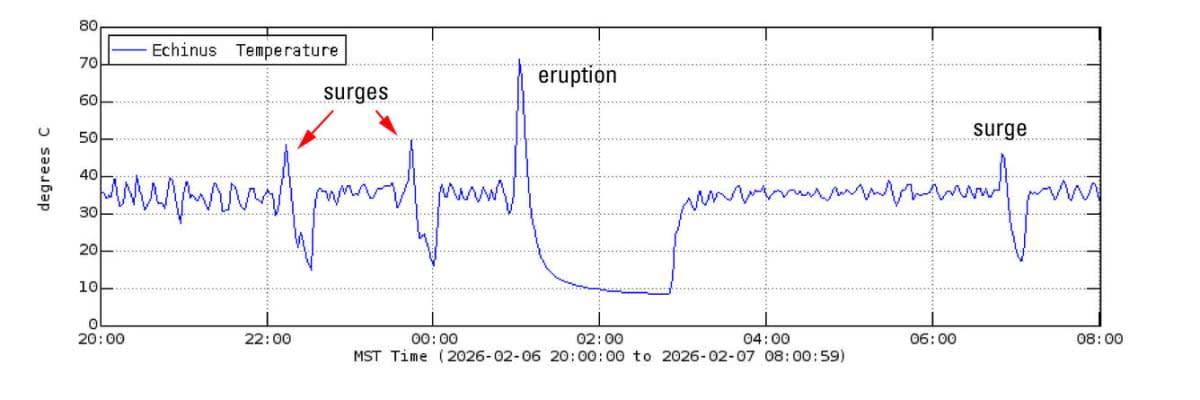
Temperature record from Echinus Geyser outflow channel for February 6, 2026, at 8 p.m. MST to February 7, 2026, at 8 a.m. MST
The eruptions took place multiple times, with each lasting two to three hours from October 18 to November 10, 2017. After this, the continuous activity stopped. Singular eruptions took place in 2018 and 2019, while two unfolded in 2020. The continuous activity began again in February 2026, with more than a normal amount of water pushed down the runoff channel. A lot about these eruptions remains a mystery. Experts don't know when they will come back, why it went quiet, or why exactly it came back to action. Scientists don't believe the eruptions indicate any sort of imminent danger, as the rest of Yellowstone is functioning normally.