
Two Yellowstone Predators Are Locked in a Power Struggle — One Is Changing Its Habits to Survive
Published Jan. 27 2026, 3:29 a.m. ET

(L) A wolf snarling in the wild, (R) A cougar in a forest (Representative Cover Image Source: Getty Images | (L) Twildlife, (R) Alaska Photography)
Within the wide-open grassy landscapes and plateaus of Yellowstone, a dramatic episode is unfolding these days. It’s a one-sided relationship between wolves and cougars, where wolves are the dominant ones and cougars the peacemakers. While the brash wolves unabashedly steal prey, cougars often withdraw from the kill sites to avoid conflict with their fellow carnivores. Since both have the same diet, mostly bison, elk, and deer, the competition for the menu evokes a power struggle.
Wolves are commanding creatures that stop at nothing to grab their prey. Cougars have to adopt shabby strategies to preserve their food stock, like climbing on trees or caching up the killed prey somewhere in tree holes or bushes. In a new study published in PNAS, researchers documented the mechanics of this asymmetrical interaction and lopsided power dynamics that are slowly governing the ecology of the western US. Thanks to cougars, there is peace and much less conflict in Yellowstone.
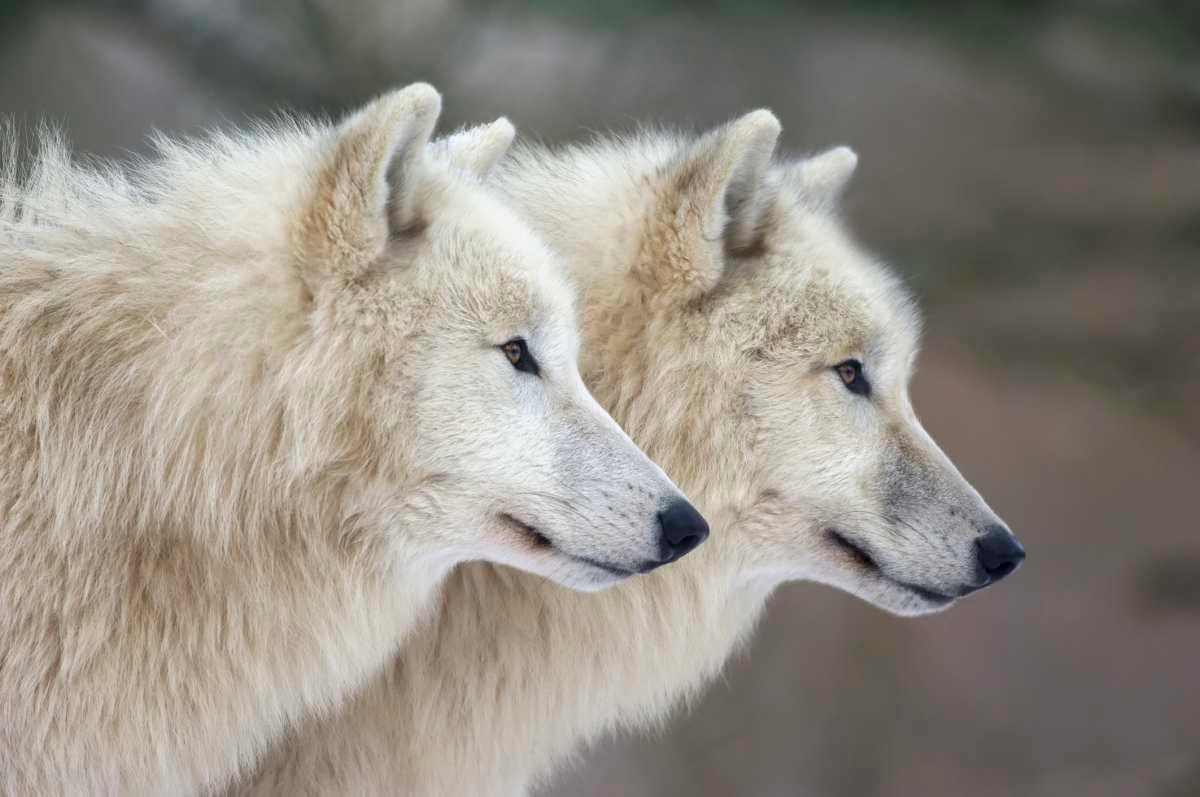
Two gray wolves
For any ecological community, carnivore interactions are of vital importance. Since both cougars and wolves are carnivores and both have the same menu, either one of them has to surrender while the other dominates, to maintain peace. Earlier studies have fondly documented similar relationships between African lions and spotted hyenas, where dominance is established by body and group size. The authors of this study call this an “enemies without benefits” relationship.
During the 20th century, the US government rolled out some policies that eliminated both predators. Between the 1960s and 1970s, the animals were reintroduced, and soon after they colonized the terrain, their population rebounded. But the growing overlap of population also created conditions for conflict. Both engaged in kleptoparasitism, or carcass theft.
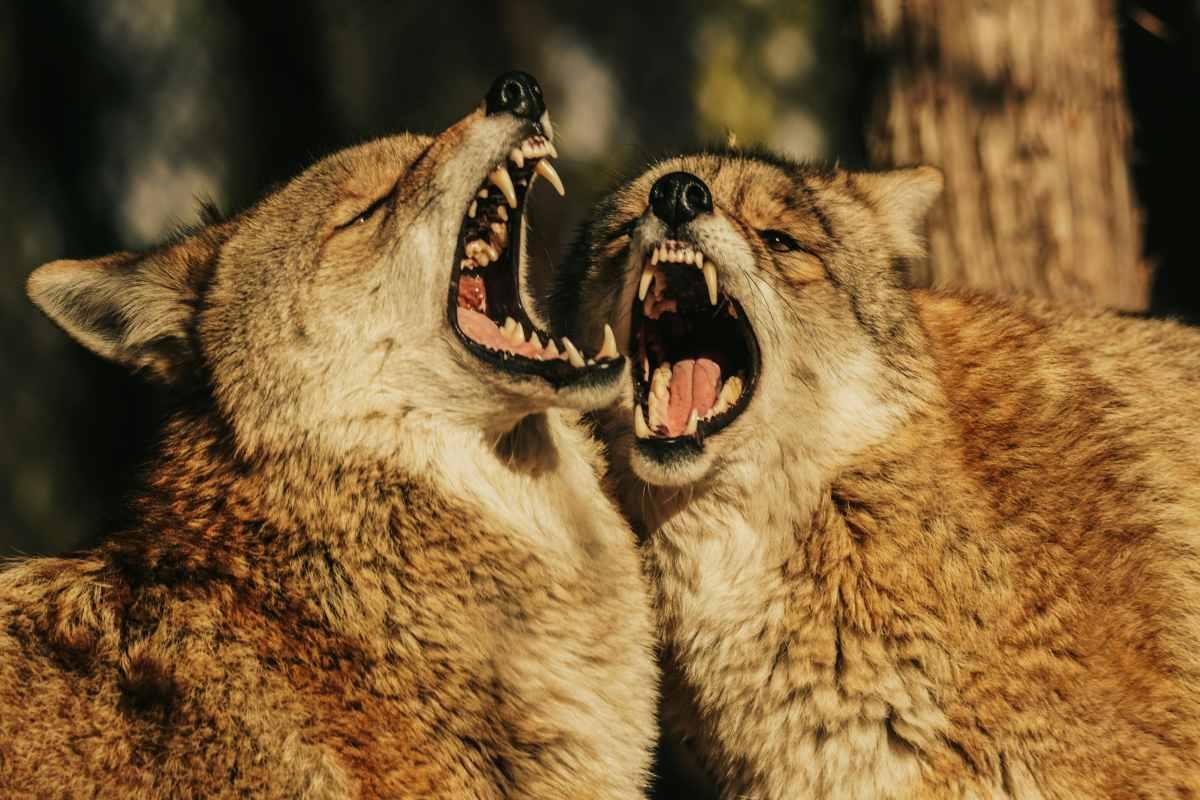
Close-up of two wolves in a forest setting
But while wolves stick to their guns and don’t budge from the kill site, cougars quietly shift their hunting grounds. In quite a contrast to their peacemaking behavior, wolves don’t even flinch if they have to kill a cougar for the day’s meal. One reason why wolves succeed in dominating the power dynamic is that they roam in packs, while cougars are mostly solitary.
Lead author Wesley Binder from Oregon State University and his team conducted this study by utilizing data collected from the GPS collars they attached to wolves and cougars over a period of nine years. Nearly 3,929 potential kill sites were investigated. Data was recorded for 852 wolf feeding events and 520 cougar feeding events. The first observation that emerged from the research was that cougars tend to avoid areas where wolves have made kills or stay close to escape terrain. At times when wolves like to feast on the elk population, cougars congregate by changing their diet to deer carcasses. This leads to fewer interactions with wolves, hence fewer quarrels.
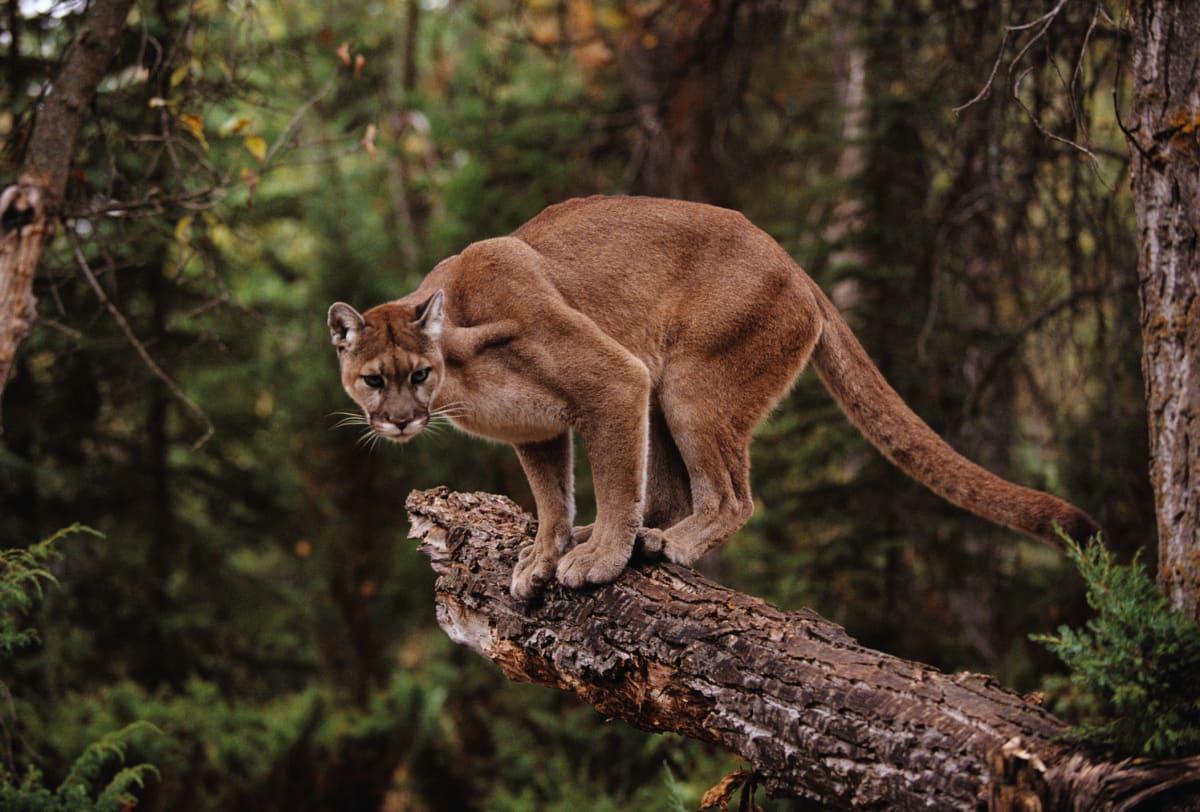
Cougar on a tree stump
Observations of kill sites revealed that, in wolves’ menus, bison increased from 1% to 10%, while elk declined from 95% to 63%. In cougar menus, the amount of elk dropped from 80% to 52%, and deer increased from 15% to 42%. This data from the kill sites was used to train machine-learning models, enabling the team to pair all wolf and cougar movements with probable kill sites and identify the drivers of their interactions. “Our research provides insight into how two apex predators compete, which informs recovery efforts,” Binder noted, according to a press release.