
These Wolves Survived Radiation Exposure in Chernobyl — and Developed a Surprising Superpower
Published Jan. 26 2026, 8:14 a.m. ET

Fiercely gazing gray wolf on an undulating landscape blanketed in snow
About 100 miles southwest of the city of Gomel lies the ghost of a town that once died a half-death on April 26, 1986. An abandoned town sits flanked by mounds of radiation-laced material that no one dares to touch; the buildings and their rooms that were earlier occupied by humans and furniture has now become a graveyard where skeleton-like trees spread their gnarly branches; everything is blanketed in a shadowy haze of dust, soot, and ash that still whispers the screams of the workers who died in the nuclear disaster.
Nothing except an uncanny Ferris wheel remains on the ghostly landscape, whose clanging rotation fills the air with the echoes of the blast that washed away life and deserted it to be haunted by silhouettes of unattended shadows. Humans were evacuated and were asked to never return. They didn’t either. But somehow, animals kept sticking around. And after almost three decades, it seems, they are quite happy. The gray wolves, especially.
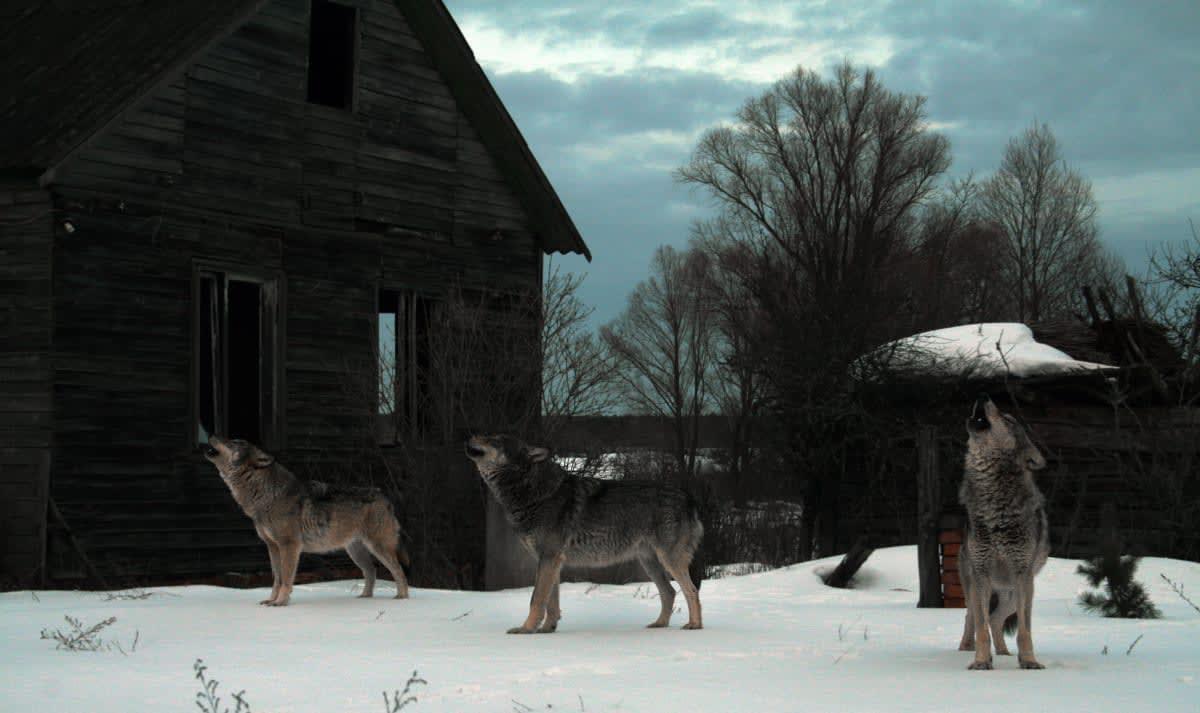
Howling wolves in a snow-covered landscape in front of an abandoned house in Chernobyl
In 2024, biologists Cara Love and Shane Campbell-Stanton set out to explore animal biology in the Chernobyl Exclusion Zone (CEZ), to understand how animals’ bodies respond and adapt to radiation. They presented a study at the Annual Meeting of the Society of Integrative and Comparative Biology, documenting how wolves here have developed surprising features that allow them to fight cancer without needing a treatment. They also published a paper in Cancer Research.
If a human had lingered in the town post the nuclear disaster, they might have died, developed a severe respiratory illness, or a chronic disease. In contrast, the gray wolves show a staggering immune response towards cancer, as well as a greater immunity to environmental stress, as compared to those who didn’t experience radiation exposure. As Campbell-Stanton shared in an interview with NPR, the physiologies of these wolves are showing genetic adaptation.
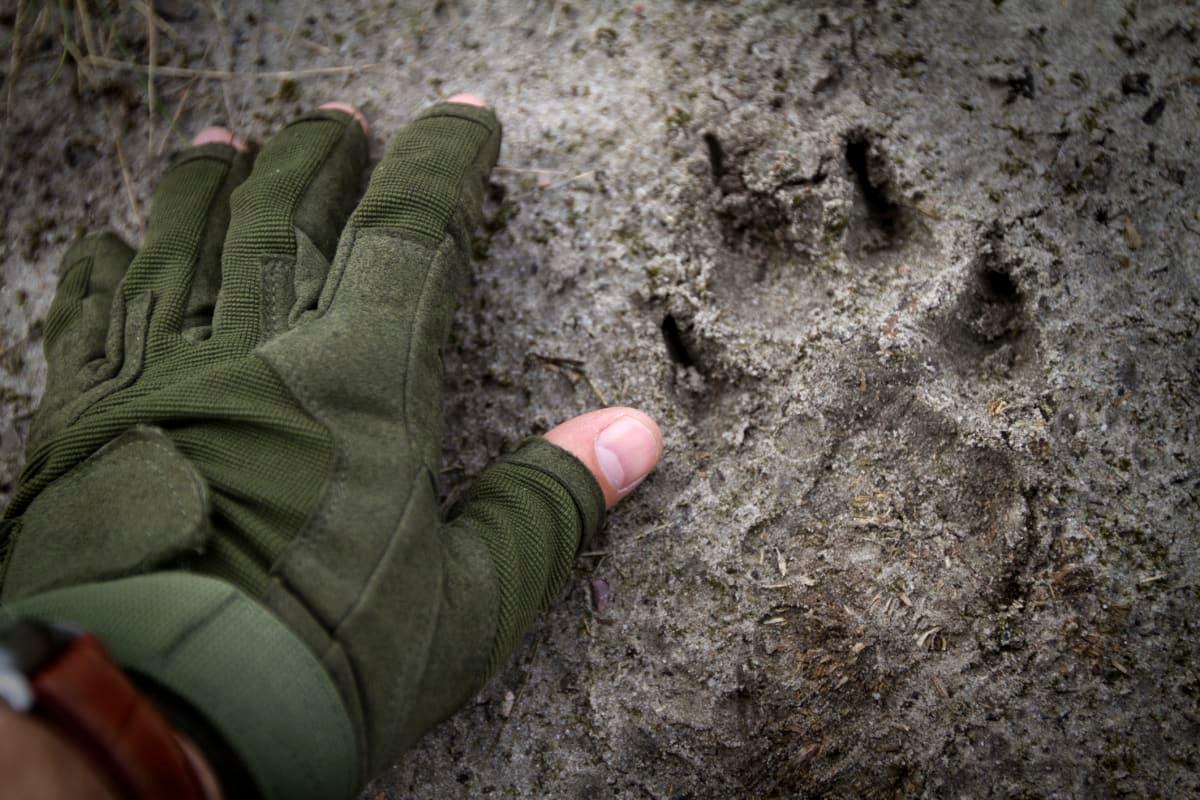
Gloved human hand touching the radiation-laced soil of Chernobyl
To conduct the research, the team tagged these wolves with GPS collars and radiation dosimeters. They discovered that the wolves put up with a thumping amount of 11.28 millirem of radiation daily, which is six times the prescribed safety limit for humans. But these wolves seemed to be following the ancient adage that says grow through what you go through. Instead of developing a chronic condition from fiery radiation material, they have developed an altered immune system as well as something that scientists say is a “genetic armor against cancer-causing genomes.”
“By counting the number of different immune cells within an individual, we’re able to identify some signature of radiation stress within the Chernobyl wolves,” shared Love. “And we’ve also explored many different parasite and pathogen infections within this population compared to reference populations, trying to get at disease rates.” If the team can gain a deeper understanding of the mechanism and chemistry of the new genetic armor wolves have developed, they can probably unravel some exciting insights into how radiation plays a role in cancer immune response and the underpinnings of anti-tumor immune response in mammals, including humans.
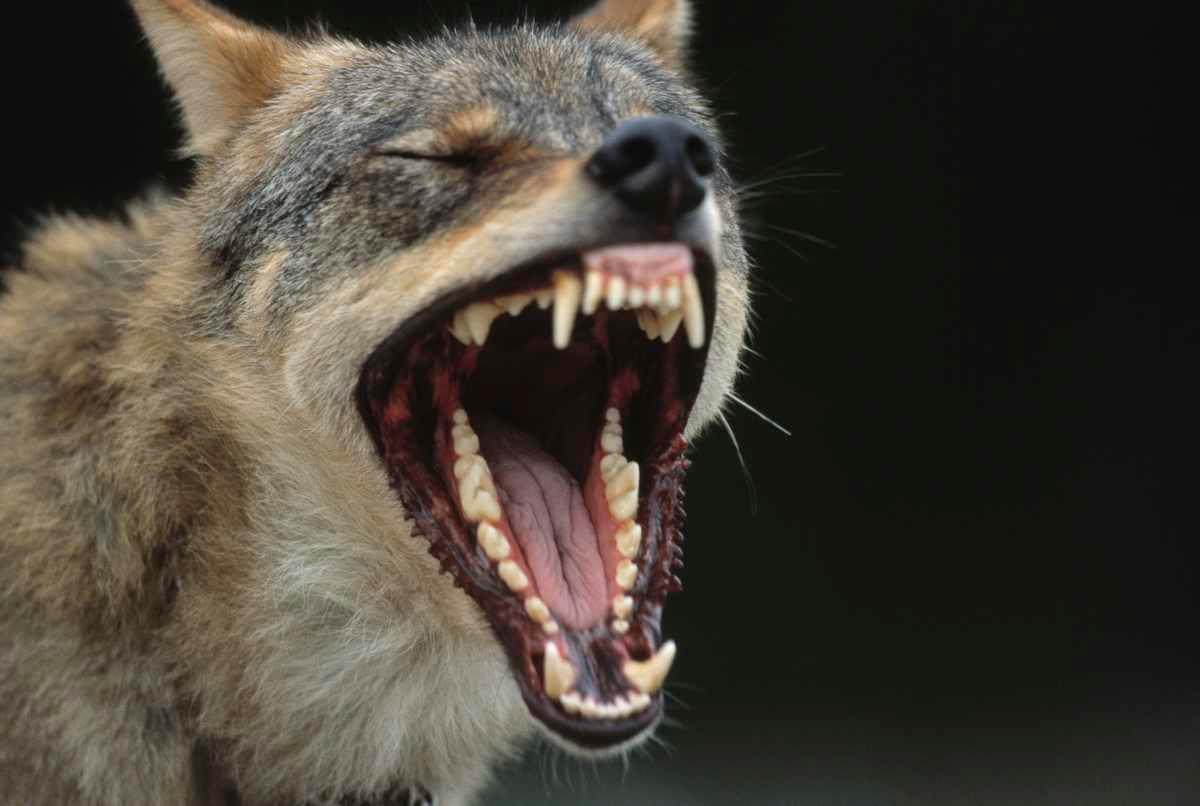
Gray wolf howling
In another electrifying observation, scientists noticed that the immune systems of Chernobyl wolves, when investigated, showed a stark resemblance to the immune systems of cancer patients receiving radiation therapy. Their immune systems displayed suppression of certain cancer-causing genes and also the development of new immunity-increasing genes. But radiation likely is not the only reason why these wolves have developed resistance to cancerous diseases. Absence of humans might be another factor. In the end, it leaves us with one question among others: Are Chernobyl wolves really evolving resistance to noxious radiation or are they simply better off with no humans around?