
Scuba Diver Exploring Creepy Dive Site in Mexico Captures Bizarre Underwater Illusion Dividing the Sea
Published March 3 2026, 3:37 a.m. ET

Diver braved the creepy aura of one of the world's scariest diving sites and ended up recording otherworldly footage.
“Not going to lie, it feels a little creepy diving here,” Amanda Keane (@amanda.exploring) confessed in a video log she recorded in one of the creepiest scuba diving sites in the world—Cenote Angelita. This 200-foot vertical sinkhole tucked deep in the jungle of Mexico, just south of Tulum in the Yucatan Peninsula, is known for its ominous gas cloud that hangs at about 100 feet into the waters, so toxic that it chokes people and animals to death, whose remains sit rotting at the bottom. The stench is so reeking it jolts the diver into a bout of disorientation and dizziness, making objects appear blurry, melting, duplicated, or shifting.
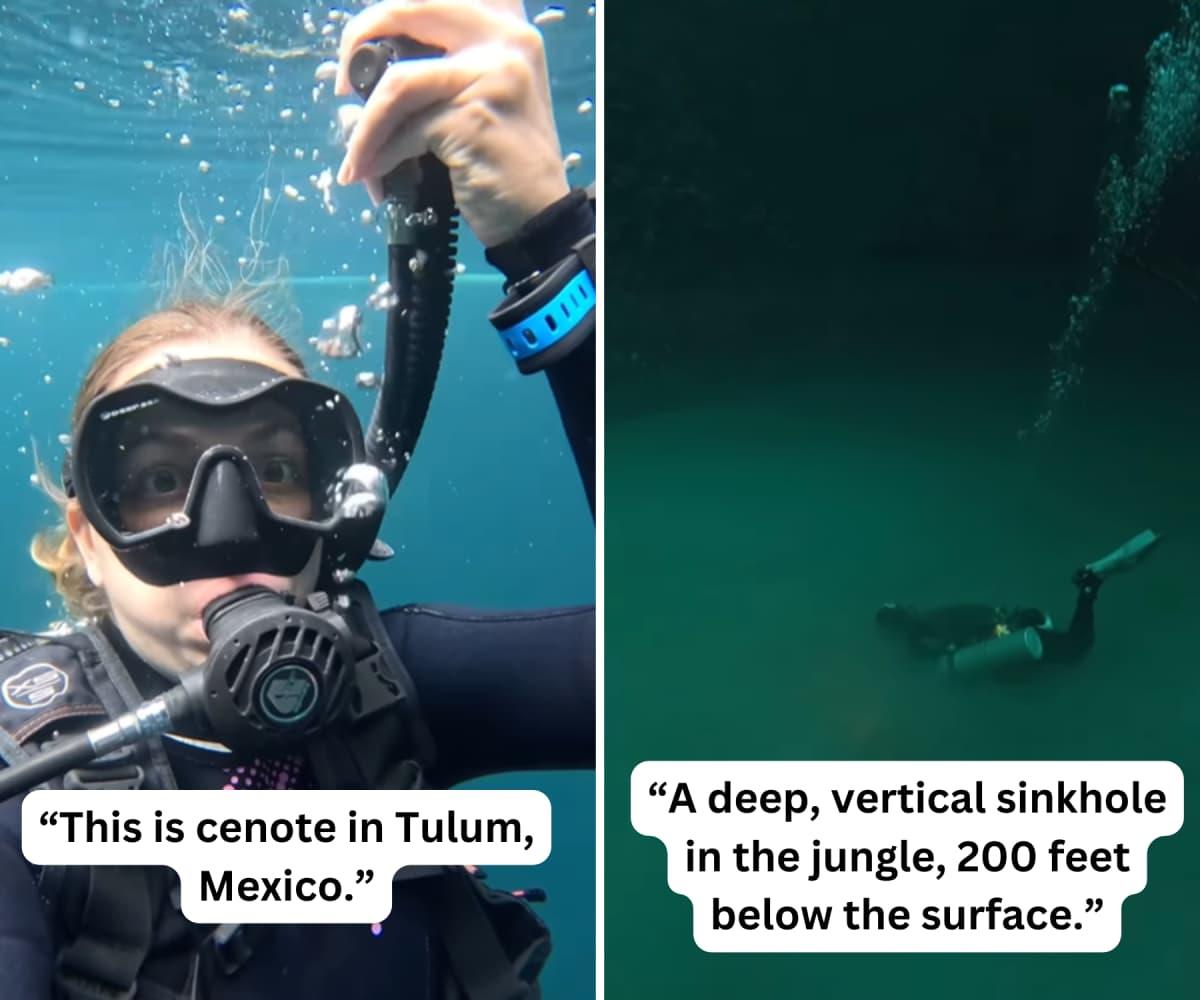
Diver recording trippy footage inside a cenote in Tulum, Mexico.
Entering the cenote means swimming in total darkness. At about 100 feet deep, lips and fingers start to tingle. Since sunlight can’t get through, the only objects visible are those through torchlights. Orientation is lost, and the only way to orient oneself is to look at the bubbles and follow their direction. Accumulated within an island of rubble lay twisted branches, like abandoned skeletons. Banks of fallen trees and rotting vegetation burp out billows of hydrogen sulfide gas, which form this gigantic cloud.
The cloud engulfs the entire cenote in a milky-white, sometimes greenish haze, justifying why it is remembered as an ancient ceremonial site in Mayan folklore. There is, however, another side to it. The cenote is eerie, for sure. But the biochemical rush, the intrigue, the curiosity that it sends through the diver’s veins is something that cannot be experienced anywhere else in the world, something that Keane also felt.
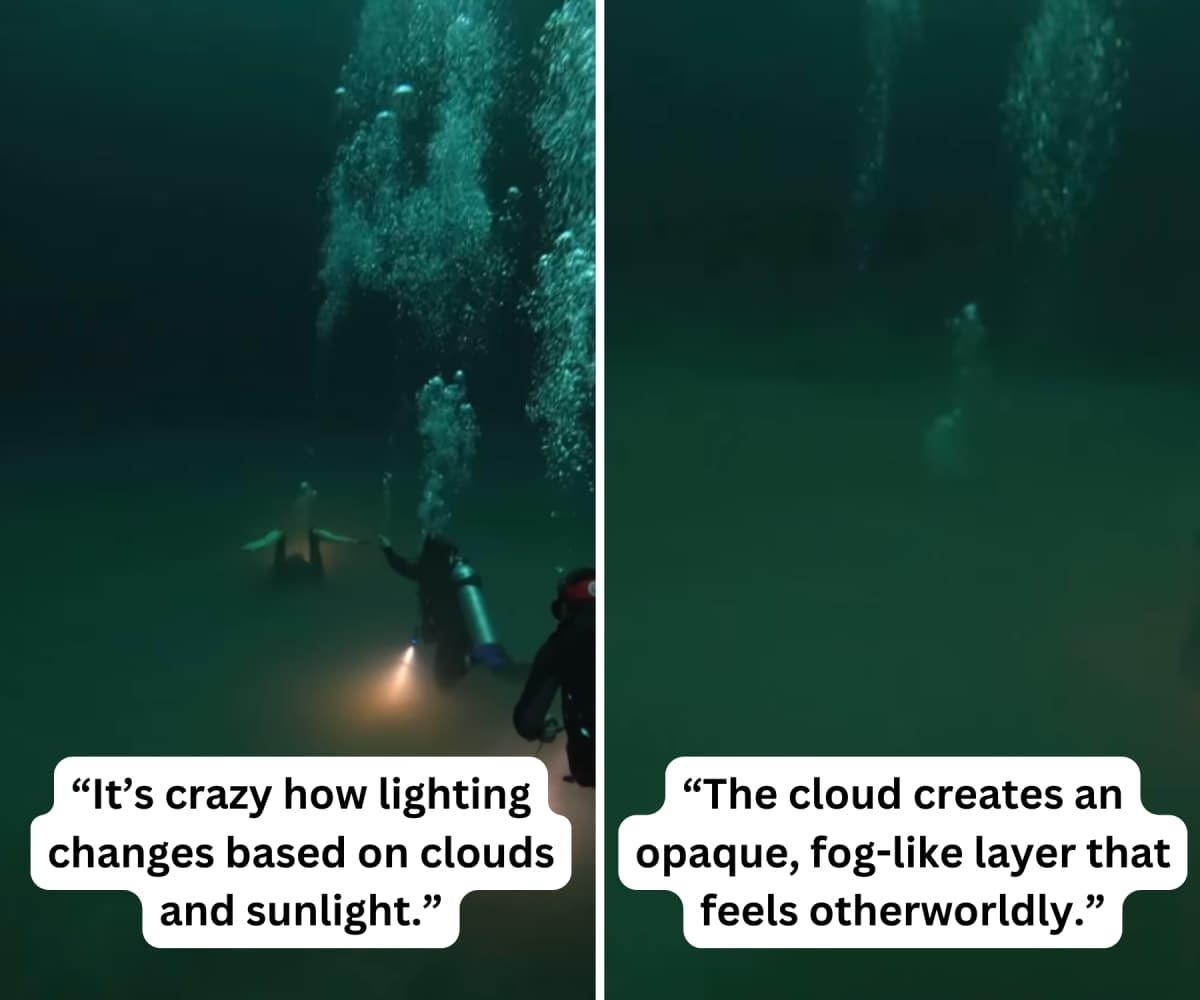
Braving the haunting aura of the scariest cenote in the world, a diver plunged into its waters.
“The cloud creates an opaque, fog-like layer that feels otherworldly,” Keane described in the video while recording the cenote’s shadowy, ancient underworld with a GoPro Hero 12. All this might sound like coming straight from a horror flick, but it is simply science, a phenomenon called “halocline.” Halocline, as The Cenote Guy puts it, is a boundary where the freshwater from above mixes with the saltwater from below.
The two waters are not able to blend in completely, which results in this murky layer that obscures everything from view. The tiny bacterial organisms sitting below munch on the rotting tree matter and release more gasses, which continue to make the cloud even more powerful and nebulous.
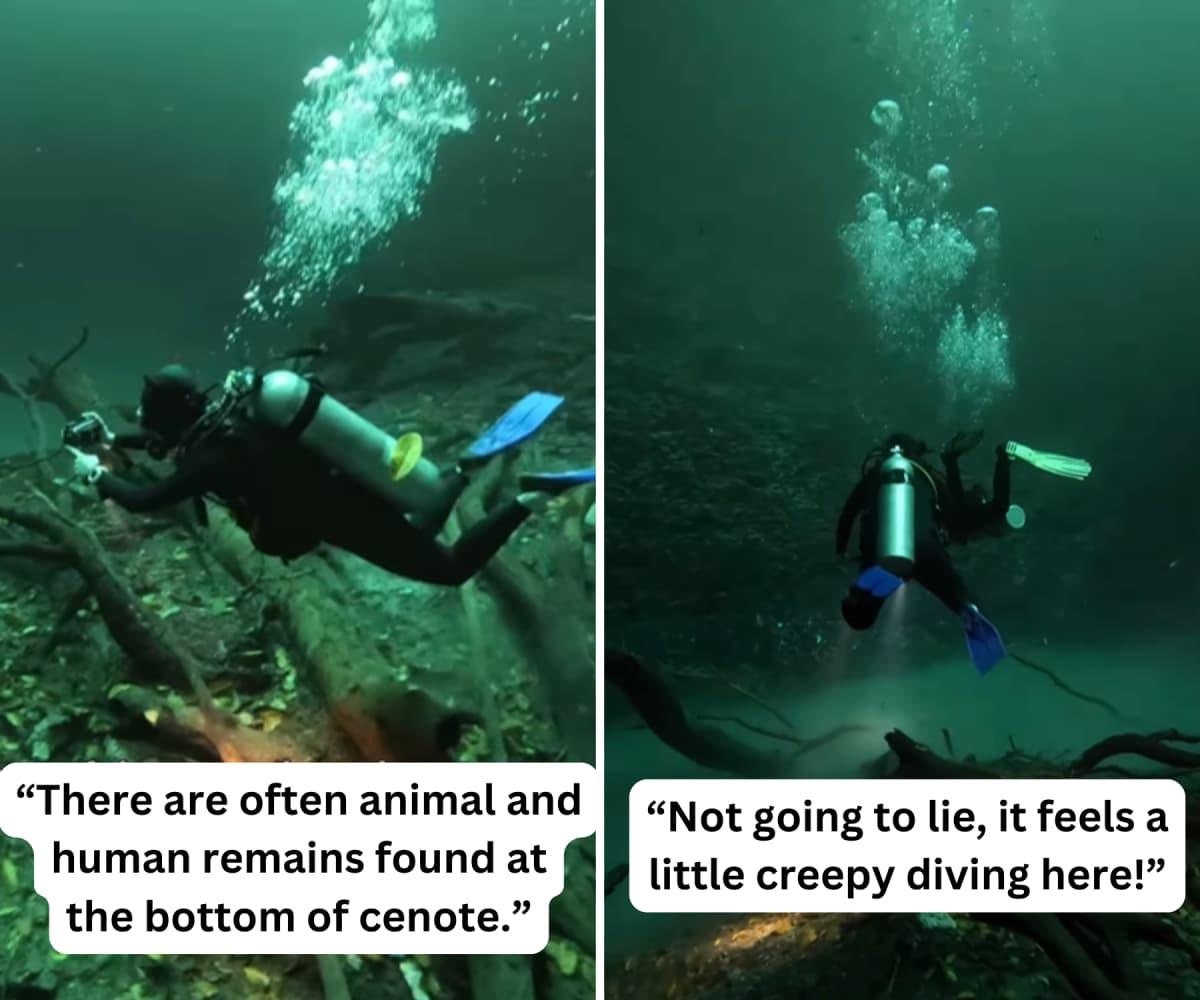
Diver dipped 200 feet into a cenote in Mexico and recorded a surreal underworld with her GoPro camera.
Unlike other watercourses, where the two types of waters eventually blend with each other, creating uniformity, this cenote enables halocline to persist undisturbed for long periods. Formed over thousands of years, the cenote was once a structure of limestone that collapsed under pressure. Rainwater seeped through the ground, ate up the rocks, and carved this underwater system.
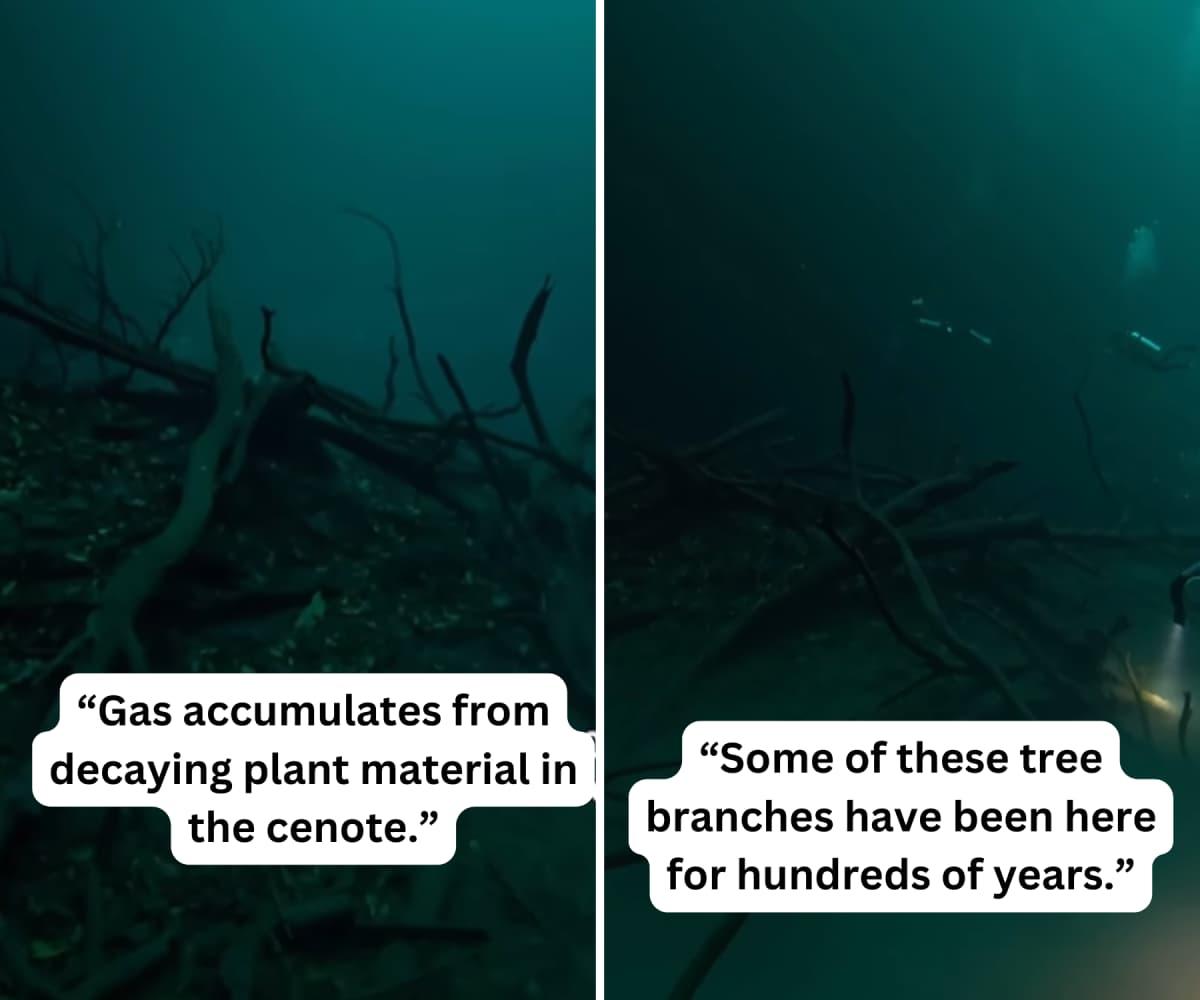
Tangles of rotting branches lay splattered underneath a cloud of toxic gas.
Diving here, however, is not the same as typical ocean diving, Keane mentioned. “You simply cannot experience this anywhere else on Earth,” she remarked. With a dramatic gas boundary paired with erratic lightning, dismal cloud layers, and unsettling geological formations, Angelita is different than the rest. “It feels like you are in a movie,” one viewer commented. Another asked if there were any fish there that were alive, to which Keane replied, "You don’t see many fish in the cenotes but there are some! There’s actually one called car wash that has a lot of fish and turtles even."
Reflecting on the fear she felt during the initial moment of the dive, she says she’s not scared anymore. “Was definitely scared the first time as we were new to cenote diving. Now I’m obsessed!” she wrote.