
Patagonia's Wildfires Threaten Irreparable Damage to Some of the World's Oldest Trees
Published Feb. 12 2026, 8:13 a.m. ET

Soldier Basin Fire in the Patagonia Mountains of Santa Cruz County, Arizona, as seen from Rio Rico, Arizona.
Patagonia’s dense forests are burning, and the world must take notice. These fires are putting several wildlife species, ancient trees, and the atmosphere at risk. Experts are concerned about the damage suffered by Alerce trees, the world’s oldest living non-clonal tree, according to Gizmodo. The situation at hand is dire, not only because of the tree’s cultural importance, but also because it is a pivotal carbon sink. If Alerce trees continue to burn at the current rate, the atmosphere will receive a colossal amount of carbon, further intensifying the already dangerous global warming phenomenon.
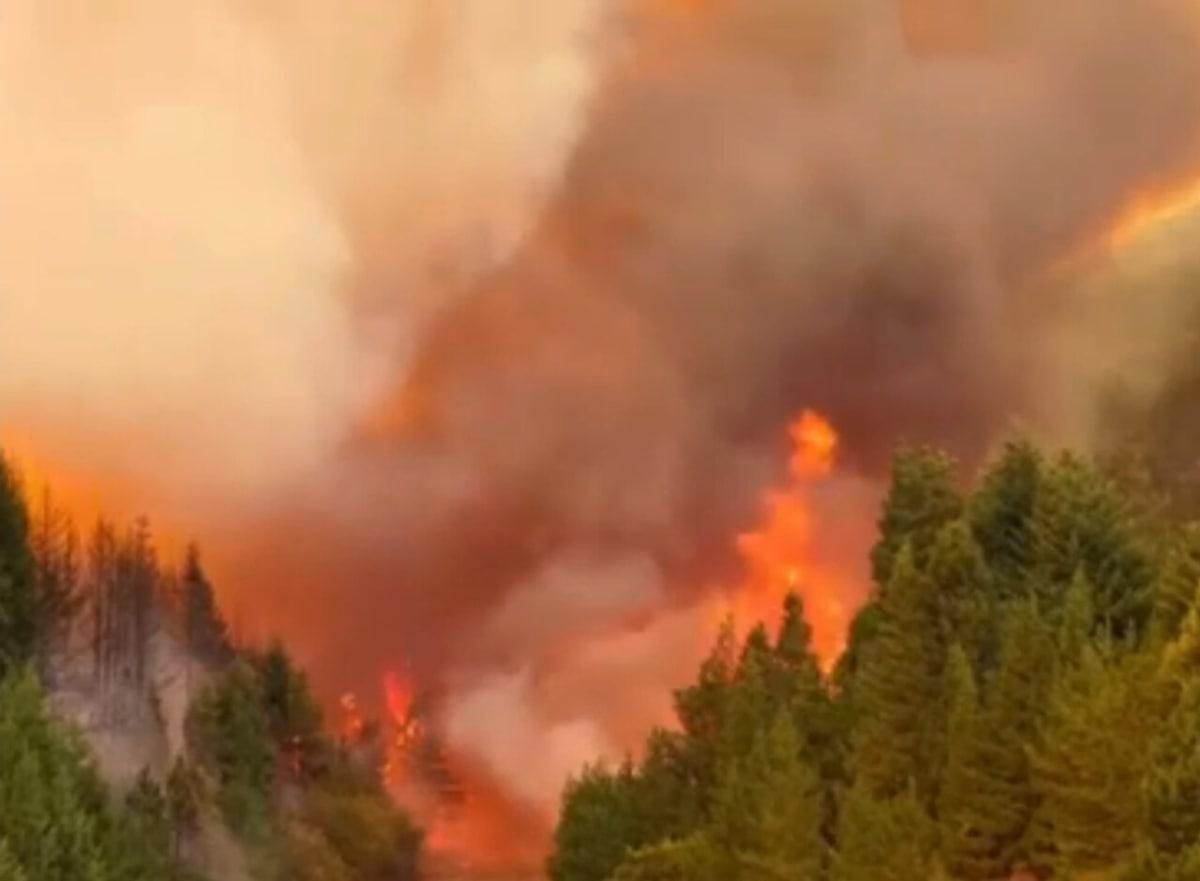
Wildfires wrecking Patagonia in January 2026.
The longest-living population of Alerce trees inhabits the UNESCO-listed Los Alerces National Park in Patagonia. These trees can live for more than 3,000 years. The oldest specimen in the park is around 2,600 years old and stands at 200 feet. This combination of longevity and large size allows it to absorb a copious amount of carbon from the atmosphere. A 2018 study reveals 1% of the largest trees carry almost 50% of the above-ground biomass carbon spread across forest biomes.
Such features make ancient forests containing Alerce trees the best line of protection against climate change. The trees serve as an efficient carbon sink and help mitigate the greenhouse effect by absorbing carbon emissions. The fires, though, have changed the equation. Now, there is a possibility that all the stored carbon will be bombarded into the atmosphere. It will increase the global temperature and intensify global warming. Furthermore, an increased amount of carbon will also result in hotter and drier conditions, which will trigger wildfires like the one currently being witnessed in Chile and Argentina.
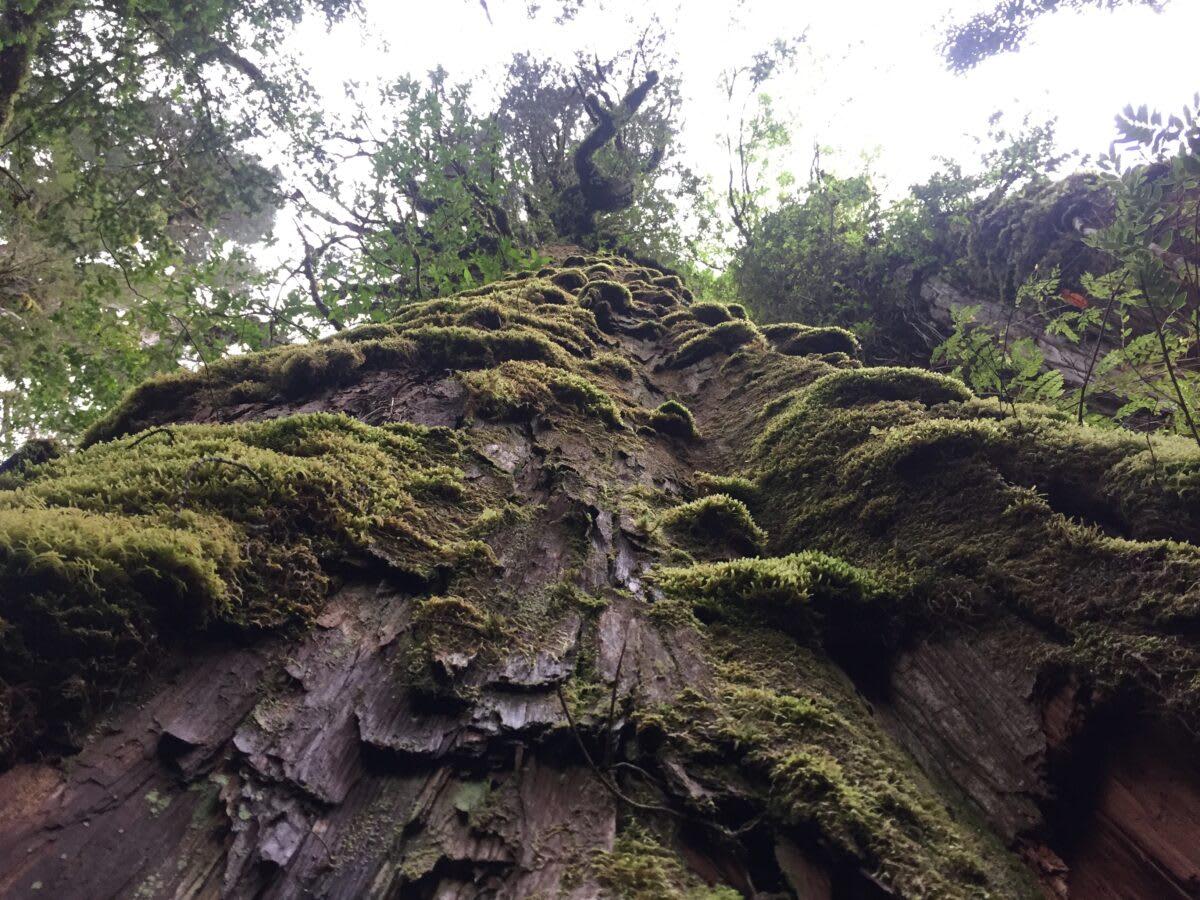
Alerce trees - also known as Patagonian cypress trees - can live for over 3000 years
Several experts have criticized the government for imposing budget cuts to the forest management services, according to The Guardian. The cuts worsened the damage caused by ancient forests. “Ancient forests were devastated, as was the unique biodiversity in the area. These are ancient giants that have stood undisturbed for thousands of years,” Dr. Juan Antonio Rivera, of the National Scientific and Technical Research Council in Mendoza, Argentina, shared. “Unfortunately, with a government that does not understand climate change and its connection to human activities, and where nature is secondary in terms of priorities, wildfires end up having greater impacts than they should. The drying of our landscapes is no longer a projection but a crisis that needs an urgent response to protect our unique biodiversity and the people of our region.”
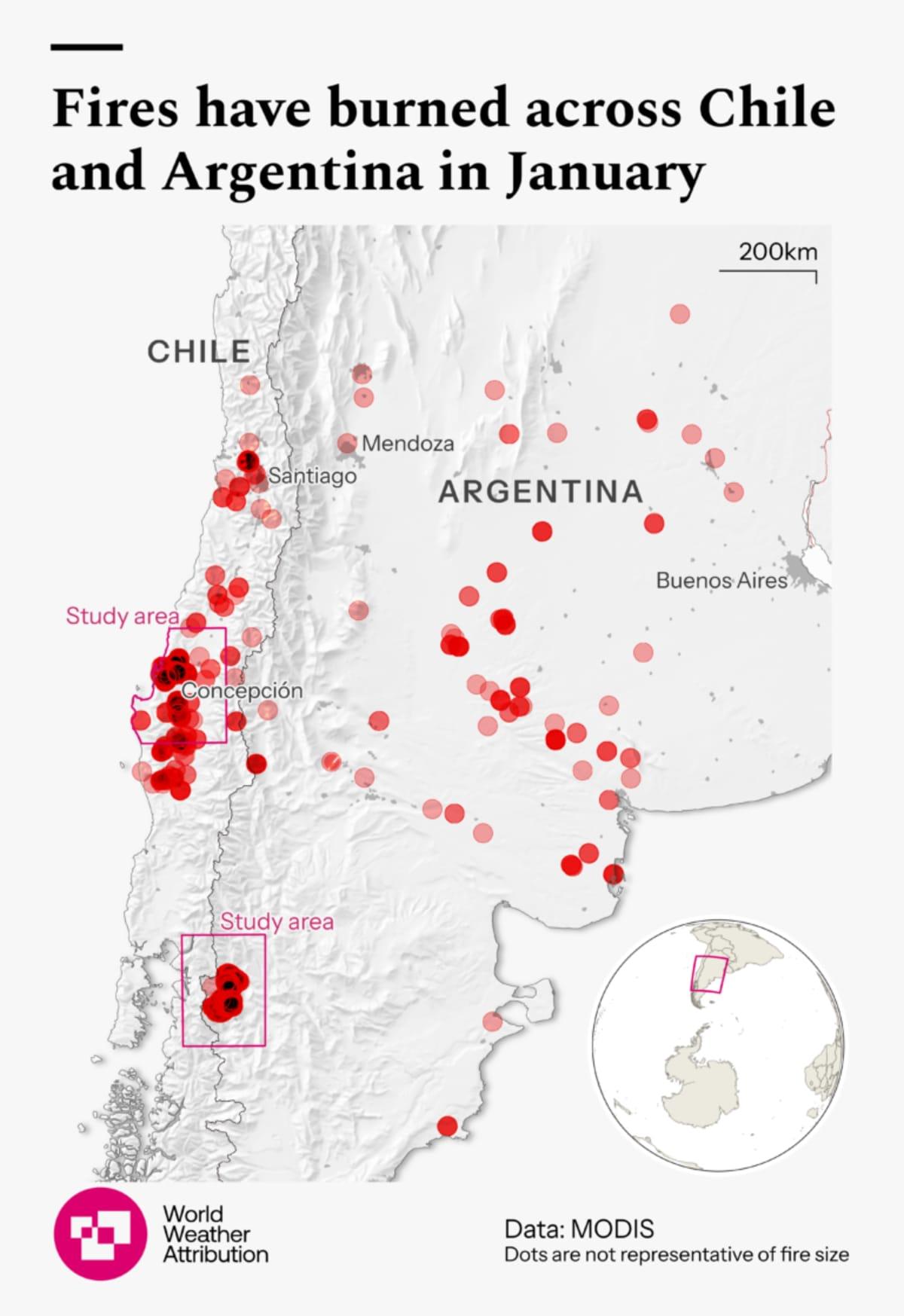
Figure 1: Map of the wider study region in Southern South America. Red dots mark active fires from January 6 – 20, according to MODIS data. The size of the dots is not to scale. The two study regions are indicated by pink boxes.
The investigation by the World Weather Attribution (WWA) consortium found that the dry, hot, and windy conditions that triggered the January wildfires were a consequence of global heating. It made the blazes three times more likely. Human-caused carbon emissions were responsible for the drier summers in certain regions of Chile and Argentina. At present, Chile and effected regions of Patagonia are receiving significantly lower rainfall than in the past. Dr. Clair Barnes, of Imperial College London, and also part of the WWA team, claimed that there was a clear link between climate change and these wildfires. “By burning fossil fuels, we have essentially loaded the dice, making the conditions for these devastating blazes more likely,” she added.
The wildfires erupted in early January 2026 and devastated all of the scrubland and forest in Chubut Province. In a matter of a few days, new fires appeared in southern Chile. Now, these forests have spread to northern Patagonia and the Andean foothills of central-southern Chile. Several critical habitats have taken a hit, putting the survival of vulnerable species, like the South Andean deer and the Magellanic woodpecker, in danger. To date, the fires have killed 23 people and disrupted the livelihoods of thousands, and more devastation is to reportedly follow.