
50 Years Ago, America Built a Nuclear 'Tomb' To Contain Radioactive Soil. It Now Threatens to Leak
Published Feb. 25 2026, 6:19 a.m. ET

Aerial photo of the Runit Dome
Testing and building nuclear weapons became an important task for the American government during the Cold War. During that time, they built a massive concrete dome sitting on a tiny island in the Pacific Ocean. Officially known as the “Runit Dome,” the structure was built by the United States in the late 1970s on Runit Island, part of the Marshall Islands. It contains radioactive waste left behind from Cold War nuclear weapons testing. The U.S. detonated 67 nuclear bombs between 1946 and 1958, turning parts of the region into heavily contaminated zones. After the tests ended, the radioactive soil, debris, and military equipment left behind were bulldozed into a massive crater created by one of those explosions. The waste was then sealed under a thick concrete cap, now known as “The Tomb.”
However, here is the issue that is raising concerns. The dome was never meant to be a permanent solution, so it was not prepared to carry the waste. The crater underneath was not lined, and seawater can move in and out beneath the structure. The rapid climate change is also raising fears that this Cold War containment effort could slowly start leaking radioactive material into the Pacific. From the outside, it does not appear threatening, just a huge concrete circle stretching about 377 feet wide. It is filled with 111,000 cubic yards of radioactive soil along with plutonium-239. It is one of the most dangerous radioactive substances ever created, with a half-life of 24,100 years.
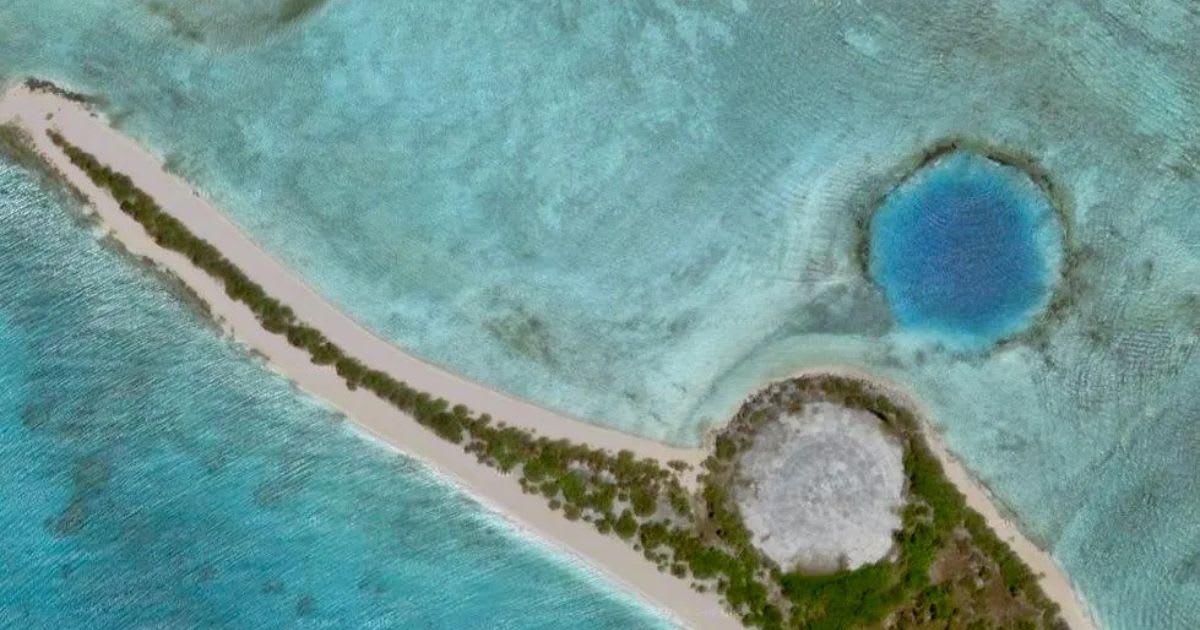
Runit Dome from above
After the nuclear testing, the U.S. crews began to deal with radioactive contamination scattered across parts of the Marshall Islands after granting them independence. Called the Enewetak cleanup mission, around 6,000 U.S. service members were sent to take part in the operation to clean up the nuclear test site. Originally, the plan was to rely heavily on trained nuclear specialists; due to budget cuts, regular troops were tasked with it. One would expect them to wear full protective gear, but instead, they could be seen wearing basic clothing and breathing radioactive dust. However, many veterans involved in the cleanup later reported serious health problems, including cancers and bone-related illnesses. The contaminated soil they collected was ultimately dumped into the massive crater.
The U.S. Environmental Protection Agency raised serious concerns about making the area a dumping ground. Suggestions to properly seal or line the bottom were discussed but ultimately rejected, as they were considered too costly and slow. Instead, the radioactive soil was mixed with cement and poured directly into the crater and then sealed with a concrete cap. It was a compromise solution that many now believe was flawed from the start. Moreover, there has also not been any maintenance whatsoever to prevent contaminated waste from mixing into the Pacific.
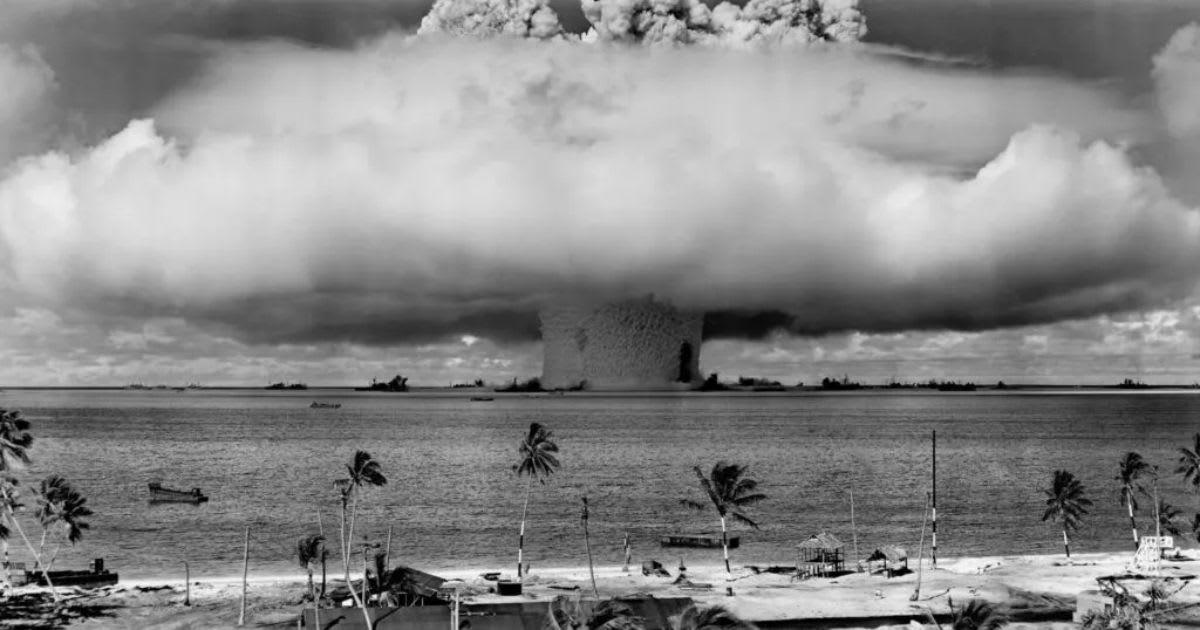
U.S. testing nuclear weapons
However, when discussions about the responsibility of cleaning the crater arose, the U.S. put it all on the Marshall Islands government. In 1986, both countries signed an agreement called the Compact of Free Association, and according to the U.S., this deal settled all past responsibilities related to nuclear testing. The U.S. says managing and maintaining the site is the responsibility of the Marshallese government. However, former President Hilda Heine said, “I’m like, how can it be ours? We don’t want it. We didn’t build it. The garbage inside is not ours. It’s theirs.”
For Marshall Islanders, nuclear contamination is part of daily life. It is leading to higher cancer risks, birth defects, and polluted food sources, forcing them to rely on imported foods. Meanwhile, rising sea levels threaten the aging dome itself. There are a few long-term fixes that exist, but none of them are being considered. This leaves the radioactive site vulnerable as climate change worsens the danger.