
Experts Think AI Could Finally Fix the Problem Slowing Down Space Missions for Years
Published Dec. 8 2025, 9:21 a.m. ET

Two people walk past a spacecraft.
Last year, NASA astronauts Butch Wilmore and Sunita Williams were supposed to return to Earth after spending eight days in space. Their eight-day trip got postponed to a prolonged nine-month trip, thanks to their spaceship, Boeing Starliner. At the time of return, Starliner started hiccupping while they were aboard the International Space Station (ISS). Wilmore and Williams discovered that the fuel tanks were leaking, and the thrusters were failing. The craft couldn’t steer them back home. Nowadays, scientists are deep into exploring how Artificial Intelligence (AI) can dramatically upgrade their space missions, four of them say, according to Space.com. Propulsion technologies, in particular.
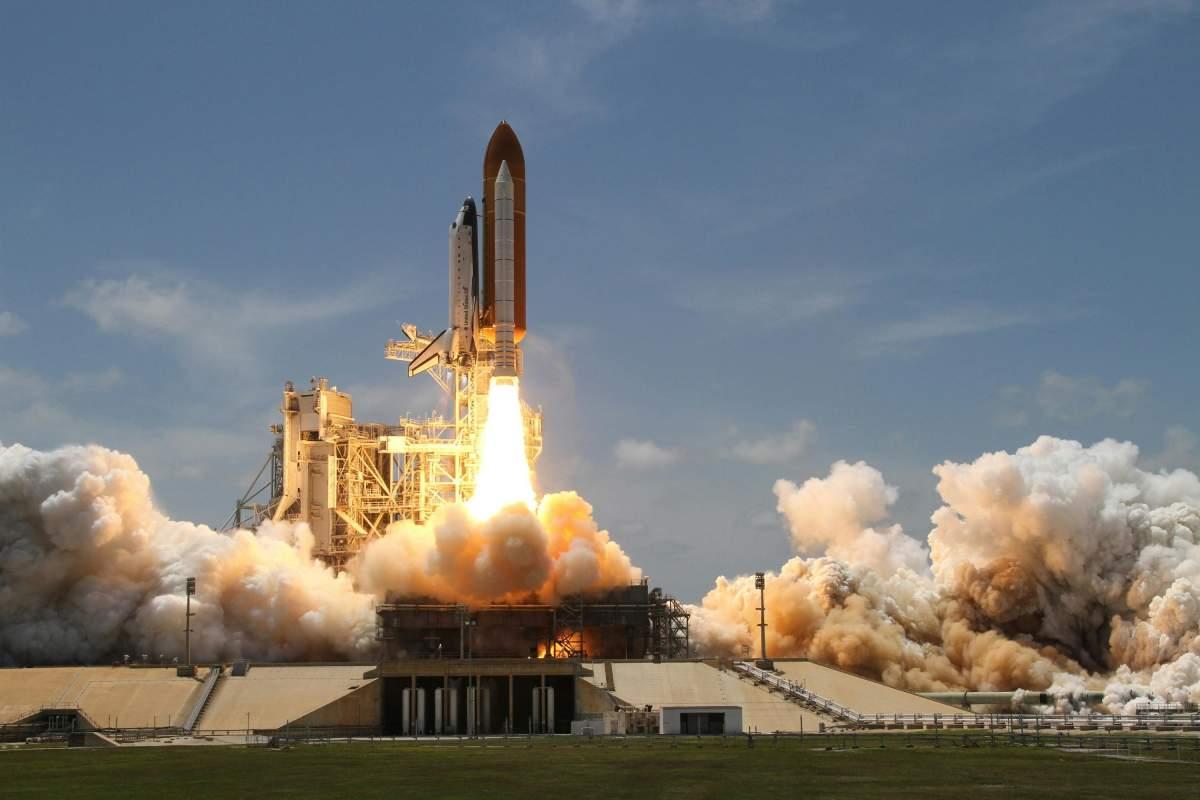
Space shuttle lifts off towards the sky, spewing enormous plumes of smoke
As companies and space agencies are carving out plans to map out patches on the Moon and colonize Martian soils, maybe navigate the rings of Saturn, it becomes even more paramount that they need a breakthrough in propulsion technology. With hundreds of rockets blasting off each year from Earth, engineers demand propulsion systems that are not just smarter, but more adaptable. AI seems to be the knight in the shining armor, the overriding mechanical force that could empower space exploration beyond imagination.
“It is quickly becoming an indispensable partner in humankind's journey to the stars,” a team of scientists said. The team includes engineers and graduate students, including Marcos Fernandez Tous, Preeti Nair, Sai Susmitha Guddanti, and Sreejith Vidhyadharan Nair. Lately, the four of them have been studying how AI, particularly the subset of AI called machine learning, can transform spacecraft propulsion. This isn’t just a metaphysical concept, but one that is totally practical and implementable.
Depiction of a woman's hand working on a laptop with AI symbols flashing all around (Representative Image Source: Getty Images | Tadamichi)
Some of the most common problems spaceships experience while orbiting millions of miles away in distant space include malfunctioning fuel pumps, declining thrusters, propellant leaks, and software glitches. By simulating complex propulsion scenarios, AI can resolve most of these errors, while also refining the nuclear fuel technologies and powering up launches. With predictive modelling of engine performance to real-time adjustments during flight, AI promises to ensure that spacecrafts will be able to navigate unpredictable conditions of the space environment with unprecedented precision. Add to it the optimization of nuclear thermal engines and the management of complex plasma confinement in fusion systems.
Machine learning, a subset of AI, functions by identifying patterns in data. One of its branches, called reinforcement learning, teaches machines to perform their tasks by rating their performance, enabling them to upgrade themselves. A January 2025 study published in Progress in Aerospace Sciences highlighted that AI has already proven its capabilities in enhancing the plasma control in the electric propulsion (EP) thrusters and introducing new control mechanisms.
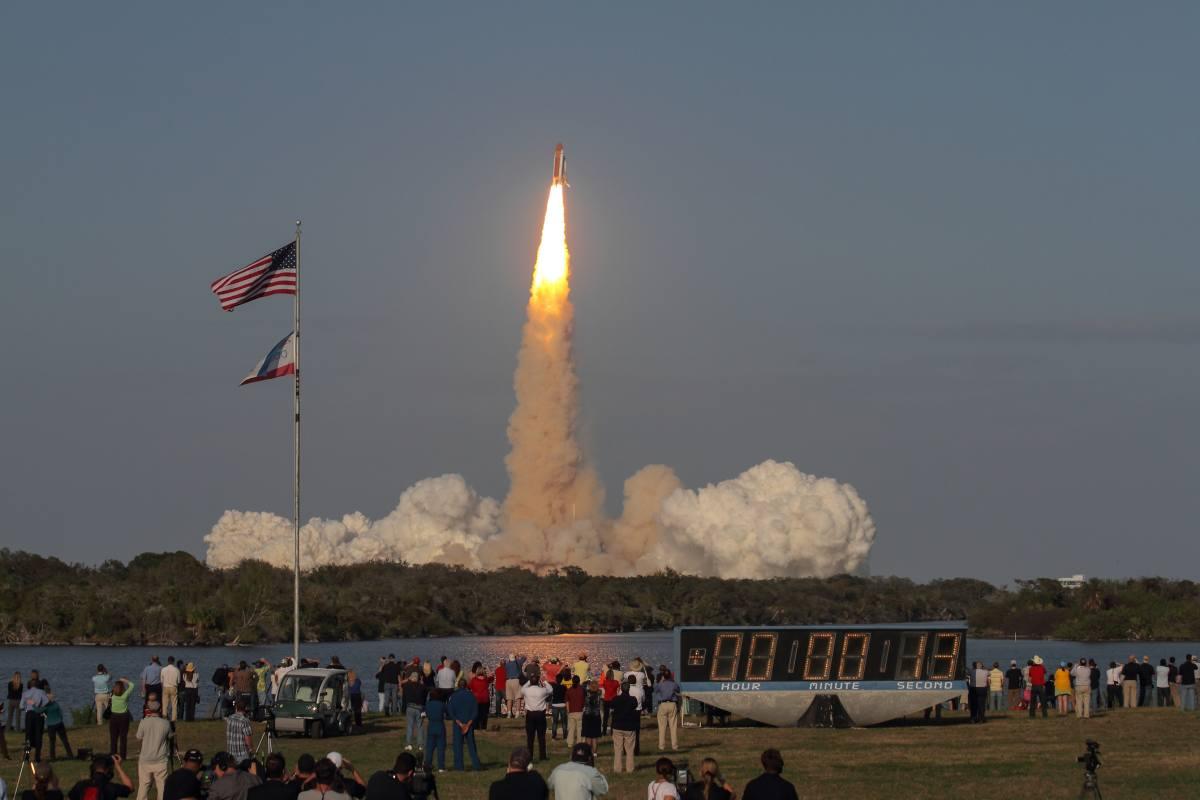
People witnessing a rocket launch spewing plumes of gases and clouds into the atmosphere
In a recent post on X, Elon Musk also proposed “solar-powered AI satellites,” which would tap constant sunlight and space's cold vacuum for power and cooling, bypassing grid overloads and water needs on the ground. The plan would tackle the rising AI data center demands. With this system, Starship could launch a whopping 300 gigawatts worth annually. Plus, as spacecraft hurtle away from the Sun, their chances of harnessing solar energy decline. An AI-powered propulsion system can come across as a kingpin that can guide the craft to the best possible ways of navigating the celestial environment.